
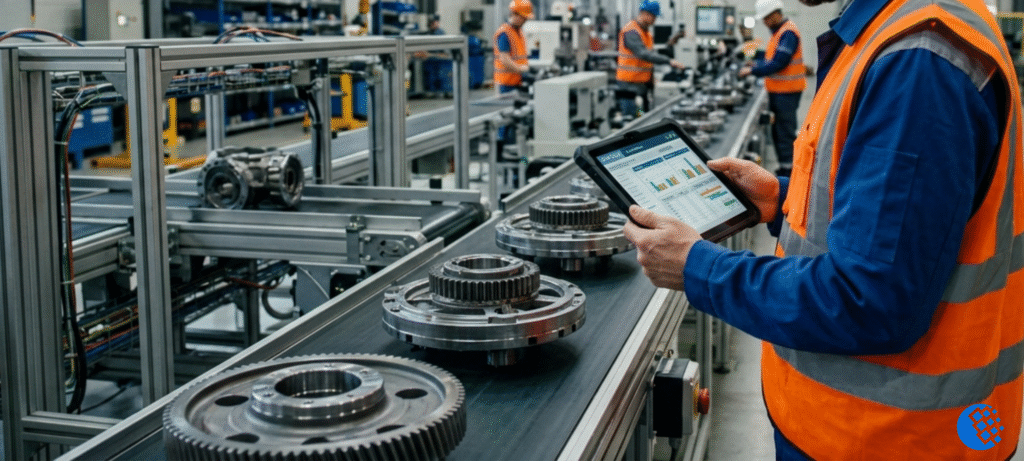
Nobody runs out of raw materials because they didn’t know how to build the product. That’s the thing I keep noticing whenever I sit in on factory planning meetings. Materials run short because someone guessed wrong about demand, a supplier shipped late, or a machine went down and nobody adjusted the schedule in time. That gap — between knowing how to make something and knowing how to coordinate the making of it — is exactly what production planning and control training exists to close.
If you’re a supervisor, an engineer, or someone eyeing a move into operations, this training isn’t just a resume line. It’s the difference between chasing problems all day and seeing most of them coming a week ahead.
Here’s a small story that sums it up better than a definition could. A plant manager I heard about once told his team he’d rather have a mediocre plan everyone follows than a brilliant plan nobody trusts. That stuck with me, because it’s basically the whole philosophy behind PPC in one sentence. If you’re also involved in tracking learner progress or building assessment systems alongside operations training, our 6 Point Grading Scale guide covers a related piece of that puzzle — how structured scoring keeps evaluation consistent, the same way a good schedule keeps a factory consistent.
What Is Production Planning and Control Training?
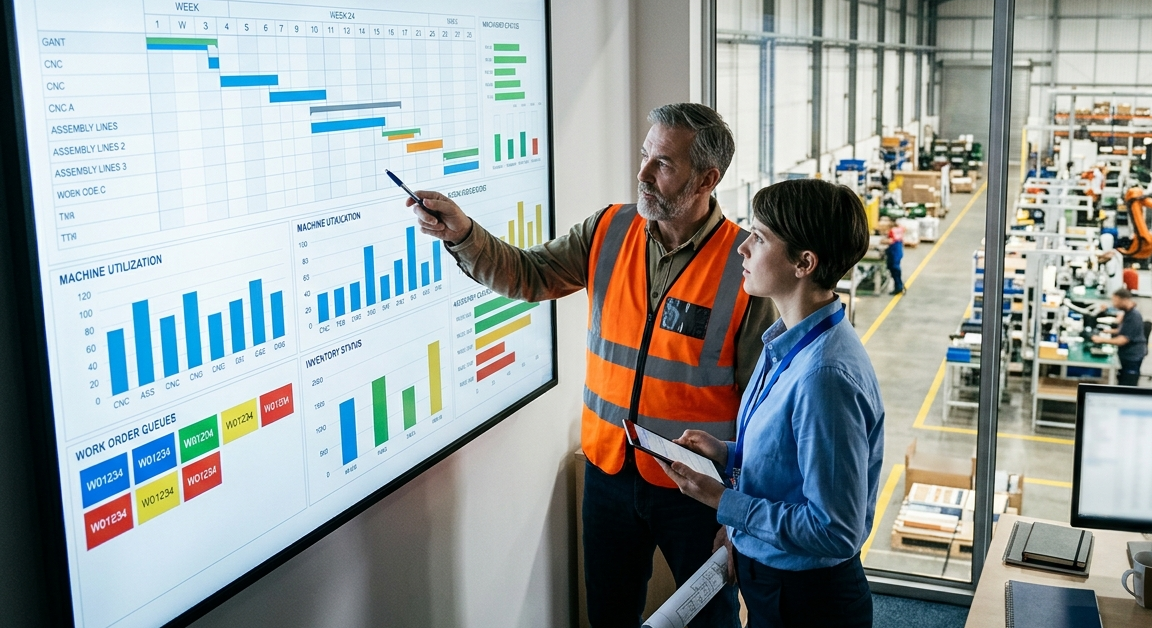
Split it into two halves, because that’s genuinely how practitioners think about it.
Planning happens before anything gets built — deciding what to produce, how much, and by when.
Control kicks in once production starts. It’s watching the floor, comparing actual output to the plan, and stepping in when something breaks.
A decent production planning and control training course walks you through both halves, along with the systems that tie them together: forecasting models, MRP, work orders, routing, and usually an ERP platform like SAP.
Why Companies Actually Pay For This
Nobody signs a team up for PPC training as a reward. Downtime, bloated inventory, and blown ship dates cost real money, and most of that traces back to weak planning.
Carrying costs tend to fall once inventory is sized against actual need instead of “just in case” padding. Machines and crews get used better because the schedule reflects real capacity utilization, not wishful thinking. Lead times shrink. Waste drops.
One production manager I heard about spent more time fixing yesterday’s schedule than building today’s — and that’s shockingly common in plants still running on spreadsheets and memory. Formal training doesn’t eliminate that entirely. But it gives people a framework so the fixing gets faster and less frequent.
Who This Training Is Actually For
Not just people with “planner” in their title.
Production supervisors use it to build schedules that survive contact with reality. Manufacturing engineers use it to design lines that match real capacity, not theoretical output. Supply chain staff use it to see how a procurement decision two weeks out becomes a shop floor problem today. Operations managers use it to connect scheduling decisions to the P&L. And honestly — small manufacturing owners running things off a whiteboard benefit more than almost anyone, because even a short course tightens up decisions that have been made on gut feeling for years.
What’s Actually Inside the Course
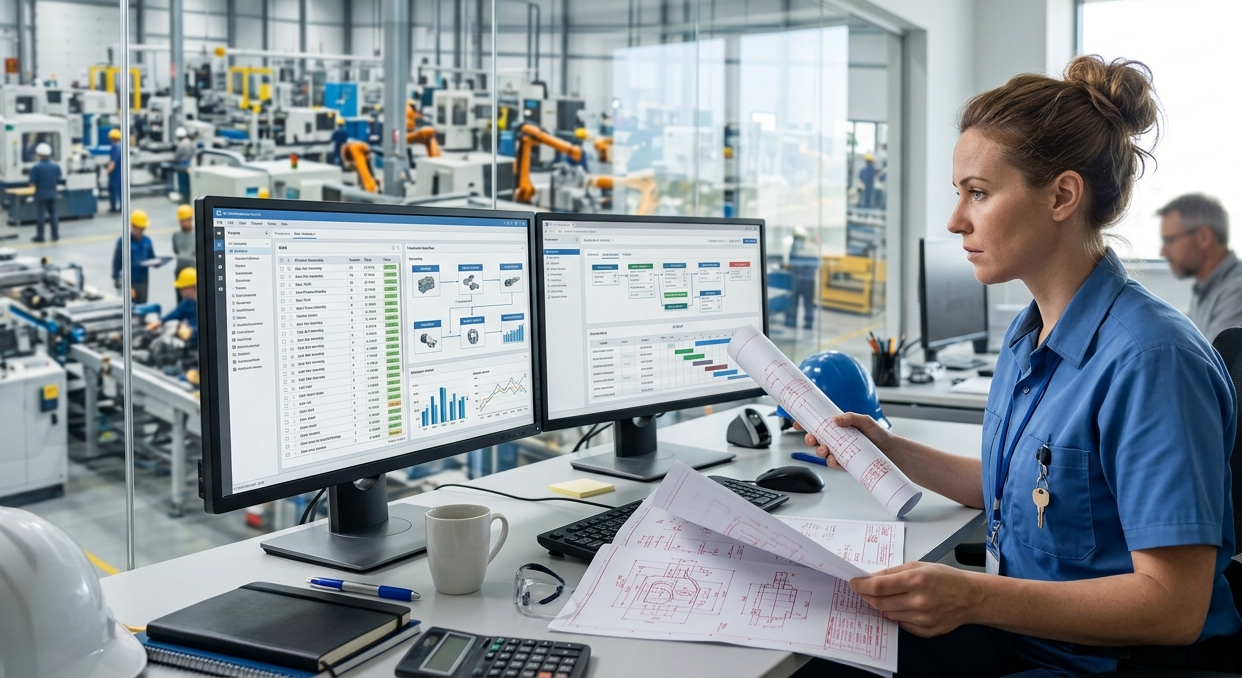
This is usually where course descriptions get boring, so let me walk through it with an example instead of a bullet list of module names.
Say a bicycle company promises 500 bikes to a retailer next month. Before anyone touches a wrench, planners need to forecast whether that order fits normal demand patterns or is a one-off spike. That’s demand forecasting and aggregate planning — arguably the least glamorous part of the course and also the part that determines whether everything downstream is even worth doing.
From there, the order gets translated into a Master Production Schedule (MPS) — a week-by-week build target. MRP then works backward from that target using the Bill of Materials (BOM) to figure out exactly how many wheels, chains, bolts, and frames need to arrive, and when.
Here’s where it usually gets messy: capacity planning. On paper, the schedule looks fine. In reality, one work center becomes a bottleneck — maybe the welding station can only handle 40 frames a day — and the whole plan has to bend around that constraint. Training covers rough-cut capacity planning specifically so this gets caught before production starts, not during it.
Then there’s shop floor control, which is the least predictable part of the job. Sequencing rules, tracking throughput, adjusting cycle time when a shift underperforms — this is where the plan meets whatever the plant actually decides to do that day.
Inventory optimization usually shows up near the end. A small furniture maker ordering plywood weekly faces a real trade-off: buy in bulk and lower shipping costs, or buy small and avoid tying up warehouse space with expensive stock sitting idle. The Economic Order Quantity formula exists to find that balance:
EOQ = √(2DS / H)
Where D is annual demand, S is the ordering cost, and H is the annual holding cost per unit. It’s a textbook formula, sure, but the logic behind it is genuinely useful when you’re negotiating batch sizes with a supplier.
Free vs. Paid Training
| Feature | Free Courses (Alison, Coursera basics) | Paid Certifications (APICS CPIM, corporate programs) |
|---|---|---|
| Typical Cost | $0, small fee for certificate | $500–$2,000+ |
| Depth | Foundational | Detailed, case-study driven |
| Employer Recognition | Decent resume filler | Often required for senior planning roles |
| Hands-on Work | Basic quizzes | Simulations, real scheduling exercises |
| Instructor Access | Usually none | Direct mentor or instructor support |
Free courses are fine for testing the waters. If you’re aiming at an actual planning role at a mid-size or large manufacturer, though, employers usually want a recognized certification behind the free-course foundation.
PPC vs. General Production Management
People mix these up constantly, so a quick table helps:
| Production Planning & Control | Production Management | |
|---|---|---|
| Focus | Scheduling, MRP, capacity, inventory | Entire manufacturing operation |
| Scope | Narrower, execution-focused | Broader, includes budgeting and staffing |
| Typical Role | Planner, scheduler | Plant manager, operations director |
Certifications and Where to Get Them
ASCM (formerly APICS) runs the Certified in Planning and Inventory Management (CPIM) credential, which is close to the industry standard for planning roles. Alison offers free introductory courses if you just want to see whether the material clicks for you. Udemy leans practical — a lot of their content is built around SAP PP specifically. Oxford Management Centre runs executive-level programs aimed at people already managing teams. And PIQC, based in Karachi, offers a well-regarded Certified Production Management Professional program that’s popular across textile and pharmaceutical manufacturing in the region.
Worth checking ASCM’s official certification page directly before enrolling anywhere — requirements and exam formats shift periodically.
Skills and Software You’ll Actually Use
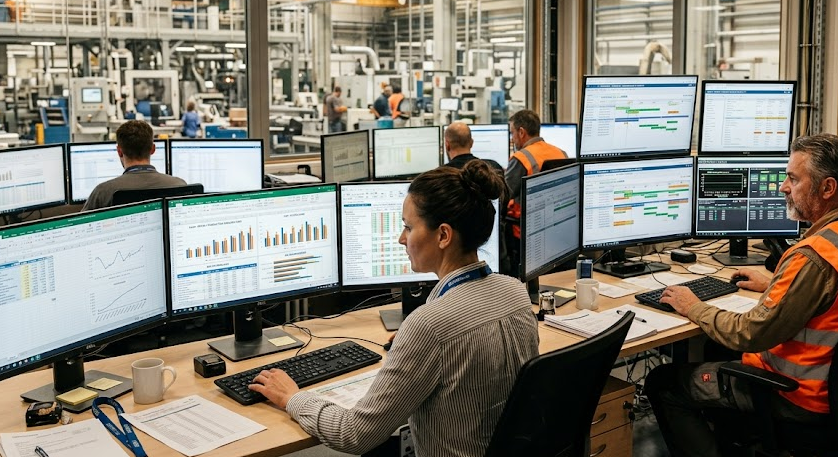
Modern planning doesn’t run on paper. Most courses will get you comfortable with ERP systems — SAP S/4HANA’s PP module especially, plus Oracle ERP. Some touch on Advanced Planning and Scheduling (APS) software, which sits on top of ERP to solve harder capacity and sequencing problems.
And then there’s Excel, which surprises a lot of people. Even plants running full SAP implementations still export data into spreadsheets constantly for quick manual adjustments. It’s not glamorous. It’s also not going away.
Beyond software, you’ll pick up familiarity with concepts like Just-in-Time (JIT) production, Kanban systems, lean manufacturing principles, safety stock calculations, and batch production planning — the kind of vocabulary that shows up in almost every manufacturing job posting whether or not the role mentions “planning” directly.
Common Mistakes People Make
Treating a forecast as a guarantee instead of an estimate, then building a rigid schedule that can’t absorb being wrong. Ignoring capacity limits because sales wants a faster delivery date than the floor can realistically hit. Leaning on safety stock to paper over supplier reliability problems instead of fixing the actual supplier relationship. Skipping regular schedule reviews so small slippages compound into a missed shipment nobody saw coming until it was too late.
Career Paths and Salary Expectations
Typical roles after this training include production planner, scheduler, inventory planner, planning manager, and eventually operations manager or plant director. Pay varies heavily by country and industry — a planner in the US or UK will generally see a meaningfully higher salary than one in South Asia doing comparable work, though certifications like CPIM tend to narrow that gap somewhat by making candidates more competitive regardless of location.
Frequently Asked Questions
What is the difference between production planning and production control?
Planning is forward-looking — deciding what to build and with what resources. Control is the execution phase, monitoring the floor and reacting when something goes wrong.
Is APICS CPIM certification worth pursuing?
For most people aiming at a planning career, yes. It’s widely recognized, though employers still weigh actual floor experience heavily alongside it.
Do I need coding skills for this field?
No. Comfort with data, Excel, and ERP navigation matters far more than programming ability.
How long does a typical course take?
Anywhere from 15–20 hours for self-paced online basics to 3–6 months for a professional diploma or corporate certification track.
Can I learn this entirely online?
Yes, though hands-on simulation exercises — which some in-person or corporate programs include — are genuinely harder to replicate remotely.
Is production planning and control training useful for experienced factory staff?
Often, yes. Experienced staff usually know the “how.” Training tends to fill gaps in the underlying math and systems — forecasting logic, MRP, capacity formulas — that pure experience doesn’t always cover.
Which industries rely on this the most?
Automotive, textiles, electronics, food processing, pharmaceuticals, furniture, and packaging all lean heavily on formal production planning and control.
What jobs does this training lead to?
Production planner, scheduler, inventory planner, manufacturing engineer, and eventually operations or plant management roles.
Where This Leaves You
Production planning and control training won’t turn a chaotic plant into a perfectly smooth one overnight — nothing does. What it gives you is the ability to see a problem before it hits the shipping dock instead of after, and that skill holds its value no matter which industry you land in. Start with a free course if you’re unsure, move to a recognized certification once you know this is the direction you want, and apply what you learn against a real schedule as early as possible — that’s genuinely where it sticks. If part of your work also involves measuring how well trainees actually absorb this material, it’s worth a look at how Student Success Definition frames outcome-based learning — the same before-and-after thinking that makes a production schedule worth trusting.
For a broader industry reference point, the Association for Supply Chain Management publishes ongoing research on planning best practices that’s worth bookmarking regardless of which course you end up choosing.