

Key Takeaways
- Teaching for impact judges success by what students actually learn, not by how much content got covered
- It’s built on a small set of evidence-based strategies, not a single trick
- A simple plan-teach-assess-reflect cycle keeps instruction improving over time
- Video and other technology support the approach but don’t replace good teaching
- Iowa’s Teaching for Impact initiative is one real-world example of this idea implemented at a state level
Two classrooms can move through the exact same curriculum at the exact same pace and produce completely different results. In one, the teacher gets through every slide, every worksheet, right on schedule – and half the class is quietly lost by week three. In the other, the pace looks almost identical from the outside, but the teacher is constantly checking who’s actually following along, and adjusting before anyone falls too far behind. That second classroom is what teaching for impact actually looks like in practice – and it has surprisingly little to do with how much material gets covered.
What Is Teaching for Impact?
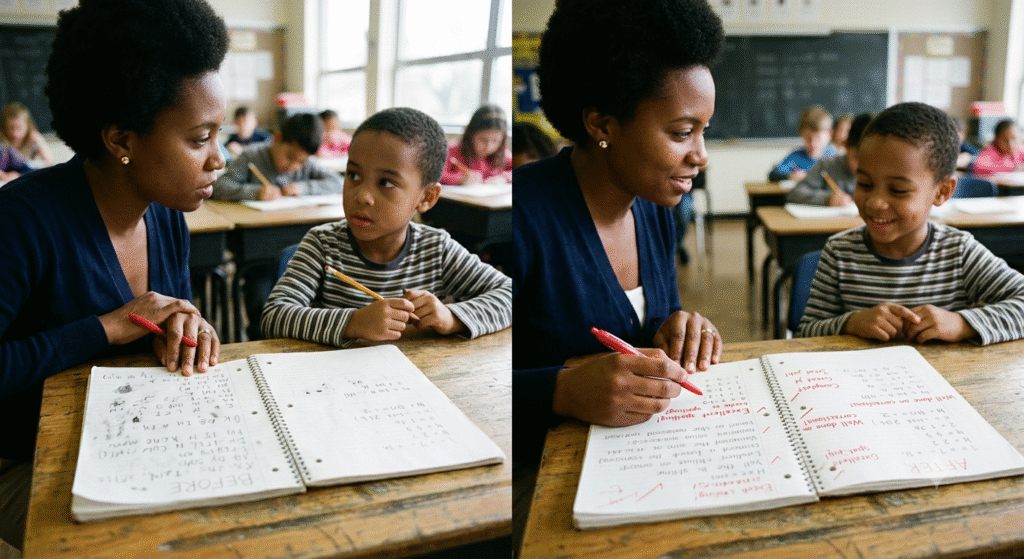
Teaching for impact is an approach that shifts the measure of success away from lesson completion and toward actual learning growth. It’s less about whether a teacher delivered the content and more about whether students walked away understanding something they didn’t understand before class started.
The distinction sounds small, but it changes almost everything about how a lesson gets planned and run. A teacher focused purely on delivery moves forward on schedule regardless of whether the class is keeping up. A teacher focused on impact treats the schedule as a guide, not a contract, and is willing to slow down, re-explain, or change approach entirely if the evidence in the room says students aren’t getting it. Some people phrase this as “teach for impact” instead, but it’s the same underlying idea either way – proven methods used deliberately, aimed at a measurable result.
Why Teaching for Impact Matters
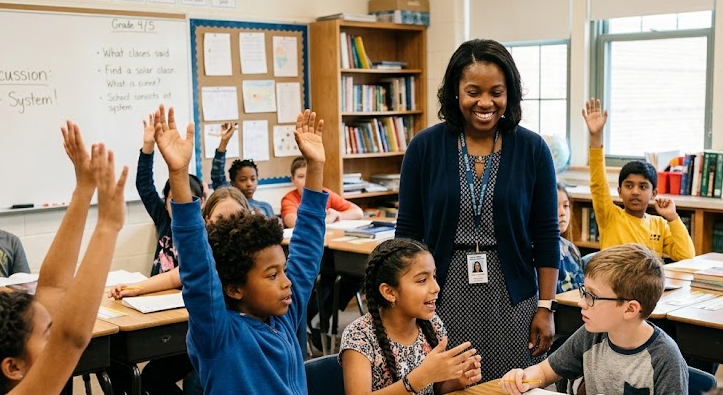
The value shows up in a few consistent places. Student achievement tends to improve, not because the material got easier, but because gaps get caught and closed before they compound into a bigger problem. Engagement rises too – students who understand what’s happening in a lesson tend to participate more than ones who are quietly guessing. Critical thinking develops further, since impact-focused teaching usually asks students to explain their reasoning rather than just produce a correct answer. Retention improves over the long run, since deep understanding tends to stick better than material that was memorized just long enough to pass a test. And teachers themselves often report more confidence in their own instruction, simply because they’re getting real-time evidence of what’s working instead of guessing.
Core Principles of Teaching for Impact
A handful of principles show up again and again across the research behind this approach.
Clear Learning Goals. Students perform noticeably better when they know exactly what they’re supposed to learn and why it matters, rather than working through an activity without a clear destination in mind.
Evidence-Based Teaching. Methods with a track record of actually working – not whatever happens to be trending in professional development that year.
Active Student Engagement. Passive listening produces weaker retention than active participation, whether that’s through discussion, problem-solving, or hands-on practice.
Continuous Assessment. Checking understanding throughout a lesson, not just at the end of a unit, catches confusion while it’s still fixable.
Reflection. Both students and teachers benefit from regularly stepping back and asking what actually worked and what didn’t.
Timely Feedback. Feedback given days after an assignment loses most of its value; feedback given while the work is still fresh sticks.
Differentiation. A single lesson rarely fits every learner in the room equally well, and adjusting for that is part of the job, not an extra.
High-Impact Teaching Strategies
This is where the research gets genuinely specific, and it’s worth naming the actual strategies rather than staying abstract.
Explicit Teaching. Clearly stating the goal, modeling the skill step by step, and giving guided practice before students work independently – one of the most consistently supported strategies in education research, and one researcher John Hattie’s work on Visible Learning ranks among the more reliably effective approaches available.
Worked Examples. Showing a complete, correct example before asking students to attempt something similar reduces the trial-and-error confusion that eats up class time.
Structured Questioning. Questions designed to check understanding and spark thinking, not just fill silence – cold-calling, think-pair-share, and follow-up probing all fall under this.
Collaborative Learning. Structured peer work, where students explain ideas to each other, often surfaces misunderstandings faster than a teacher lecturing to the whole room.
Feedback. Specific, actionable, and close to the moment of performance – “fix this one step” beats “good effort” almost every time.
Retrieval Practice. Regularly pulling information back out of memory, through quizzes or quick recall exercises, strengthens retention far more than passive review. Dylan Wiliam’s research on formative assessment leans heavily on this idea.
Multiple Exposures. Revisiting a concept across different contexts instead of teaching it once and moving on permanently.
Metacognition. Teaching students to think about their own thinking – what strategy they used, why it worked or didn’t – builds independence over time.
The Teaching for Impact Framework
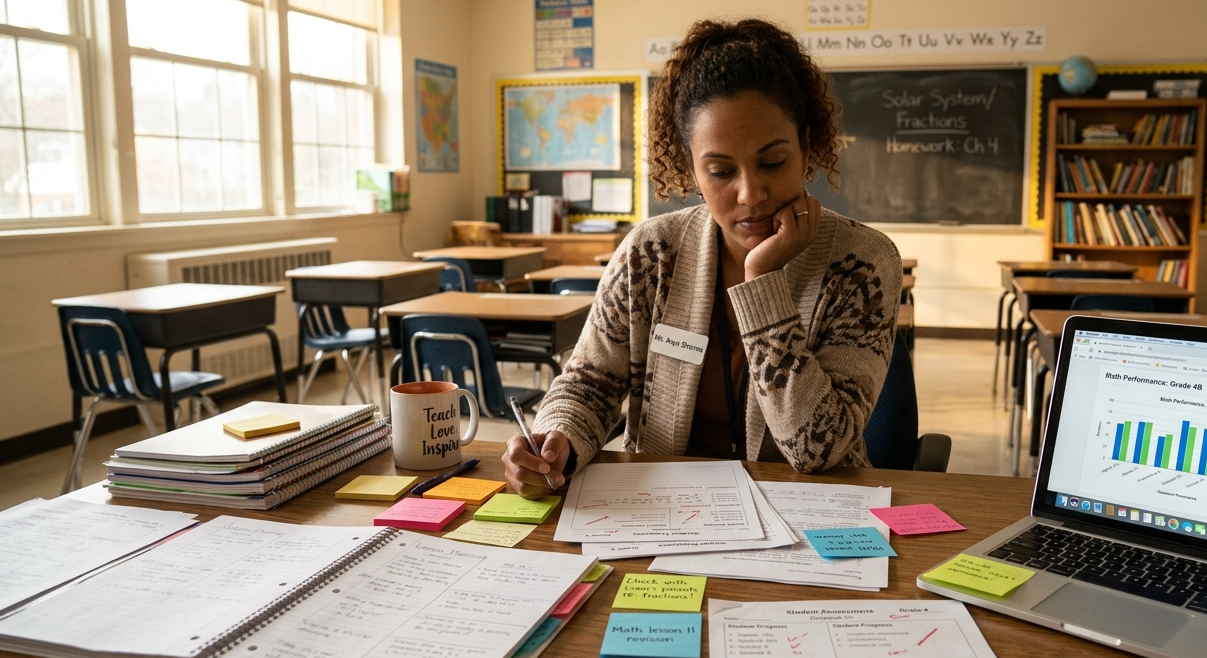
A simple cycle sits underneath most versions of this approach, and it’s worth keeping in mind as a loop rather than a one-time checklist:
Plan → set a clear, specific learning goal before the lesson begins Teach → deliver instruction using evidence-based methods, not habit alone Assess → check, during and after the lesson, whether the goal was actually met Reflect → honestly review what worked and what didn’t, without skipping the uncomfortable parts Improve → adjust the next lesson based on that reflection Repeat → treat this as an ongoing cycle, not a one-time project
Characteristics of an Impactful Teacher
Certain traits tend to show up consistently in teachers whose classrooms produce strong results. Deep subject knowledge matters, obviously, but so does the ability to communicate that knowledge in a way students can actually follow. Adaptability shows up constantly – a lesson plan that assumed too much or too little gets adjusted mid-class rather than pushed through regardless. Empathy plays a bigger role than people expect, since noticing when a student is quietly struggling (rather than just loudly struggling) takes real attention. Comfort with technology has become close to essential in most modern classrooms. Strong assessment skills, solid classroom management, ongoing professional development, and a genuine growth mindset – the willingness to treat their own teaching as something still improving – round out the list.
Teaching for Impact Across Different Subjects
The core ideas hold steady across subjects, but the practical application shifts. In science, impact-focused teaching leans on inquiry and hands-on experimentation rather than pure lecture. In math, it depends heavily on worked examples and careful scaffolding, since gaps compound quickly in a subject that builds sequentially. In English and language arts, it often centers on modeling thinking aloud – showing students how a skilled reader or writer actually reasons through a text. In social studies, it leans toward discussion and structured questioning that pushes past simple recall. In early childhood settings, it’s built more around play-based learning and constant, informal checking for understanding. In higher education, it increasingly borrows the same evidence-based strategies K-12 research has validated, rather than relying purely on lecture. And in online teaching, it depends more heavily on structured video, frequent low-stakes checks, and asynchronous feedback loops.
Focus on Teaching Using Video for High-Impact Instruction
Video has become one of the more practical tools for putting all of this into practice, largely because it decouples instruction from the exact moment of class time. A flipped-classroom model, where students watch a recorded explanation at home and use class time for practice and feedback, frees up the highest-value resource in the room – the teacher’s live attention – for the part of learning that actually benefits most from it.
Video modeling works particularly well for skills that are easier to show than describe. Recorded lessons also let a struggling student rewatch a confusing section as many times as needed, something a live lecture can’t offer. And for teachers themselves, reviewing a recording of their own lesson – a form of self-coaching that’s become far more common – often reveals patterns they’d never notice while actually teaching, from pacing issues to which students rarely get called on.
Teaching for Impact in Iowa
Iowa runs its own state-level initiative under this same name, built around equipping teachers with evidence-based strategies and ongoing instructional coaching rather than one-off training days. The idea mirrors the broader concept covered throughout this guide: measurable student growth as the actual goal, with professional learning structured to support that rather than just check a compliance box. It’s a useful real-world example of the framework above being applied at scale across an entire school system rather than staying theoretical.
Assessing Teaching Impact
Measuring whether teaching for impact is actually working takes more than a single test score. Formative assessment – the ongoing, in-the-moment checks during a lesson – catches problems early. Summative assessment shows the bigger picture once a unit wraps up. Student feedback, gathered directly, often reveals things a test score can’t. Peer observation and instructional coaching bring in an outside perspective a teacher can’t get from inside their own classroom. And increasingly, learning analytics from digital tools surface patterns across a whole class that would be nearly impossible to spot by hand.
| Assessment Method | What It Reveals |
|---|---|
| Formative checks | Real-time understanding during the lesson |
| Summative tests | Overall mastery at the end of a unit |
| Student feedback | How instruction is actually landing |
| Peer observation | Blind spots a teacher can’t see alone |
| Learning analytics | Patterns across an entire class over time |
Common Challenges
None of this happens in ideal conditions. Large class sizes make individual attention genuinely hard, no matter how skilled the teacher is. Limited resources and time constrain how much differentiation is realistically possible. Technology gaps – whether it’s outdated devices or inconsistent internet access – complicate video-based and digital strategies. Curriculum pressure to “cover” material on a fixed schedule pushes directly against the slower, more responsive pace impact-focused teaching sometimes needs. And teacher burnout, quietly, erodes the energy this kind of constant adjustment requires, even when the knowledge and intent are still there.
A Real Classroom Example
Picture a math teacher covering fractions using a fairly standard lecture-and-worksheet approach. The unit test comes back, and a third of the class is clearly still confused – not because they weren’t paying attention, but because the lesson moved forward before the concept had actually landed.
The following year, the same teacher restructures the unit around the framework above. Each lesson opens with a specific, stated goal. Worked examples come before independent practice. A short formative check happens partway through, not just at the end. When that check reveals confusion, the lesson adjusts on the spot instead of pushing ahead on schedule. By the end of the unit, the same test shows far fewer students stuck at the same sticking point – not because the material changed, but because the teaching around it did.
Teaching for Impact vs. Traditional Teaching
| Traditional Teaching | Teaching for Impact |
|---|---|
| Teacher-centered | Student-centered |
| Focused on content delivery | Focused on learning outcomes |
| Leans on memorization | Builds genuine understanding |
| Assessment mostly at the end | Continuous, ongoing assessment |
| Largely passive for students | Active participation throughout |
Common Mistakes Teachers Make
A few patterns undercut impact-focused teaching even when the intent is right. Talking for most of the lesson, leaving little room for students to actually process or respond. Skipping formative assessment and only finding out something didn’t land once the unit test comes back. Sticking to a one-size-fits-all lesson regardless of who’s actually in the room. Ignoring student feedback because it’s inconvenient to act on. And, maybe most common of all, teaching to finish the syllabus on schedule rather than teaching to make sure the material actually stuck.
Best Practices
Know the students in the room well enough to notice when something isn’t landing. Lean on evidence-based methods rather than whatever’s simply familiar or convenient. Adjust instruction in real time based on what the room is actually showing, not what the lesson plan assumed. Encourage genuine discussion instead of one-way delivery. Build in regular reflection, both for students and for the teacher’s own practice. And keep building relationships with students – a surprising amount of instructional effectiveness depends on students trusting the person teaching them.
Frequently Asked Questions
What is teaching for impact?
It’s an approach to teaching that judges success by what students actually learn and can do afterward, not by whether a lesson plan got covered. It shifts the focus from delivering content to measuring real change in understanding.
What is teach for impact?
It’s the same core idea, phrased slightly differently – using proven, evidence-based methods so that teaching produces measurable learning growth rather than just covering material.
Why is teaching for impact important?
Because a class can look busy and productive on the surface while very little real learning is happening underneath. Teaching for impact keeps the focus on outcomes – whether students actually understand more at the end than they did at the start.
How does teaching for impact improve learning?
By combining clear goals, evidence-based methods, and constant checking for understanding, so gaps get caught and addressed in the moment rather than showing up as a bad test score weeks later.
What are high-impact teaching strategies?
A set of research-backed practices – explicit teaching, worked examples, structured questioning, feedback, and retrieval practice among them – shown across decades of education research to consistently move student learning forward.
What is the teaching for impact framework?
A simple cycle: plan with a clear goal in mind, teach using evidence-based methods, assess whether it worked, reflect honestly on the results, then adjust and repeat. It’s less a rigid model and more a habit of continuous improvement.
What is Teaching for Impact Iowa?
It’s a state-level professional learning initiative in Iowa built around the same core idea – equipping teachers with evidence-based strategies and ongoing coaching so instruction translates into measurable student growth.
How do teachers measure teaching impact?
Through a mix of formative assessment during the lesson, summative results afterward, student feedback, and peer or coaching observation – no single measure tells the full story on its own.
What makes a teacher impactful?
Deep subject knowledge paired with the ability to explain it clearly, notice confusion quickly, adjust in real time, and give feedback that students can actually act on – not talent alone, but a set of learnable habits.
What is focus on teaching using video for high impact instruction?
It’s the practice of using recorded lessons, modeled demonstrations, or flipped-classroom videos so students can review material at their own pace, and teachers can use classroom time for practice and feedback instead of straight lecture.
What is explicit teaching?
A structured method where a teacher clearly states the learning goal, models the skill step by step, and gives students guided practice before they’re expected to work independently – rather than leaving them to figure it out on their own.
How does technology support teaching for impact?
Mainly by making feedback faster and instruction more flexible – digital quizzes reveal gaps immediately, recorded lessons let students revisit tricky material, and learning analytics show a teacher patterns they’d otherwise miss.
Final Thoughts
Teaching for impact isn’t a single technique or a program a school adopts once and files away. It’s a habit of checking, honestly, whether teaching is actually working – and being willing to adjust when the evidence says it isn’t. The strategies behind it aren’t new or exotic; researchers like Hattie, Wiliam, and Marzano have been documenting versions of this for years. What separates classrooms that put it into practice is mostly persistence: setting a clear goal, teaching toward it deliberately, checking the result, and doing it again, a little better, the next day.