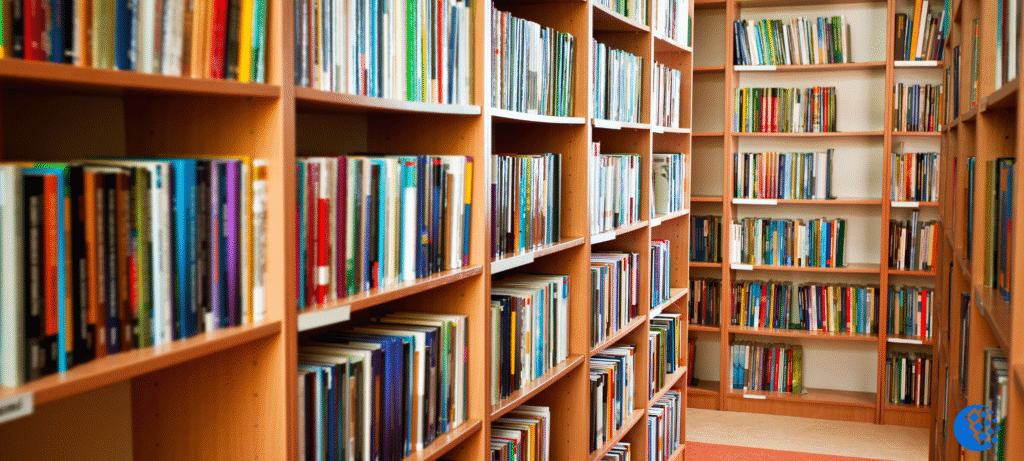
Walk into almost any school on a Monday morning and you’ll find a handful of kids hovering near the library doors before the bell even rings. Not because they were assigned to be there. They just want to grab a book, sit somewhere quiet, or ask the librarian for help finding something for a project due Friday. That small, ordinary scene says more about the importance of a library than most formal definitions ever could.
A library stopped being just a room full of books a long time ago, if it ever really was one. Students end up there to think through things on their own, away from constant noise. Researchers use it to track down sources they can actually trust, which honestly is harder than it sounds these days. And communities lean on it too, for internet access, computers, a quiet corner, sometimes even help putting together a resume. That’s basically what the importance of a library comes down to now, it goes way past the shelves.
What is the importance of a library? A library matters because it gives people free access to reliable information, supports education at every level, encourages lifelong learning, sharpens research skills, promotes digital literacy, and offers equal learning opportunities regardless of income or background.
What Is a Library, and Why Does Its Importance Keep Growing?
At its simplest, a library is an organized collection of books, media, and information resources made available to a group of people — students, researchers, or the general public. But that definition undersells what libraries have grown into.
There are several types worth knowing:
- School libraries — built around curriculum support and reading development for students
- Classroom libraries — smaller, teacher-curated book collections kept right in the room
- Public libraries — open to entire communities, often the only free access point to computers and internet some residents have
- Academic libraries — housed at colleges and universities, focused on research-level materials
- Digital libraries — online repositories of e-books, journals, and databases accessible from anywhere
So when someone asks what is the importance of a library, the honest answer depends a little on which kind they mean — though the core purpose, giving people reliable access to knowledge, stays the same across all of them.
For students specifically, that access ties directly into how education and knowledge actually develop over time — libraries are often the quiet infrastructure behind that growth, even when nobody notices it happening.
Why the Importance of a Library Has Only Grown
It would be easy to assume libraries matter less now that information is a search bar away. The opposite has turned out to be true. The internet handed everyone unlimited information and very little guidance on what to trust. Libraries fill that gap. Librarians curate, verify, and organize sources in a way a general search engine simply doesn’t — which is part of why information literacy and digital literacy keep showing up in education research as skills schools need to teach directly.
There’s also the access question. Not every household has reliable internet or a quiet place to study. Libraries level that field, offering free books, free Wi-Fi, and free study space regardless of a family’s income. That alone makes libraries one of the more quietly essential public institutions still standing, and it’s why national bodies like the American Library Association continue to track and advocate for library funding across the country.
12 Reasons That Show the Importance of a Library
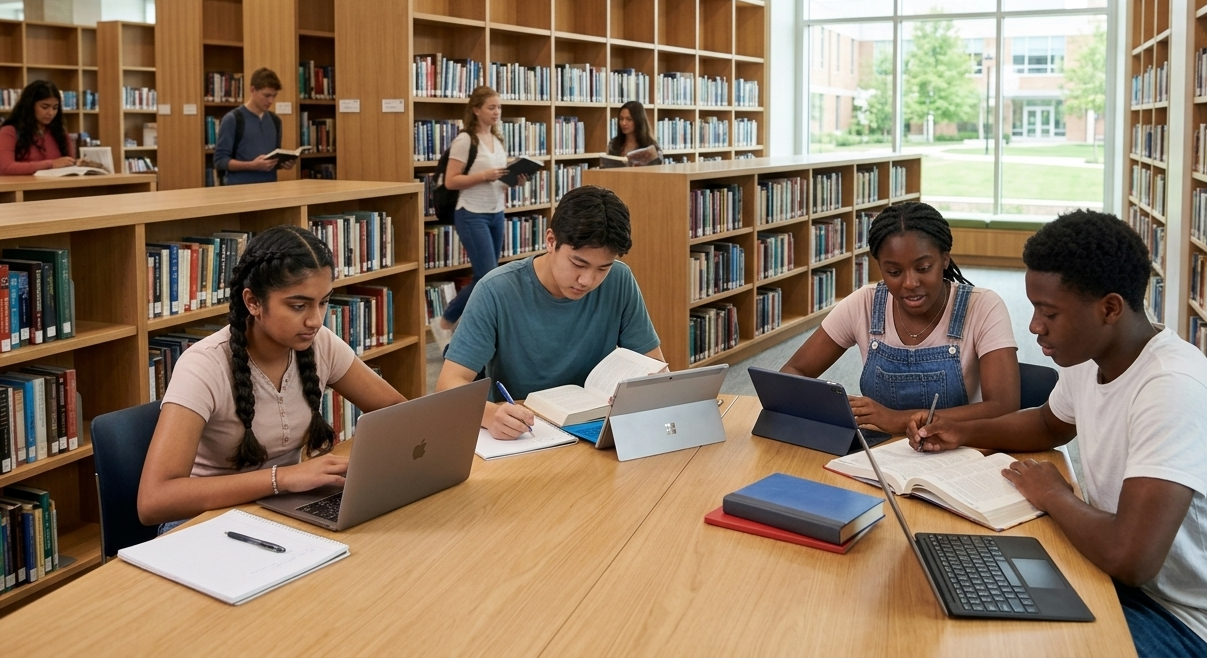
Encourages reading habits. Kids who grow up with regular library access tend to read more for pleasure, not just for assignments, and that habit tends to stick well into adulthood.
Supports academic success. Students with strong library access generally perform better on research-heavy assignments simply because they know how to find and evaluate sources properly.
Provides equal access to knowledge. A library card costs nothing. That single fact makes libraries one of the few institutions that don’t discriminate by income.
Develops research skills. Learning to navigate a library catalog, cross-check a source, or search a research database is a skill that outlasts any single school assignment.
Promotes digital literacy. Many public libraries now run free classes on basic computer skills, resume building, and internet safety — services that matter enormously for older adults and first-generation computer users.
Offers quiet study spaces. In a world of constant notifications, a library remains one of the few places built specifically for uninterrupted focus.
Preserves culture and history. Archives, local history collections, and rare manuscripts often survive nowhere else but a library’s shelves — institutions like the Library of Congress and the British Library exist almost entirely around this preservation role.
Supports lifelong learning. Libraries don’t stop being useful after graduation — adult education, career resources, and community workshops keep them relevant at every life stage.
Builds stronger communities. Story hours, book clubs, and community events turn libraries into genuine gathering spaces, not just quiet rooms.
Improves critical thinking. Comparing sources, questioning claims, and forming independent conclusions are all skills libraries quietly train through everyday use.
Helps career development. Resume workshops, interview prep, and free access to job databases make libraries an underrated career resource.
Encourages innovation and creativity. Modern libraries increasingly host makerspaces — 3D printers, recording studios, coding clubs — turning them into hands-on creative hubs, not just reading rooms.
Importance of a Classroom Library
A classroom library works a little differently than the big school library down the hall. It’s smaller, curated by the teacher, and sitting right there in the room — which matters more than it sounds. Students don’t need a hall pass or a free period to grab a book; it’s just available.
That kind of closeness does something a distant library just can’t. Kids who struggle with reading tend to respond well when the books sitting right next to them are actually at their level, no walk down the hall required. And teachers keep saying the same thing, once you remove the hassle of “let’s go grab a book,” daily reading time just goes up on its own.
Choice ends up mattering a lot here too. Motivation tends to go up when students actually get to pick their own book instead of being handed one, and kids stick with something longer when they chose it themselves, which shows up as better reading fluency by the end of the year. It also makes life easier for teachers running a well-stocked classroom library, since they can point a struggling reader toward something easier without making a big deal out of it in front of everyone else.
Vocabulary tends to grow out of this too, without much effort. When the books around students actually connect to whatever they’re studying, new words just show up naturally in context instead of getting memorized off a flashcard. That’s a big reason building key academic vocabulary usually happens through reading itself, not drills. Give it enough time and that daily contact with books changes something. Kids who used to dread reading out loud start putting their hands up for it.
Importance of School Libraries for Student Success
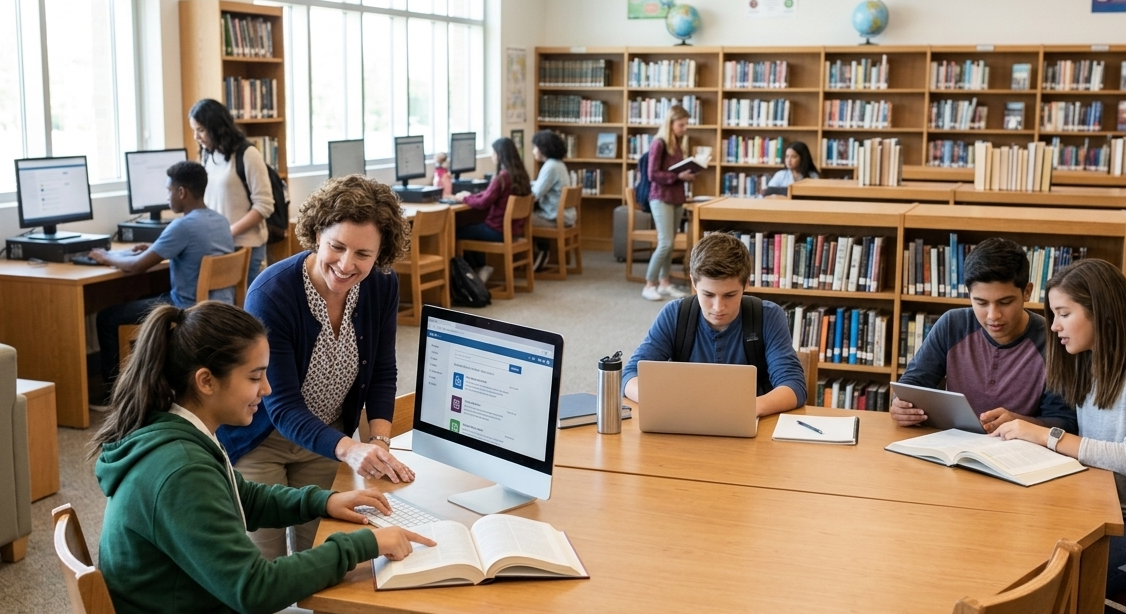
School libraries work on a different scale than a classroom shelf, and that shows up in academic performance overall. Students with solid library programs tend to do better on reading assessments, not because sitting in a library somehow makes test-taking easier, but because having consistent access to books and a librarian who actually guides you builds the skills those tests are measuring in the first place.
They also support exam preparation, group research projects, and general information literacy — learning how to tell a credible source from an unreliable one, which matters more every year as misinformation spreads faster online. School librarians frequently work directly with classroom teachers to plan lessons around research skills, which is a form of teacher collaboration that rarely gets credit but shapes how well students handle independent projects later on.
Many students also search for a dialogue about importance of school library, which says something interesting on its own — school libraries remain a common classroom discussion and debate topic, not just a physical space students walk past.
Technology access matters a lot here too. If a student doesn’t have a computer or decent internet at home, the school library is often the one place left to print something, actually research a topic properly, or use software the classroom just doesn’t have. And it’s not only about academics either. School libraries end up quietly holding up student wellbeing too. For some kids, that room is the calmest, safest part of their whole day.
Importance of Public Libraries
Public libraries carry a different weight entirely. For a lot of people, they’re the only place offering free internet access, a quiet spot to fill out a job application, or a computer to print a resume. Job seekers rely on public library staff more than most people realize — resume help, interview coaching, and database access to open positions.
Then there’s the programming side. Story hours and summer reading challenges for kids, tech classes and book clubs for seniors, it’s honestly one of the few places still trying to serve every age group under one roof. And membership costs nothing, pretty much everywhere. That matters more than it sounds like on paper, especially now that most community resources seem to come with some fee attached somewhere.
Importance of a Library in the Digital Age
| Traditional Library | Digital Library |
|---|---|
| Printed books | E-books |
| Requires a physical visit | Accessible online |
| Quiet, in-person study space | Supports remote learning |
| Local collection | Global resource access |
| Limited operating hours | Available 24/7 |
Neither fully replaces the other. Digital libraries solve the access problem — someone in a rural area with no nearby branch can still reach thousands of resources online, including projects like the World Digital Library, which pulls historical and cultural material from institutions around the world into one searchable place. But traditional libraries still offer something digital access can’t quite replicate: a physical space designed entirely around focus and quiet.
Library Types at a Glance
| Library Type | Primary Purpose | Main Users |
|---|---|---|
| School Library | Curriculum support | Students |
| Classroom Library | Daily reading | Classroom |
| Public Library | Community learning | Everyone |
| Academic Library | Research | University students |
| Digital Library | Online access | Global users |
Challenges Libraries Face Today
It wouldn’t be fair to only talk about the good parts. Libraries are under real pressure right now. Budget cuts tend to hit library programs before almost anything else, they’re often first on the chopping block when funding gets tight. And misinformation online hasn’t made a librarian’s job easier either, if anything there’s just more noise now to sort through. In some regions, younger students are reading less simply because screens are winning the attention battle. Add to that the cost of keeping technology updated, money a lot of smaller libraries just don’t have, plus staffing shortages that leave fewer people around to actually run the programs communities depend on.
None of this erases the importance of a library — if anything, it makes the case for continued investment stronger, not weaker.
How Libraries Are Likely to Evolve
Expect libraries to keep leaning into hybrid models — AI-assisted search tools that help patrons find sources faster, expanded digital archives, and more makerspaces built around STEM learning. Virtual library cards, open educational resources, and remote access to research databases are already becoming standard rather than a novelty. The physical building isn’t going away, but what happens inside it keeps shifting toward flexible, tech-supported learning.
According to UNESCO, libraries remain a core part of the global push toward equitable education access, particularly in regions where digital infrastructure is still catching up. Groups like the International Federation of Library Associations and Institutions also track this shift globally, pushing for consistent standards around open access and information literacy across countries.
That evolution also touches language learning specifically — students building fluency, whether through a school program or something like AP Spanish language vocabulary, often lean on library databases and audio resources a textbook alone can’t provide.
People Also Ask
What is the importance of a library?
A library provides free, equitable access to books, research materials, and quiet study space, while supporting reading habits, research skills, and lifelong learning for students and communities alike.
Why are libraries important today?
With so much unreliable information online, libraries help people find and evaluate trustworthy sources — something a search engine alone doesn’t really do.
How do libraries help students?
They build reading confidence, teach research and critical thinking skills, and offer a distraction-free environment that’s harder to find at home or on a phone.
Why is a classroom library important?
It puts books within immediate reach, increasing daily reading time and giving teachers a way to match books to individual student reading levels.
Why do schools need libraries?
They support academic performance, exam preparation, and information literacy, while giving students a calm space some don’t get anywhere else in their day.
Frequently Asked Questions
What is the importance of a library?
A library provides free, equitable access to books, research materials, and quiet study space, while supporting reading habits, research skills, and lifelong learning for students and communities alike.
What is the importance of a classroom library?
It puts books within immediate reach, increasing daily reading time and giving teachers a way to match books to individual student reading levels.
Are libraries still important in the digital age?
Yes — arguably more than before. With so much unreliable information online, libraries help people find and evaluate trustworthy sources, something search engines alone don’t do well.
How do libraries benefit communities?
Beyond books, they offer free internet, job search help, community events, and programs for every age group, making them one of the few truly inclusive public spaces left.
For additional research on how library access correlates with literacy outcomes, the Institute of Museum and Library Services publishes ongoing national data worth reviewing.
Final Thoughts
The importance of a library isn’t really up for debate once you look past the stereotype of a silent room full of dusty books. Libraries teach research skills, protect access to information regardless of income, preserve culture, and give entire communities a shared space to learn, work, and grow. They’re not without challenges — funding and staffing pressures are real — but their core value hasn’t diminished with time. If anything, in a world this noisy and this fast, that quiet corner with the bookshelves matters more than it used to.