
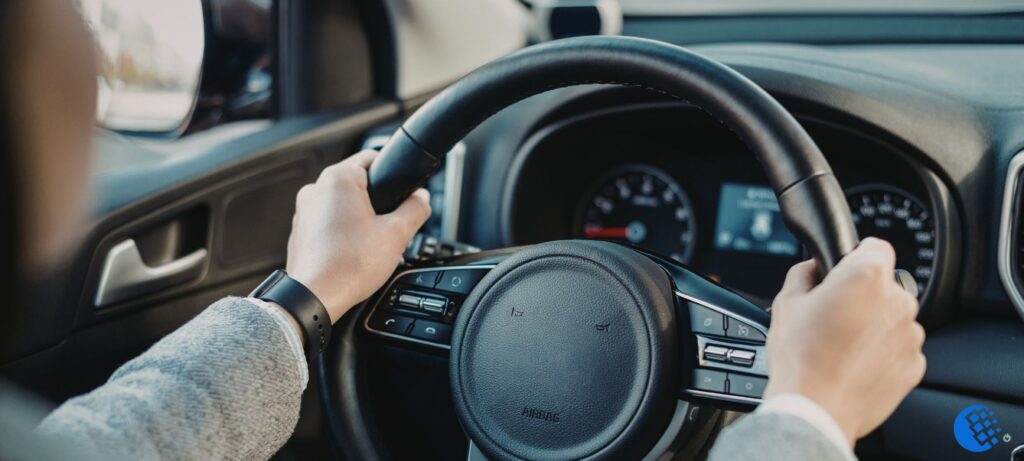
Whether you’re getting ready for a driving test, preparing for a road trip abroad, or building everyday driving vocabulary in English, knowing these terms will help you stay safe and speak with confidence behind the wheel.
If you’re also interested in learning another language, you may enjoy our guide on Is German Easy to Learn for an English Speaker?
This updated guide covers over 200 essential driving terms—including vehicle types, license categories, dashboard warning lights, emergency response terms, weather conditions, highway navigation, examiner commands, UK vs. US differences, phrasal verbs, and idioms.
Key Takeaways
- Driving vocabulary includes terms for vehicle controls, body styles, traffic laws, emergency situations, license types, and exam directions.
- Learning vocabulary for driving improves road safety, prevents traffic violations, and ensures you follow examiner commands smoothly during your driving test.
- British and American car vocabulary differs significantly (e.g., boot vs. trunk, petrol vs. gas, indicator vs. turn signal).
- Understanding english vocabulary for driving test prep helps you pass both practical assessments and theory exams on your first attempt.
Quick Navigation
- Key Takeaways & Quick Answers
- Editorial Note & E-E-A-T Compliance
- What Is Driving Vocabulary?
- Driving License & Training Vocabulary
- Vehicle Types & Body Styles
- Basic Driving Vocabulary
- Car Parts & Vehicle Vocabulary
- Dashboard Warning Lights Vocabulary
- Driving Actions & Driving Verbs
- Road & Traffic Infrastructure Vocabulary
- Highway & Long-Distance Driving Vocabulary
- Parking & Maneuver Vocabulary
- Traffic Signs & Rules Vocabulary
- Weather & Driving Conditions Vocabulary
- Breakdown, Safety & Emergency Vocabulary
- Navigation & Route Vocabulary
- Fuel, EV & Economy Vocabulary
- Road Safety & Vulnerable Road Users
- Driving Test Vocabulary & Examiner Commands
- British vs. American Driving Vocabulary
- Common Driving Phrasal Verbs
- Driving Expressions & Idioms
- Driving Vocabulary by Situation & Use Case
- Pronunciation & Learning Tips
- Real-Life Driving Conversation Examples
- Common Driving Vocabulary Mistakes
- Expanded Driving Vocabulary Quiz
- Driving Vocabulary Glossary
- Frequently Asked Questions
Quick Answers
What is driving vocabulary?
Driving vocabulary is the complete collection of English words, phrases, and technical terms used to describe vehicles, road signs, traffic laws, driving maneuvers, emergency situations, dashboard indicators, and driving test instructions.
Why is driving vocabulary important?
Road safety vocabulary helps learners interpret street signs instantly, follow navigation directions, handle unexpected vehicle breakdowns, communicate clearly with instructors or mechanics, and avoid dangerous driving mistakes.
How many driving words should beginners learn?
Most learners can confidently navigate roads, handle everyday conversations, and understand examiner directions after mastering 150 to 200 core driving words.
This guide has been reviewed against official driver education materials, including the UK Highway Code and U.S. DMV Driver Handbooks, while also reflecting the everyday language used by experienced drivers, road safety experts, and driving instructors.
What Is Driving Vocabulary?
When we talk about english driving vocabulary, we mean the functional language used every day on the road. Knowing these driving english terms gives you the clarity you need across several key scenarios:
- Interpreting road signs, highway signs, and GPS navigation prompts without hesitation.
- Understanding exact step-by-step commands from a driving instructor or examiner.
- Explaining mechanical issues or breakdowns clearly to roadside assistance and mechanics.
- Communicating effectively during driving exams, road trips, car rentals, or everyday travel conversations.
Driving License & Training Vocabulary
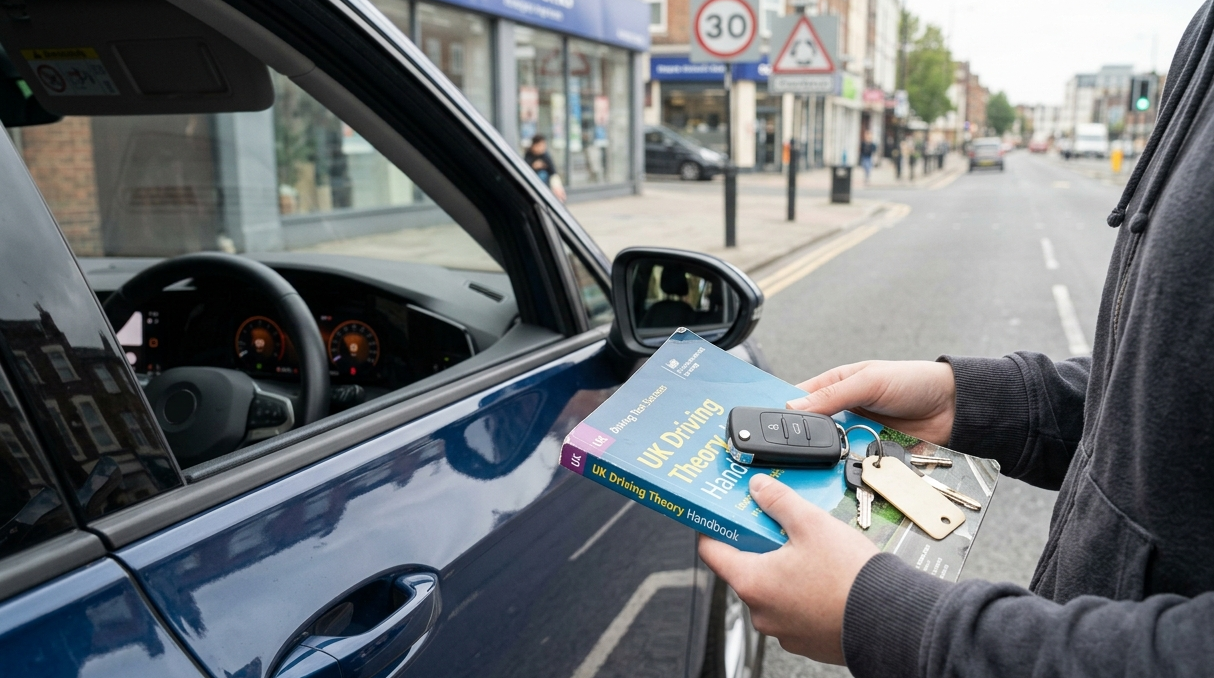
Understanding licensing terms is essential for anyone starting driver’s education or moving to a new country.
- Learner’s Permit (Instruction Permit): An initial entry-level permit allowing beginner drivers to practice under supervision.
- Provisional License: A temporary license issued to new drivers with specific conditions (such as night driving limits or passenger restrictions).
- Full License: An unrestricted driver’s license granted after passing all written theory and practical road tests.
- Restricted License: A legal license that carries specific limits, such as requiring corrective eyewear or prohibiting night driving.
- Driver’s Education (Driver’s Ed): Formal training courses covering traffic laws, vehicle safety, and supervised behind-the-wheel instruction.
- Roadworthy Certificate (Inspection Certificate): An official document proving that a motor vehicle meets minimum safety standards to drive legally.
Vehicle Types & Body Styles
Car categories and body shapes vary widely. Recognizing these terms helps when renting, buying, or describing a car.
| Vehicle Type | Description | Example Sentence |
| Sedan | A traditional 4-door passenger car with a separate trunk compartment. | Sedans offer a smooth ride and plenty of trunk space for family trips. |
| Hatchback | A car with a rear door that swings upward, providing easy cargo access. | Hatchbacks are easy to park in crowded city streets. |
| SUV (Sport Utility Vehicle) | A large vehicle with higher ground clearance, often featuring all-wheel drive. | SUVs are popular for winter driving and off-road trips. |
| Pickup Truck | A light utility truck featuring an open rear cargo bed. | He loaded the construction tools into the back of his pickup truck. |
| Coupe | A sporty 2-door car with a sleek, sloping rear roofline. | Coupes offer great styling but less rear legroom. |
| Convertible | A car featuring a retractable or removable roof. | Driving a convertible along the coastal highway is a fun experience. |
| Minivan | A large passenger vehicle built with sliding rear doors and three seating rows. | Minivans are ideal for family road trips. |
| Electric Vehicle (EV) | A vehicle powered entirely by battery-driven electric motors. | Electric vehicles require regular charging at home or at public charging stations. |
| Hybrid Vehicle | A car that combines a traditional petrol or diesel engine with an electric motor. | Hybrids offer excellent fuel economy in city traffic. |
Basic Driving Vocabulary
For learner driver vocabulary building, these fundamental terms form the backbone of everyday road communication.
| Word | Part of Speech | Definition | Contextual Example |
| Drive | Verb | To operate and control the speed and direction of a motor vehicle. | I drive to work every morning using the outer bypass. |
| Vehicle | Noun | Any motorized transportation machine (car, truck, van, motorcycle). | Park your vehicle inside the designated bays. |
| Brake | Verb / Noun | To slow down or stop; the mechanism that stops the wheels. | Press the brake pedal gently when approaching a stop sign. |
| Accelerate | Verb | To increase speed by pressing the accelerator pedal. | Accelerate smoothly when entering the motorway ramp. |
| Pass | Verb | To move past a slower vehicle traveling in the same direction. | It is unsafe to pass another vehicle on a blind curve. |
| Passenger | Noun | A person riding in a vehicle who is not operating the controls. | The front passenger seat is often called ‘shotgun’ in informal slang. |
| Traffic | Noun | The movement of vehicles along a road or highway network. | Morning traffic is heavy during weekday rush hour. |
| License | Noun | An official legal document granting permission to drive a motor vehicle. | Always carry your driver’s license while behind the wheel. |
Car Parts & Vehicle Vocabulary
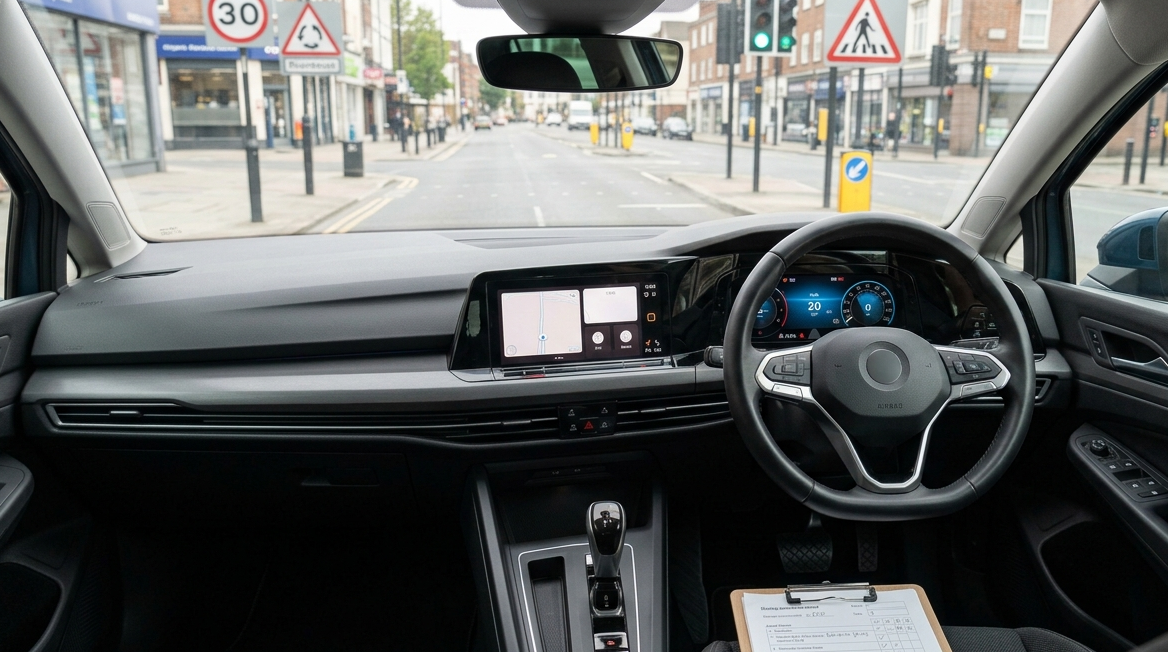
Knowing internal and external car vocabulary makes vehicle maintenance, safety checks, and dashboard monitoring simple.
Vehicle Control & Gauge Layout:
[Steering Wheel] ──> Controls Direction
[Pedals: Clutch | Brake Pedal | Accelerator] ──> Controls Speed & Gear Engagement
[Dashboard: Speedometer | Tachometer | Odometer | Fuel Gauge] ──> Displays Status
Steering & Interior Controls
- Steering Wheel: The circular control wheel turned by the driver to direct the car.
- Gear Shift / Gearbox: The lever and transmission assembly used to switch gears in manual or automatic vehicles.
- Transmission: The mechanical system that transfers power from the engine to the wheels.
- Clutch: The left pedal in manual cars, pressed to disengage the engine when changing gears.
- Brake Pedal: The foot pedal pressed to reduce speed or bring the vehicle to a complete stop.
- Accelerator (Gas Pedal): The right pedal pressed to feed fuel to the engine and speed up.
- Dashboard: The primary instrument panel located directly in front of the driver.
- Speedometer: The gauge displaying your current traveling speed.
- Tachometer: The dashboard instrument measuring engine rotation speed in revolutions per minute (RPM).
- Odometer: The display measuring total distance traveled by the vehicle.
- Fuel Gauge: The instrument showing remaining fuel capacity in the tank.
- Ignition: The switch mechanism that connects the electrical system and starts the engine.
- Horn: The warning device on the steering wheel used to alert others to danger.
- Handbrake / Parking Brake: The mechanical lever or electronic button used to secure a parked vehicle.
- Cruise Control: An electronic system that automatically maintains a set road speed without continuous pedal pressure.
Mirrors & Visibility Systems
- Rearview Mirror: The central mirror attached to the windshield for checking traffic behind your vehicle.
- Side Mirrors (Wing Mirrors): External door mirrors used to monitor adjacent lanes and traffic behind you.
- Blind Spot: Areas beside and behind the vehicle that cannot be seen directly through mirrors.
- Windshield (Windscreen): The front glass window protecting occupants from wind, rain, and debris.
- Windshield Wipers: Motorized rubber blades that clean water, snow, and dirt from the windshield.
- High Beams / Low Beams: Headlight settings—low beams for regular night driving, high beams for unlit rural roads.
- Fog Lights: specialized lamps designed to illuminate the road through thick fog, heavy rain, or snow.
Exterior & Engine Components
- Tire / Tyre: The durable rubber covering mounted on the wheel rim that maintains traction.
- Wheel: The metal rim assembly supporting the tire.
- Trunk / Boot: The rear storage compartment used for luggage, tools, and emergency gear.
- Hood / Bonnet: The hinged cover protecting the car’s engine compartment.
- Engine: The engine or motor that generates mechanical power.
- Headlights & Taillights: Front lamps illuminating the road ahead and red rear lamps signaling presence and braking.
- Hazard Lights: Four-way simultaneous flashing signals indicating emergency stops or hazards.
- Indicators / Turn Signals: Flashing amber lights indicating intended turns or lane changes.
Dashboard Warning Lights Vocabulary
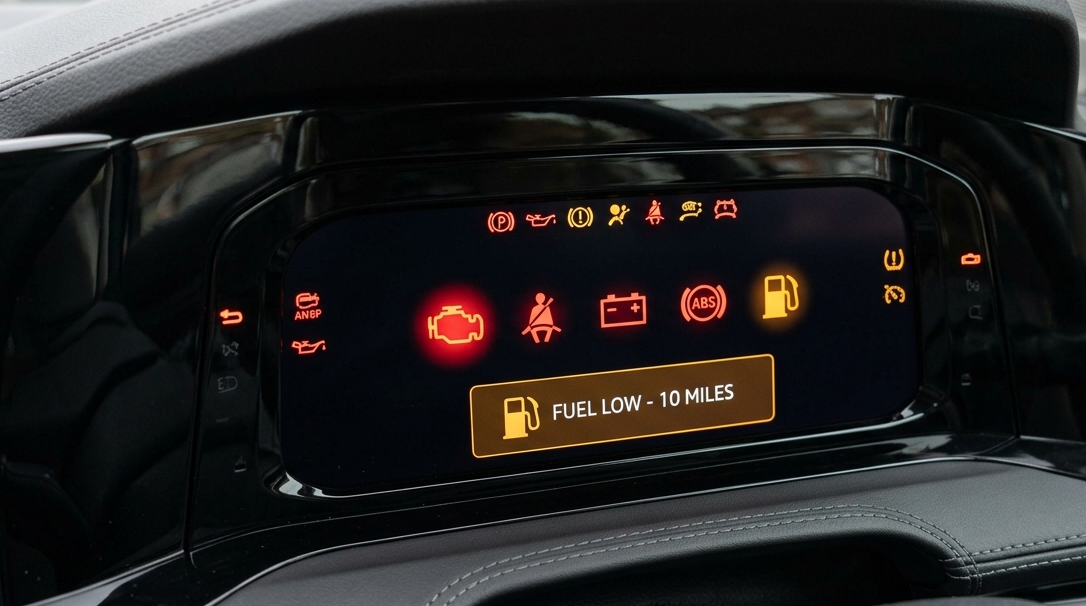
Modern vehicles use dashboard warning symbols to alert drivers to potential safety or mechanical issues.
Warning Light Severity:
[Red Light] ──> Immediate Danger / Stop Safely (e.g., Oil Pressure, Brake System)
[Amber / Yellow Light] ──> Warning / Maintenance Needed Soon (e.g., Check Engine, ABS)
- Check Engine Light: An amber dashboard icon indicating an engine control or emissions system malfunction.
- ABS Light: A warning indicator showing a fault within the Anti-lock Braking System.
- Battery Warning Light: A red symbol alerting the driver that the charging system or battery is failing.
- Oil Pressure Light: A critical red warning light indicating dangerously low engine oil pressure.
- Tire Pressure Light (TPMS): An indicator signaling that one or more tires have low air pressure.
- Coolant Temperature Light: A warning symbol alerting you that the engine is overheating.
- Airbag Warning Light: An indicator showing a fault in the supplemental restraint system (SRS).
Driving Actions & Driving Verbs
These standard driving verbs describe physical movements, speed management, and vehicle control.
| Verb | Meaning | Example Sentence |
| Accelerate | Increase speed. | Accelerate smoothly when entering the highway. |
| Brake | Apply force to slow down or stop. | Brake early when approaching a red light. |
| Decelerate | Reduce speed gradually. | Decelerate before taking a sharp turn. |
| Merge | Join an active traffic lane. | Match traffic speed when you merge onto the freeway. |
| Yield / Give Way | Let other vehicles or pedestrians proceed first. | Yield to oncoming cars when turning left. |
| Overtake / Pass | Move past a slower vehicle ahead. | Check your blind spot before trying to overtake. |
| Reverse / Back Up | Drive the vehicle backward. | Look over your shoulder when you reverse out of a driveway. |
| Pull Over | Move to the side of the road and stop. | The emergency vehicle signaled for traffic to pull over. |
| Pull In | Enter a parking space, driveway, or service station. | Let’s pull in here to grab a quick coffee. |
| Steer | Guide direction using the steering wheel. | Steer firmly through the curve to maintain your position. |
| Park | Stop the vehicle completely and turn off the engine. | Park inside marked lines. |
| Swerve | Turn sharply to avoid an obstacle. | He had to swerve to avoid a fallen branch. |
| Tailgate | Drive dangerously close behind another car. | Tailgating reduces your stopping distance significantly. |
Road & Traffic Infrastructure Vocabulary
Mastering road vocabulary and traffic vocabulary makes map reading and navigation straightforward.
Infrastructure Layout:
[Sidewalk / Pavement] | [Crosswalk] | [Lanes] | [Median] | [Hard Shoulder]
- Lane: A marked strip of roadway designated for a single line of vehicles.
- Highway / Freeway / Expressway: Multi-lane high-speed public roads built for long-distance traffic.
- Motorway: The standard British English term for controlled-access, high-speed highways.
- Street / Road / Avenue: Urban thoroughfares accommodating vehicles and pedestrians.
- Junction / Intersection: A place where two or more roads cross or join together.
- Roundabout: A circular junction where traffic flows continuously around a central island.
- Crosswalk / Zebra Crossing: Marked road sections designated for pedestrian crossings.
- Sidewalk / Pavement: A raised paved walkway alongside roads intended for pedestrians.
- Median / Central Reservation: A barrier or grass strip separating opposing direction lanes.
Highway & Long-Distance Driving Vocabulary
Highway driving requires familiarity with specific vocabulary for exits, lanes, and rest areas.
- Exit Number: A numerical identifier assigned to specific highway off-ramps.
- Interchange: A system of interconnecting roadways allowing traffic to move between intersecting highways without stopping.
- Overpass & Underpass: Bridges that carry one road over another road (overpass) or allow a road to pass beneath another structure (underpass).
- Service Area / Rest Stop: Designated roadside facilities offering fuel, food, restrooms, and parking space for drivers.
- HOV Lane / Carpool Lane: High-Occupancy Vehicle lanes reserved exclusively for cars carrying two or more passengers.
- Hard Shoulder: The emergency strip along high-speed roads reserved strictly for breakdowns and emergency vehicles.
Parking & Maneuver Vocabulary
Parking maneuvers require clear spatial language and precise vehicle positioning terms.
| Parking Term | Definition | Contextual Example |
| Parallel Parking | Parking parallel to the curb between two stationary vehicles. | Parallel parking is a mandatory skill evaluated during practical exams. |
| Angle Parking | Parking a car at an angle (usually 45 degrees) relative to the curb. | Angle parking is common in wide shopping center parking lots. |
| Perpendicular Parking | Parking at a 90-degree right angle to the curb or wall. | Align your vehicle carefully when performing perpendicular parking. |
| Parking Meter | A coin or card-operated device measuring paid parking time limits. | Insert payment into the parking meter before leaving your vehicle. |
| Parking Permit | An official sticker or digital pass granting permission to park in specific zones. | Residential zones often require a valid parking permit. |
| No Parking Zone | A restricted road segment where vehicle parking is prohibited by law. | Parking in a no parking zone can result in a fine or tow. |
| Valet Parking | A service where an attendant parks and retrieves your car for you. | The hotel offers complimentary valet parking for guests. |
| Disabled Parking | Reserved parking bays designated exclusively for permit holders with disabilities. | Always keep disabled parking spaces open for permit holders. |
| Parking Garage / Multi-story | A dedicated multi-level building designed for vehicle parking. | Park on the third floor of the multi-story parking garage. |
Traffic Signs & Rules Vocabulary
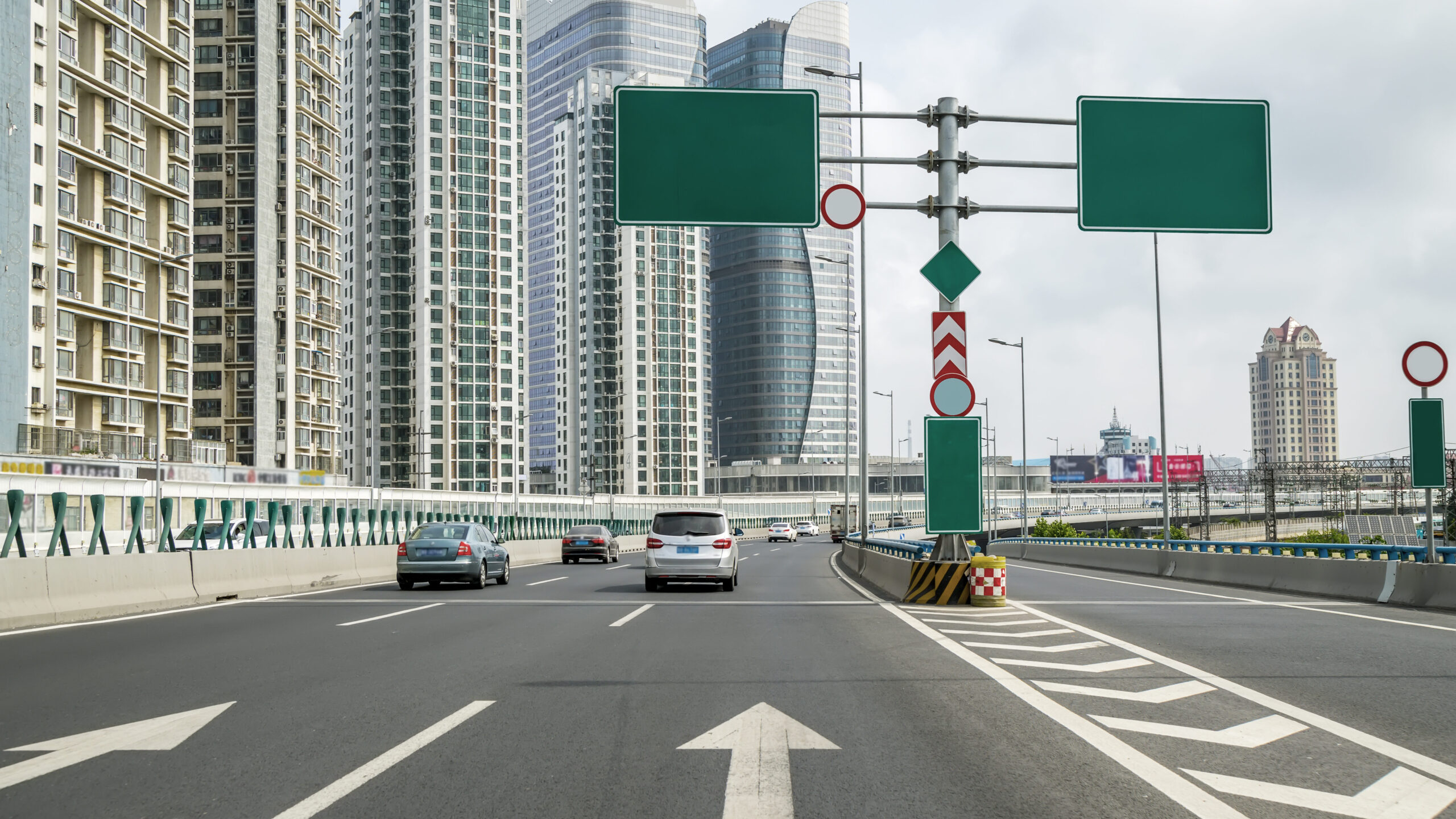
Recognizing road signs vocabulary helps you comply with legal speed limits and right-of-way rules.
Traffic Sign Classification:
├─ Regulatory Signs: Stop, Yield, Speed Limit, No Entry, One Way, No Parking
├─ Warning Signs: School Zone, Railroad Crossing, Pedestrian Crossing, Road Closed
└─ Directional Signs: Detour, Highway Exit Signs, Toll Warnings
- Stop Sign: An octagonal red sign requiring drivers to come to a complete halt.
- Yield Sign / Give Way: A triangular sign instructing drivers to grant priority to existing traffic.
- Speed Limit: The legal maximum speed permitted on a section of road.
- One-Way Street: A street on which vehicles are permitted to move in one direction only.
- No Entry: A regulatory sign indicating vehicle entry is prohibited.
- School Zone: Road segments near schools featuring lowered speed limits and safety warnings.
- Railroad Crossing: An intersection where a road crosses railway tracks.
- Pedestrian Crossing: A marked roadway zone indicating frequent pedestrian foot traffic.
- U-Turn / No U-Turn: Making a 180-degree turn to reverse direction (or signs prohibiting this action).
- Detour: A temporary route bypassing closed roads or construction work.
- Road Closed: A barrier sign indicating passage is blocked completely.
Weather & Driving Conditions Vocabulary
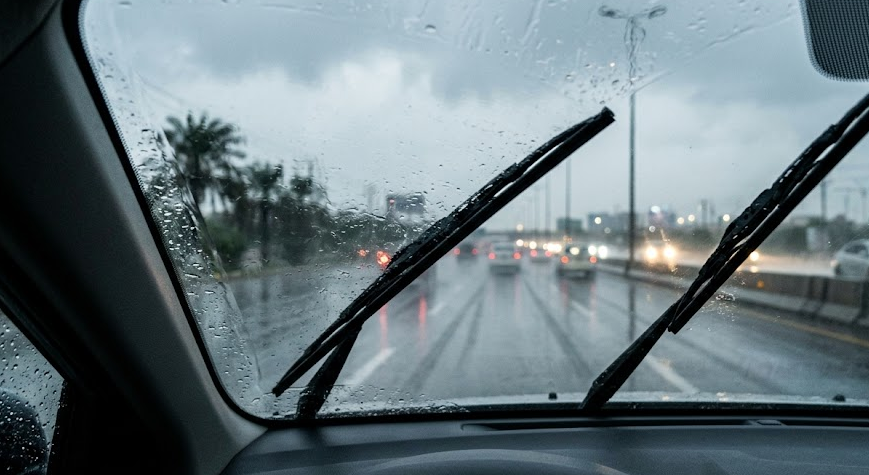
Adverse weather impacts road traction and visibility. Understanding weather terms helps you react safely.
- Fog: Thick ground-level cloud cover that severely restricts driving visibility.
- Snow & Hail: Frozen precipitation that creates slick road surfaces and reduces grip.
- Heavy Rain: Intense rainfall causing water accumulation and hydroplaning risks.
- Slippery Road: A road surface with reduced friction due to wet leaves, ice, or oil.
- Icy Road / Black Ice: Transparent ice sheets formed on road surfaces that are difficult to see.
- Wet Pavement: Damp asphalt requiring increased stopping distances.
- Reduced Visibility: Poor sight conditions caused by heavy fog, smog, rain, or snowfall.
Breakdown, Safety & Emergency Vocabulary
Knowing emergency terms ensures you can request assistance efficiently during mechanical trouble.
Breakdown Safety Steps:
[Hazard Lights On] ──> [Pull to Shoulder] ──> [Set Triangle] ──> [Call Roadside Assistance]
- Breakdown: A sudden mechanical or electrical failure that stops a vehicle from driving.
- Jump Start: Connecting booster cables from a working battery to start a car with a dead battery.
- Flat Battery: A vehicle battery that has lost its electrical charge completely.
- Tow Truck: A specialized recovery vehicle used to transport disabled cars.
- Roadside Assistance: An emergency service providing breakdown help, towing, fuel delivery, and tire changes.
- Emergency Triangle: A reflective red triangle placed behind a stopped vehicle to alert traffic.
- First Aid Kit: A collection of medical supplies kept in a vehicle for emergency treatment.
- Spare Tire (Donut): An extra wheel stored in the vehicle to replace a flat or damaged tire.
- Jack & Wheel Wrench: Mechanical tools used to lift a car and loosen lug nuts during a tire change.
Navigation & Route Vocabulary
Navigation terms are essential when setting routes, following spoken GPS directions, or planning trips.
- GPS (Global Positioning System): Satellite navigation technology used to calculate precise location and route guidance.
- Navigation System: The onboard computer or smartphone application providing step-by-step directions.
- Route: The chosen path taken to travel between a starting point and a destination.
- Destination: The end point or final location of your journey.
- Rerouting: The automatic calculation of a new path when a driver strays from the original route or encounters delays.
- Voice Guidance: Spoken audio prompts provided by a GPS navigation system.
- Waypoint: An intermediate stopping point or milestone along a planned route.
Fuel, EV & Economy Vocabulary
Refueling and energy management language differs between traditional fuel vehicles and electric models.
| Term | Definition | Example Sentence |
| Unleaded | Standard petrol fuel formulated without lead additives. | Most modern gasoline cars run on standard unleaded fuel. |
| Premium Fuel | High-octane fuel designed for high-performance engines. | Check your owner’s manual before filling up with premium fuel. |
| Diesel | A heavy compression-ignition fuel used in diesel engines. | Ensure you don’t accidentally put petrol into a diesel engine. |
| Octane Rating | A standard measure of fuel stability and performance resistance to engine knocking. | Performance sports cars usually require high octane ratings. |
| Charging Station / EV Charger: | Equipment that supplies electric energy to recharge electric vehicles. | We stopped at a rapid charging station during our trip. |
| Fuel Economy: | The efficiency with which a vehicle converts fuel into distance traveled. | Smaller cars generally deliver superior fuel economy. |
| Miles Per Gallon (MPG): | The US/UK measure of vehicle fuel efficiency. | This hybrid achieves over 50 miles per gallon in city driving. |
| Kilometers Per Liter (km/L): | The metric unit for measuring vehicle fuel efficiency. | Compact vehicles can achieve over 18 kilometers per liter. |
Road Safety & Vulnerable Road Users
Understanding key safety concepts keeps drivers alert to vulnerable road users and legal responsibilities.
- Defensive Driving: A driving strategy focused on anticipating hazards and avoiding accidents proactively.
- Safe Following Distance: The buffer space maintained behind a leading vehicle (measured by the 2-second or 3-second rule).
- Distracted Driving: Operating a vehicle while engaging in non-driving activities like texting, calling, or adjusting controls.
- Speeding: Exceeding the legally posted speed limit or driving too fast for road conditions.
- Seat Position: Adjusting the driver’s seat correctly to maintain posture, pedal access, and airbag clearance.
- Child Safety Seat: A specialized restraint system designed to protect young children in collisions.
- Pedestrian: Any person traveling on foot alongside or across roads.
- Cyclist & Motorcyclist: Operators of bicycles or motorcycles who share the roadway and require safe passing distances.
Driving Test Vocabulary & Examiner Commands
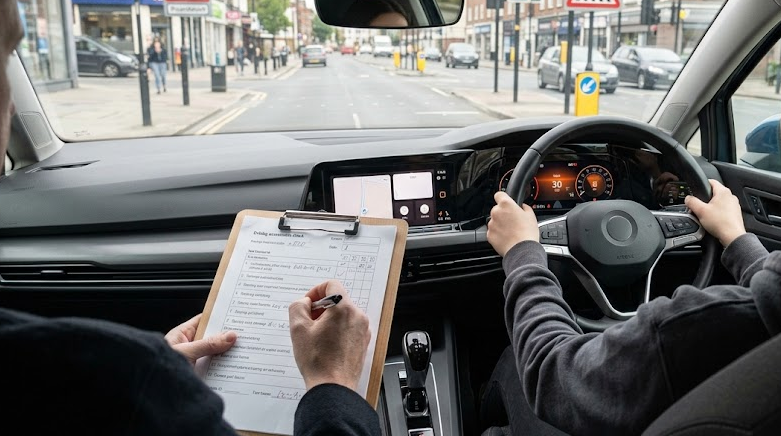
Preparing for a practical exam requires understanding key driving test vocabulary and examiner expectations.
Exam Skill Steps:
[Mirror Checks] ──> [Observation Routine] ──> [Hazard Perception] ──> [Maneuver Execution]
- Examiner: The certified official observing and evaluating your driving performance.
- Blind Spot Check: Turning your head to look over your shoulder past car pillars before moving off or turning.
- Hazard Perception: Scanning the road continuously to spot potential dangers early.
- Right of Way: The legal right or priority of a vehicle or pedestrian to proceed first.
- Observation: Monitoring mirrors, blind spots, and surrounding road conditions constantly.
- Emergency Stop: Performing a prompt, safe braking maneuver on command without losing control.
- Lane Discipline: Maintaining central lane positioning and selecting correct directional lanes early.
- Examiner Feedback: The summary review given after your test highlighting minor errors or critical faults.
British vs. American Driving Vocabulary
Driving terminology varies between British (UK) and American (US) English. This comparison table highlights key differences:
| UK Term | US Term | Meaning |
| Boot | Trunk | Rear luggage storage compartment. |
| Bonnet | Hood | Protective metal cover over the engine. |
| Petrol / Petrol Station | Gas / Gas Station | Fuel and the retail location where it is purchased. |
| Motorway | Highway / Freeway | High-speed multi-lane road network. |
| Indicator | Turn Signal / Blinker | Flashing amber lights indicating turns. |
| Windscreen | Windshield | Front glass window of a vehicle. |
| Tyre | Tire | The rubber wheel cover contacting the road. |
| Zebra Crossing | Crosswalk | Marked pedestrian crossing path. |
| Car Park | Parking Lot | Designated area for vehicle parking. |
| Dual Carriageway | Divided Highway | Road with a central median separating opposing traffic. |
| Number Plate | License Plate | Metal registration plate on front and rear of a vehicle. |
| Pavement | Sidewalk | Raised walkway alongside roads for pedestrians. |
| Slip Road | Entrance / Exit Ramp | Connecting road for entering or exiting high-speed roads. |
Common Driving Phrasal Verbs
Mastering driving phrasal verbs makes understanding spoken directions natural and clear.
- Pull Over: Move to the side of the road and come to a stop.“The police officer signaled for the vehicle to pull over.”
- Pull In / Pull Into: Enter a parking space, driveway, or service station.“Let’s pull into the next service station to refuel.”
- Back Up: Drive the car backward in reverse.“Back up carefully so you don’t hit the curb behind you.”
- Speed Up: Increase traveling speed.“Speed up to match highway traffic when merging from an entrance ramp.”
- Slow Down: Decrease traveling speed.“Slow down as you enter an active school zone.”
- Fill Up: Fill the fuel tank completely.“We should fill up the tank before starting our long road trip.”
- Cut Off: Pull sharply in front of another vehicle without maintaining safe spacing.“That driver cut me off without using a turn signal!”
- Turn Around: Reverse traveling direction completely.“We missed our highway exit; we will need to turn around at the next junction.”
Driving Expressions & Idioms
English contains many popular driving expressions and driving idioms borrowed directly from driving terms.
- Hit the Road: To depart or begin a journey.Example: “It’s getting late, so let’s hit the road before evening rush hour.”
- Backseat Driver: A passenger who gives unwanted driving advice or criticism.Example: “Stop telling me when to change lanes—don’t be such a backseat driver!”
- In the Driver’s Seat: To be in full control of a situation.Example: “After her promotion, Sarah is firmly in the driver’s seat of the project.”
- On the Right Track: Making good progress toward a goal.Example: “Your driving test preparation is going well; you are on the right track.”
- At a Crossroads: Reaching a point where a major decision must be made.Example: “He is at a crossroads in his career and must choose a new path.”
- Put the Brakes On: To slow down, pause, or cancel a project or plan.Example: “Management decided to put the brakes on the new expansion project.”
Driving Vocabulary by Situation & Use Case
1. Driving Vocabulary by CEFR Level
- A1–A2 (Beginner): Car, road, drive, stop, brake, traffic light, turn left, turn right, gas station, park.
- B1–B2 (Intermediate): Accelerate, merge, yield, blind spot, overtake, parallel park, roundabout, hazard lights, shoulder, highway, sedan, ABS, breakdown.
2. For International Exams (IELTS / TOEFL)
Driving terms appear frequently in listening sections (map/direction prompts) and speaking tests (describing trips). Focus on phrases like: heavy traffic congestion, public transit infrastructure, alternative routes, commuter patterns, and road safety regulations.
3. For Immigrants, Learners & Tourists
If renting a vehicle abroad or adjusting to local driving rules:
- Rental Counter Terms: Unlimited mileage, insurance coverage, collision damage waiver, full-to-full fuel policy.
- Breakdown Terms: Tow truck, roadside assistance, flat tire, dead battery, emergency triangle, spare tire.
Pronunciation & Learning Tips
- Tire / Tyre: Pronounced
/ˈtaɪər/(rhymes with fire). - Windshield / Windscreen: Pronounced
/ˈwɪnd.ʃiːld/(wind-shield) vs./ˈwɪnd.skriːn/(wind-screen). - Accelerate: Pronounced
/əkˈsel.ə.reɪt/(ak-SEL-er-ayt). - Gauge (Fuel Gauge): Pronounced
/ɡeɪdʒ/(sounds like gage, not gawge).
Practical Memory Strategies
- Commentary Driving: Describe your actions out loud while practicing (“Checking rearview mirror, signaling left, checking blind spot, executing lane change”).
- Flashcards & Diagrams: Label diagrams of dashboard controls, warning lights, body styles, and intersections to reinforce recall.
Real-Life Driving Conversation Examples
Scenario 1: Taking Directions on a Road Trip
Driver (Alex): “Which exit do I take at this roundabout?”
Passenger (Sam): “Take the third exit toward the city center. Make sure to signal before you exit.”
Driver (Alex): “Got it. Should I switch lanes now?”
Passenger (Sam): “Yes, check your side mirror and blind spot first—there’s a motorcycle in your blind spot.”
Scenario 2: Practical Driving Exam Feedback
Examiner: “You handled the parallel parking maneuver well, but remember to perform full mirror and shoulder checks before moving off.”
Learner: “Thank you. I’ll make sure to check my blind spots more carefully next time.”
Examiner: “Good. Your overall lane discipline and speed control were excellent.”
Common Driving Vocabulary Mistakes
Avoid these common vocabulary and spelling mix-ups:
- ❌ Brake vs. Break:
- Incorrect: Press the break to stop the car.
- Correct: Press the brake to stop the car. (Break means to fracture or shatter).
- ❌ Stationary vs. Stationery:
- Incorrect: The vehicle hit a stationery pole.
- Correct: The vehicle hit a stationary pole. (Stationery refers to writing paper and office supplies).
- ❌ Lane vs. Line:
- Incorrect: Keep driving inside your line.
- Correct: Stay inside your marked lane. (Lines are painted markings; lanes are where vehicles travel).
- ❌ Yield vs. Stop:
- Incorrect: You must yield completely even if no cars are coming.
- Correct: You yield by slowing down and giving right-of-way, coming to a full stop only if traffic is present.
Expanded Driving Vocabulary Quiz
Test your understanding of key terms with this 10-question review:
- What action are you taking when you look over your shoulder before switching lanes?
- A) Parallel parking
- B) Blind spot check
- C) Emergency stop
- D) Tailgating
- What is the British English word for a car’s “Trunk”?
- A) Bonnet
- B) Boot
- C) Pavement
- D) Indicator
- What dashboard warning light indicates dangerously low engine oil pressure?
- A) ABS light
- B) Oil pressure light
- C) Check engine light
- D) TPMS light
- Which sign instructs you to give priority to other traffic without requiring a full stop if the road is clear?
- A) Stop sign
- B) Yield sign / Give Way
- C) No Entry sign
- D) Speed limit sign
- Which pedal is pressed to disengage the engine from the transmission in a manual car?
- A) Accelerator
- B) Brake pedal
- C) Clutch
- D) Parking brake
- What instrument on the dashboard measures the total distance a car has traveled?
- A) Speedometer
- B) Odometer
- C) Fuel gauge
- D) Tachometer
- What type of car body style features an open rear cargo bed?
- A) Sedan
- B) Hatchback
- C) Pickup truck
- D) Coupe
- What safety system prevents car wheels from locking up during sudden emergency braking?
- A) Cruise control
- B) ABS (Anti-lock Braking System)
- C) Traction control
- D) Airbag
- What term describes driving along the emergency strip beside a motorway during a vehicle breakdown?
- A) Pulling into the median
- B) Stopping on the hard shoulder
- C) Swerving onto the sidewalk
- D) Merging into the HOV lane
- What phrasal verb means to steer your vehicle to the side of the road and come to a stop?
- A) Pull in
- B) Pull over
- C) Cut off
- D) Speed up
(Answers: 1: B | 2: B | 3: B | 4: B | 5: C | 6: B | 7: C | 8: B | 9: B | 10: B)
Driving Vocabulary Glossary
| Word | Definition |
| Accelerator | The foot pedal pressed to increase vehicle speed. |
| Brake Pedal | The foot pedal pressed to slow down or stop the car. |
| Clutch | The pedal in manual cars used to switch transmission gears. |
| Dashboard | The interior instrument panel displaying speed, fuel, and warning lights. |
| Merge | Joining an active traffic lane smoothly from an entrance ramp. |
| Yield / Give Way | Granting priority to other vehicles or pedestrians before proceeding. |
| Overtake | Passing a slower moving car in an adjacent lane. |
| Blind Spot | An unmonitored area around the vehicle not visible through mirrors alone. |
| Roundabout | A circular junction where traffic flows around a central island. |
| Hazard Lights | Simultaneous flashing turn signals used to indicate an emergency or stopped vehicle. |
| Learner’s Permit | An entry-level permit allowing beginner drivers to practice under supervision. |
| Tow Truck | A recovery vehicle used to transport disabled cars following a breakdown. |
Frequently Asked Questions
What is driving vocabulary?
Driving vocabulary is the dedicated collection of English words, phrases, abbreviations, and technical terms used to describe vehicle operation, road signs, traffic laws, car parts, warning lights, emergency situations, and driving exam instructions.
Why is learning driving vocabulary important?
Learning vocabulary for driving ensures personal safety on public roads, helps drivers interpret highway codes, enables effective communication during mechanical breakdowns, and helps candidates pass practical driving tests.
What vocabulary is needed for a driving test?
Driving test candidates should know examiner commands and maneuver terms, including parallel parking, three-point turn, blind spot check, emergency stop, lane discipline, hazard perception, and right of way.
Is driving vocabulary different in British and American English?
Yes. Significant terminology differences exist between British (UK) and American (US) English. For instance, UK drivers use boot, bonnet, petrol, motorway, and indicator, whereas US drivers use trunk, hood, gas, highway, and turn signal.
What are common driving action verbs?
Essential driving verbs include accelerate, brake, decelerate, steer, merge, yield, overtake, pass, reverse, back up, pull over, and swerve.
How can I improve my english driving vocabulary effectively?
You can build english vocabulary for driving test prep and general driving by practicing with categorized word lists, studying visual diagrams of car parts and warning lights, watching driver POV videos online, and using commentary driving during lessons.
Final Thoughts
Mastering driving vocabulary goes beyond simply passing your written test or practical exam—it’s about building real confidence behind the wheel. From recognizing dashboard warning lights to handling emergency breakdowns and navigating unfamiliar roads, understanding the right terms helps you drive more safely and communicate more effectively in real-world situations.
Start by learning the core driving terms, practice common maneuvers, familiarize yourself with road signs and vehicle controls, and review your knowledge regularly. The more you use these words in everyday situations, the more natural they’ll become.
If you’re working on your overall language skills, you might also find our AP Spanish Language Vocabulary guide useful for expanding your Spanish vocabulary.