
Step inside a normal school today, and you will notice how much education has changed. Students are using Chromebooks, interactive whiteboards are replacing traditional boards, and digital platforms have become a regular part of classroom learning. The best modern teaching methods are no longer about teachers simply delivering information; they are about helping students participate, create, and solve problems. Technology is not just an extra tool anymore—it has become part of everyday learning. Unlike classrooms twenty years ago, where students mostly memorized facts for exams, today’s education focuses on creativity, critical thinking, collaboration, and real-world skills needed for the future.
Because of that shift, old-school lecturing just doesn’t cut it anymore. If you stand up there and talk for fifty minutes, you lose them to daydreaming or hidden phones. That is why teachers everywhere are throwing out the old playbook. We are moving toward active, chaotic, technology-driven spaces where kids actually have to build, question, and solve things themselves. The modern teaching methods aren’t about letting screens replace us; they’re about forcing students to actually show up and participate in their own learning.
Quick Answer
What are the best modern teaching methods?
The most effective modern strategies right now are student-centered learning, project-based learning (PBL), inquiry models, flipped classrooms, personalized paths, gamification, and targeted AI tools. Instead of letting kids sit there passively, these methods lean on active doing, integrate everyday technology naturally, and let students move at their own speeds so they actually learn how to think critically.
What Does “Modern” Even Mean in a Classroom?
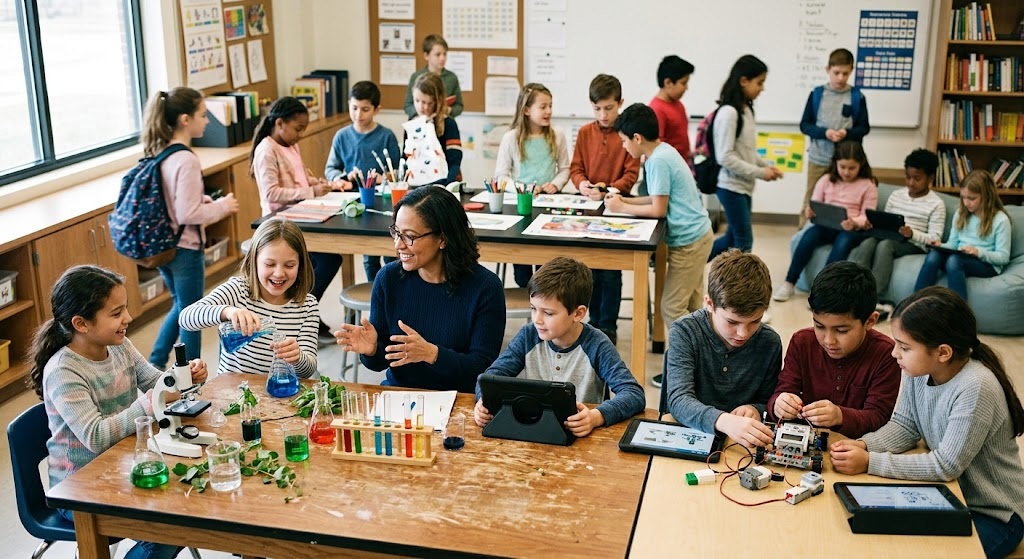
Strip away the buzzwords. A modern method is simply shifting who does the heavy lifting in the room. In an old classroom, the teacher does all the talking. In a modern setup, the student is the one working.
If you look at a classroom that actually works today, it usually boils down to three things:
- Doing, Not Just Listening: Students run real experiments, argue out solutions in groups, and build things instead of just copying definitions off a slide.
- Tech That Makes Sense: Using an LMS or tablet apps because it genuinely makes the lesson better, not just to look fancy for an administrator’s walk-through.
- Bending the Pace: Letting lessons adapt to where a kid is actually stuck, rather than dragging forty completely different students through a textbook at the exact same rigid speed.
When you make this switch, the payoff is obvious. Engagement goes up because the work feels connected to the real world, and kids start picking up the digital literacy skills they actually need for life after graduation.
Why the Old Way Is Breaking Down in 2025–2026
We’re living through a massive AI shift that’s turning every single industry upside down. Knowing a historical date or a specific math formula by heart just isn’t the flex it used to be when a kid can get the answer from an app in three seconds.
The world doesn’t need human encyclopedias anymore. It needs people who can look at a mountain of data, spot the biases, and use tech tools ethically. Groups like UNESCO and the OECD keep screaming this from the rooftops: if we don’t build student-centered, tech-heavy classrooms, we are failing to teach the critical thinking skills these kids actually need.
Besides, these kids have never known a world without internet. Trying to teach them using only a dusty chalkboard and a 500-page textbook creates a total disconnect. Modern teaching methods just meet them where they already live, turning passive, mindless screen time into collaborative problem-solving.
Honest Review: The Top 15 Modern Teaching Methods
Let’s cut through the hype. Not every strategy works perfectly. Some sound incredible on paper but turn your classroom into a circus or take up every single weekend with grading. Here is the real breakdown of what works and what hurts.
1. Student-Centered Learning
This is the big umbrella strategy. You stop acting like the absolute ruler of the room and start acting like a facilitator or a learning coach.
- The Ugly Truth: It builds immense personal accountability. But if your classroom management isn’t locked down tight, the room will devolve into total chaos within five minutes.
- What It Looks Like: Instead of lecturing on plant biology for an hour, you set up three different stations. The kids choose how they want to digest the information—one group dissects a seed, another watches a short digital breakdown, and pairs work together to label a physical model.
2. Project-Based Learning (PBL)
You give students a massive, messy, real-world problem, and they spend weeks working in teams to build a tangible solution.
- The Ugly Truth: When it works, the engagement is unmatched. Kids remember these projects for years. But the prep workload for teachers is brutal. Plus, you have to police the classic group-work nightmare where one kid does all the work while the other three sit back and scroll on their phones.
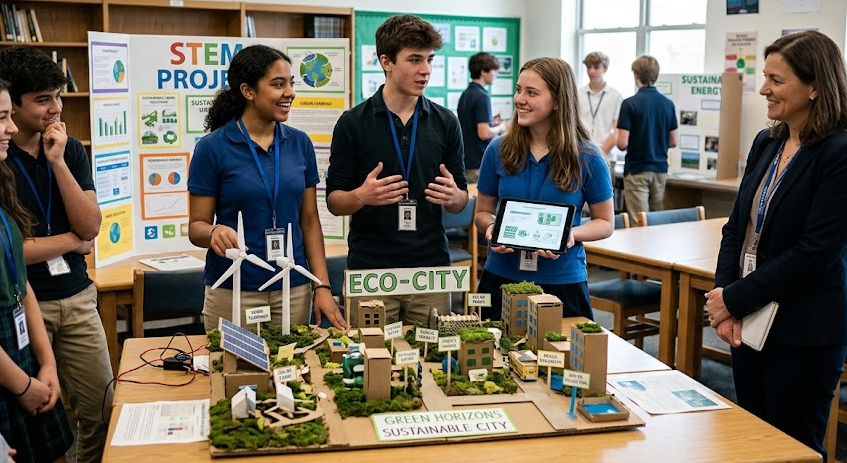
- What It Looks Like: A middle school class spends two weeks designing a model for a sustainable neighborhood. They use math for the building scales, science for the green energy grids, and public speaking to pitch their final blueprints to the rest of the class.
3. Inquiry-Based Learning
Instead of starting a lesson with a boring definition, you start with a weird mystery, a confusing scenario, or a massive question to hook their attention. It’s the classic John Dewey philosophy: learning by doing.
- The Ugly Truth: It builds incredible independent research habits. The catch? It eats up a ton of clock time. You can’t rush an inquiry lesson, which makes hitting rigid pacing guides incredibly stressful.
- What It Looks Like: Before saying a word about gravity, a teacher drops a heavy textbook and a single sheet of paper from a high ledge. “Why did the book hit first, and what happens if I crumple the paper?” The kids then have to design their own basic experiments to figure out the physics.
Modern learning requires moving beyond the textbook. To foster true inquiry-based skills, you need to guide students toward professional-grade research environments like JSTOR, where they can access the same primary sources and scholarly journals as college-level researchers.
4. Flipped Classroom
A decade ago, this sounded wild. Now it’s common. You record your short lectures or assign readings for homework, and then you use the actual school hours for what used to be homework—practice, debates, and problem-solving.
- The Ugly Truth: It completely changes how you use instructional time. Kids can pause or rewind your explanations at home, and they have you right there when they’re actually struggling with the math problems. The bottleneck? The three or four kids who never watch the videos at home leave you stuck playing catch-up during class.
- What It Looks Like: A high school math teacher uploads a 10-minute video explaining a formula for homework. The next day, the students spend the full hour working through tough practice problems together at their desks while the teacher walks around giving instant help.
5. Personalized Learning
You customize the entire educational journey—the content, the speed, the style—to fit each kid’s specific academic level.
- The Ugly Truth: It keeps your advanced kids from losing their minds with boredom and stops struggling kids from drowning. But it relies heavily on good data software, and sometimes you feel less like a teacher and more like an air traffic controller managing thirty separate planes.
- What It Looks Like: During reading time, an elementary teacher uses an app that changes the vocabulary difficulty of an historical article based on each kid’s last assessment. Everyone learns the same history, but the text matches their current reading level.
6. Differentiated Instruction
Similar to personalization, but instead of thirty separate tracks, you create three or four distinct learning pathways for different groups of kids inside the same room.
- The Ugly Truth: It ensures your visual, auditory, and hands-on learners all get what they need. The downside is a massive spike in teacher workload. You’re basically planning three versions of the exact same lesson every day.
- What It Looks Like: After a brief history chat, you give out three assignment options: write a summary paragraph, sketch out an illustrated timeline map, or record a quick mock interview podcast with a classmate.
7. Gamification
We’ve all seen it: a class that treats a standard worksheet like pulling teeth will suddenly go completely feral with competition if you turn that exact same info into a game. The material hasn’t changed, but participation doubles. You take gaming elements—points, leaderboards, digital badges—and paste them onto schoolwork.
- The Ugly Truth: Engagement goes through the roof, and it completely wipes out test anxiety. The major risk is that kids get so obsessed with winning the points that they stop caring about actually understanding the content.
- What It Looks Like: A teacher uses Kahoot or Quizizz to run a live vocabulary review. Kids blast through questions to score points, watching their names climb a shared digital leaderboard on the board.
Want to see this in action? Check out our Gamification Templates for Classroom Engagement to see how you can turn your next unit test into a competitive, digital-first experience that boosts participation instantly
8. Blended Learning
A deliberate mix of old-school, face-to-face teaching and digital software tools. It’s about balance.
- The Ugly Truth: It gets kids ready for the hybrid work environments they’ll see as adults, and it gives you great analytics dashboards to see who is struggling. But it requires a flawless 1:1 device ratio, which a lot of underfunded schools just can’t afford.
- What It Looks Like: A class splits down the middle: twenty minutes spent in a tight reading circle with the teacher, and twenty minutes using an interactive literacy app on their tablets to practice phonics.
9. Experiential Learning
This is pure, unadulterated “learning by doing.” You get the kids out of their seats and into real, lived experiences, followed by heavy reflection.
- The Ugly Truth: It creates deep, core memories and real emotional maturity. The problem is that these projects are usually expensive, logistically annoying to set up, and incredibly hard to grade with a standard rubric.
- What It Looks Like: A high school business class runs a real, small-scale coffee cart in the school lobby for a semester. They buy the inventory, manage the cash register, track real marketing budgets, and look at the weekly profit sheets to fix bad sales days.
10. Collaborative Learning
Pulling straight from Lev Vygotsky’s social development theories, this method groups kids together to brainstorm, solve tasks, or build presentations. It relies entirely on peer-to-peer learning.
- The Ugly Truth: It forces kids to practice empathy, fix communication breakdowns, and learn to compromise. But without strict, individual grading metrics, you always end up with one frustrated kid doing all the work while the others coast along.
- What It Looks Like: A teacher sets up “peer editing pairs” where students swap essay drafts, critique the arguments, and help correct each other’s writing before handing it in.
11. Competency-Based Learning
Kids move on to a new topic only after they have proven they 100% master the current one, regardless of how many days or weeks it takes them.
- The Ugly Truth: It completely destroys the hidden learning gaps that make kids fail later in life. The challenge is structural: our school systems are built on rigid semesters and calendar dates, making this model incredibly difficult to run at scale.
- What It Looks Like: In a modular math class, a kid cannot move from fractions to decimals until they score a 90% or higher on the fractions check-in. If they fail, they don’t get a D and move on—they get targeted practice until they genuinely get it down.
12. Adaptive Learning
Using educational software that changes the difficulty or layout of an assignment in real time based on how a student is answering.
- The Ugly Truth: It gives kids instant, custom feedback without forcing you to spend hours making thirty separate worksheets. The downside? It minimizes human interaction, and kids can get totally glazed-eyed if they spend too much time staring at an adaptive screen.
- What It Looks Like: If a kid aces three math problems in a row, the app automatically throws them a tough bonus challenge. If they miss the next one, the system backs up and drops a helpful hint box to coach them through the mistake.
13. Problem-Based Learning
Like PBL, but usually shorter and built around a specific, open-ended case study that kids have to dissect and resolve.
- The Ugly Truth: It refines real logic and teaches kids how to handle frustration and ambiguity. But because there’s rarely one “correct” answer, some students find the lack of direction incredibly stressful and shut down.
- What It Looks Like: An environmental science class gets a real report about a local park suffering from massive litter issues. The kids look up municipal recycling rules, calculate trash bin costs, and draft a formal proposal to pitch to the city council.
14. AI-Assisted Learning
Bringing safe, school-approved AI platforms into the daily routine to act as personalized assistant coaches for both teachers and students.
- The Ugly Truth: It gives every single kid an on-demand tutor while saving teachers hours of lesson-planning time. The massive battle here is making sure kids use AI as a tool to improve their thinking, rather than a lazy shortcut to write their essays for them.
- What It Looks Like: Students paste their creative essay drafts into a secure school AI tool. The program flags structural issues and suggests ways to make arguments clearer, letting the kids edit their work before a human teacher ever sees it.
If you want to see what adaptive tech looks like in action, platforms like Khan Academy are currently setting the pace by using AI-driven coaching to give students instant, personalized feedback while providing teachers with live performance dashboards.”
15. Microlearning
Breaking huge, complex subjects down into tiny, bite-sized mini-lessons followed by immediate practice, usually taking just a few minutes.
- The Ugly Truth: It matches natural attention spans perfectly and prevents cognitive overload during exhausting weeks. It’s perfect for quick reviews, but it falls flat when you need to teach deep, highly nuanced historical or philosophical topics that require sustained focus.
- What It Looks Like: Instead of a long, 40-minute presentation on writing rules, a teacher plays a 3-minute video on comma splices, followed immediately by two quick practice sentences on the board for the room to solve.
Traditional vs. Modern Teaching Methods
Let’s look at the two philosophies side-by-side to see how the daily rhythm changes:
| Evaluation Factor | Traditional Teaching Methods | Modern Teaching Methods |
| Teacher Role | Direct speaker and main source of facts | Coach, facilitator, and resource guide |
| Student Role | Passive listener and quiet note-taker | Active thinker, project creator, and researcher |
| Tech Use | Rare, separate, or completely banned from rooms | Seamlessly woven into everyday learning tasks |
| Main Grades | Heavy midterm and final exams | Continuous daily checks and project reviews |
| Classroom Aim | Rote memorization of terms and formulas | Critical thinking, collaboration, and problem solving |
The Real Breakdown: What Actually Works?
Look, no single modern method is a magic bullet. What works like a charm for a high school AP class will cause an absolute riot in a room full of third graders. You have to match the strategy to your actual goals.
The Best Methods by Your Goal
- For Pure Engagement: Gamification and Project-Based Learning (PBL). These turn passive, quiet rooms into active spaces where kids actually care about the scoreboard or the final product.
- For Critical Thinking: Inquiry-Based Learning and Problem-Based Learning. These force kids to question assumptions, sift through data, and build an argument from scratch.
- For Tech Integration: Adaptive Learning and AI-Assisted Learning. These use modern tech to give you real-time data and give kids instant feedback.
The Best Methods by Grade Level
- Elementary School (K-5): At this age, you are just trying to manage short attention spans and teach basic social habits. Gamification keeps boring drills fun, while Social-Emotional Learning (SEL) helps them learn how to share and communicate without losing their tempers.
- Middle School (6-8): Pre-teens are incredibly social and desperately want to know why their schoolwork matters. Project-Based Learning (PBL) channels that social energy into long-term team projects, while Inquiry-Based Learning taps into their natural urge to question everything.
- High School (9-12): Teenagers need strategies that prepare them for college or a real job. The Flipped Classroom teaches them independent time management, and Competency-Based Learning ensures they master foundational math or writing before moving into advanced placement tracks.
Which Modern Teaching Method Is Most Effective?
There is no single best teaching method for every classroom. Research consistently shows that the most effective classrooms combine several approaches based on student age, subject matter, and learning goals.
For daily engagement, Project-Based Learning and gamification often produce the fastest, most noticeable results. For long-term academic achievement, differentiated instruction and personalized learning remain the gold standards because they ensure no student is left behind. Meanwhile, for developing real workplace skills, collaborative learning and inquiry-based instruction are among the strongest choices available.
The most successful teachers units rarely rely on a single methodology. Instead, they act as instructional designers, blending these strategies to match the changing needs of their students throughout the school year.
Modern Education Across the United States
Across the United States, school districts are trying to scale these strategies to hit state and national testing benchmarks. Groups like the International Society for Technology in Education (ISTE) and the U.S. Department of Education routinely drop grants and framework models to push schools toward digital upgrades and STEM pathways.
In both public and charter systems, there is a massive shift toward career readiness. Instead of evaluating a kid’s potential based on how well they bubble in a multiple-choice sheet, districts are quietly updating their curricula to emphasize data literacy, basic coding, and collaborative problem-solving. It’s an uphill battle, but it’s the only way to ensure high school seniors are actually ready for a tech-heavy corporate job market or a competitive college setting.
The Real-World Roadblocks Teachers Face
Switching to an active, modern teaching style sounds beautiful in a textbook. In reality, teachers hit massive walls trying to implement this stuff:
- Underfunded Budgets: Buying tablets, VR headsets, adaptive platforms, and functional school-wide LMS tools is completely out of reach for thousands of underfunded public districts.
- Total Teacher Burnout: Moving away from a standard lecture model takes an immense amount of time. Without proper training and dedicated planning hours, teachers end up working until midnight every day just to prep an interactive lesson.
- The Digital Divide: If a flipped classroom relies on kids watching video lectures at home, students without reliable high-speed internet or a quiet home environment fall behind instantly.
- Institutional Inertia: Parents and administrators are used to traditional classrooms. When they see kids walking around, talking, and working on long-term projects instead of taking quiet quizzes, they get anxious and push back.
The secret to making it work is taking tiny steps. Successful schools don’t completely throw out their curriculum overnight. They gamify a single review unit or flip one lesson plan a week, slowly building momentum, tracking the data, and earning parent trust over time.
Future Trends: What’s Coming Next?
As we look toward the horizon, technology is only going to change the rhythm of the school day faster. We are already seeing early pilots of Virtual Reality (VR) environments and Augmented Reality (AR) tools. This lets a biology class take a virtual stroll through a human heart or a history class walk around ancient Roman ruins right from their school desks.
On top of that, learning analytics software is going to make tracking progress completely automatic. Instead of waiting for report cards or quarterly exams to figure out who is drowning, teachers will get live dashboard alerts the moment a kid’s daily assignment answers show a drop in understanding. It takes the guesswork out of data-driven teaching, making early, supportive human intervention incredibly simple.
Frequently Asked Questions
What are the best modern teaching methods?
The most effective ones are active: project-based learning, flipped classrooms, personalized instruction, gamification, and inquiry-focused setups. They focus on keeping kids doing and thinking instead of just sitting through long lectures.
What are the best modern teaching methods in 2025–2026?
The biggest trends right now are all about blending real human teaching with smart tech tools. That means using AI assistant apps, adaptive software platforms, and live data dashboards to tailor the work to each kid’s personal speed.
Which modern teaching method is most effective?
There isn’t one magic answer because every room is different. But student-centered learning and project-based learning (PBL) consistently score the highest marks in research studies for boosting engagement and long-term memory.
Is student-centered learning better than traditional teaching?
For most lessons, yes. It heavily improves critical thinking, social skills, and overall motivation. But old-school direct lecturing is still useful when you need to give a quick overview or explain lab safety rules before a project starts.
How is AI changing teaching methods?
AI works like an on-demand, private tutor for students, offering real-time essay suggestions or math clues. For teachers, it acts as an admin assistant that can draft lesson plans and track data, freeing up more face-to-face coaching time.
What are the best modern teaching methods in the United States?
U.S. schools focus heavily on building STEM tracks, meeting modern ISTE standards, and expanding hybrid learning options. There is also a major countrywide effort to prioritize social-emotional learning (SEL) and career readiness.