
So, can colleges see your digital footprint? Yes, at least the parts that are public, or that someone else makes public on your behalf. Admissions offices aren’t running a background check on every applicant’s entire online life. Nobody has the staff for that. What they can find, and what actually tends to matter, is narrower than most students assume, and also a little scarier once you understand where the gaps are.
This guide walks through what’s actually visible, what stays private, how colleges stumble onto content they weren’t looking for, and the practical steps to clean up your footprint before you hit submit.
Can Colleges See Your Digital Footprint? What Can They Find?
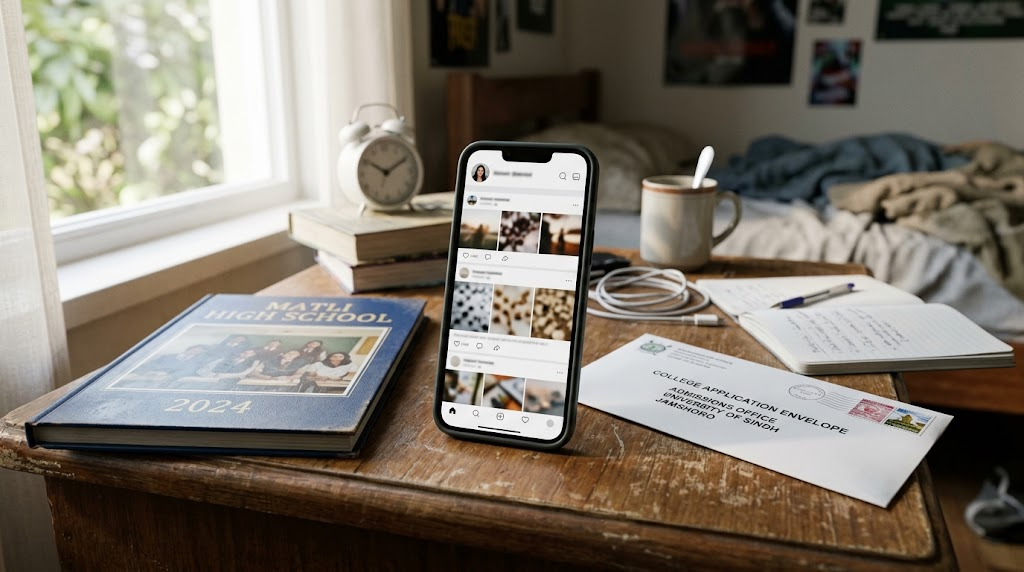
Anything publicly accessible online can potentially be found, even if it doesn’t appear in Google search results. Being publicly accessible doesn’t necessarily mean an admissions officer will actually find it, though — discoverability depends on things like your name, your usernames, how searchable your accounts are, and whether someone points the content out to the college. That includes public Instagram or TikTok posts, X posts, YouTube videos, personal blogs, portfolio sites, forum comments, and anything a news outlet or school website has published about you. It also includes content you didn’t post yourself — a photo a friend tagged you in on a public account, or a comment you left on someone else’s public thread years ago.
| What’s out there | Can a stranger typically see it? |
|---|---|
| Public Instagram, TikTok, or X posts | Yes |
| A personal website or portfolio | Yes |
| Public YouTube videos or channel activity | Yes |
| Comments left on public posts or forums | Yes |
| A private account’s posts | Not directly, but screenshots and reposts can leak out |
| Direct messages | No |
| Your personal Google search history | No |
| Deleted posts with no publicly available copies | Usually no |
That table is the honest version of the question. Public means public. Private means mostly private, with real exceptions worth taking seriously.
Do Colleges Check Your Digital Footprint for Every Applicant?
Not as a routine step, no. Reviewing every applicant’s full online history isn’t realistic for offices reading tens of thousands of files a season, and most admissions officers aren’t spending their limited time scrolling TikTok. Kaplan’s survey of admissions officers found that 28% said they had looked up an applicant’s social media, while 67% said doing so was “fair game” if they chose to. That’s a wide gap between what officers consider fair game and what they actually do.
What changes things is context. If a peer reports something, if a coach or teacher flags a concern, if a community member emails the admissions office directly, or if something in an application doesn’t line up, an officer is far more likely to go looking. So the real risk isn’t a routine audit. It’s a specific reason for someone to look, followed by whatever they find once they do.
Can Colleges See Your Digital Footprint Through Search?
When admissions officers do look, they’re not usually using anything exotic. The common paths are:
- A plain Google search of the applicant’s full name, sometimes paired with their city or high school
- Direct platform searches on Instagram, TikTok, X, or LinkedIn using a name or handle from the application
- Links the applicant provided, like a personal website, portfolio, or YouTube channel listed in the activities section
- Mutual connections and tagged content, where a public friend’s account leads back to a supposedly private one
- Reports from other people, including classmates, coaches, or community members who reach out directly
- Verification processes, where a disciplinary record or a discrepancy triggers a closer look at the full file
In many cases, no special software is necessary. A basic search, a platform lookup, or a link someone else shares can be enough to surface public content.
Do Colleges Look at Social Media Specifically?
Some do, some don’t, and it depends heavily on the school and the situation. When social media does come into play, that can include public profiles or posts on Instagram, TikTok, Facebook, X, LinkedIn, and YouTube. Officers are generally scanning for a mismatch between the applicant an essay describes and the person the public posts show, or for content that’s genuinely alarming: hate speech, threats, harassment, illegal activity, or academic dishonesty bragged about online.
On the flip side, a public presence that backs up your application can help. A student who writes about a robotics project and also has a YouTube channel documenting the build gives an officer something to confirm rather than question. The same goes for a writing portfolio, a public GitHub, or documented volunteer work. A digital footprint isn’t automatically a liability. It’s a liability when it contradicts your application, and an asset when it supports it.
A few areas where this tends to show up:
- Creative work — portfolios, writing samples, art, film, design
- Leadership and community involvement — documented volunteer work or project outcomes
- Academic interests — participation in field-specific communities, competitions, or public writing
- Athletic and extracurricular identity — team or club presence, local coverage, awards
Can Colleges See Your Social Media If It’s Private?
Not directly, and not by bypassing your settings. A private Instagram or locked X account generally isn’t visible to people who haven’t been approved to follow it, and colleges don’t have some special admissions backdoor that lets them get around that.
Private doesn’t mean invisible, though. Screenshots travel outside the app they were taken in. A follower can repost something publicly. A group chat can be forwarded well past the group it started in. Tagged photos on a friend’s public account can surface even if your own account is locked down. And an account you forgot existed from ninth grade might still be public, indexed, and one search away from anyone who looks.
A well-known 2017 case at Harvard illustrates how this can play out. According to reporting from The Harvard Crimson, Harvard rescinded admission offers for at least ten incoming students after learning about offensive memes shared in a private Facebook group chat. The content wasn’t publicly searchable in the ordinary sense. It reached the admissions office because someone shared information from the group.
In 2020, Inside Higher Ed reported that Marquette University rescinded an admission offer after screenshots of a racist Snapchat post circulated on Twitter, while Xavier University revoked another student’s offer after offensive, racially charged posts came to light. Neither student appears to have intended their post to travel as far as it did. The common thread across Harvard, Marquette, and Xavier is the same: content intended for a limited audience can become an admissions issue once someone with access shares it outside the original circle.
Can Colleges See Your Search History?
Generally, no. Admissions officers don’t normally have access to your personal Google or Bing search history simply because you applied to college, and no legitimate admissions process involves requesting it.
There’s an important distinction worth making here, because it gets confused constantly. FERPA generally governs the privacy of education records maintained by educational institutions — grades, transcripts, disciplinary files. It does not provide admissions officers with access to an applicant’s personal browsing history or private social media accounts. You can read the official FERPA overview from the Department of Education for the exact scope.

Can Colleges See Your Search History on Their Wi-Fi?
That’s a separate question from admissions screening. Network administrators at a school you’re already attending may have some visibility into activity on their own network, depending on how it’s configured, but that’s a network security and IT policy matter — unrelated to whether an admissions office can see your personal search history during the application process. The two get lumped together online, but they’re not the same system, the same rules, or the same people looking.
How Far Back Do Colleges Look at Your Digital Footprint?
There’s no fixed rule here, no official “we only look back three years” policy anywhere. What’s publicly visible stays potentially visible regardless of when it was posted. An account created in seventh grade that’s still active and public can potentially be found just like a newer account.
Does Middle School Content Count?
This is exactly why old, forgotten accounts are worth a second look before you apply. Most students don’t think about the Musical.ly account from 2019 or the meme page they ran in ninth grade, but if it’s still public, it’s still part of what a search turns up. Locking down or deleting old accounts is one of the highest-value, lowest-effort things you can do here.
What Colleges Usually Can’t See
It’s worth being just as clear about the limits, because a lot of the fear around this topic comes from not knowing where the line actually sits. Colleges generally cannot see:
- Your private messages or DMs on any platform
- The contents of a genuinely private or locked account
- Your personal search history, simply because you submitted a college application
- Private emails or files stored in a personal, non-school cloud account
- Content you deleted before anyone screenshotted or shared it
- Private group chats, unless a member of that group shares the content elsewhere
“Generally” is doing real work in that list. Every one of those has an exception if a human being decides to share what was supposed to stay private. For a closer look at privacy risks on Snapchat, see our guide to Snapchat privacy and security risks. Privacy settings can limit who sees your content, but they can’t stop someone who already has access from copying or sharing it further.
What If Someone Reports Your Social Media to a College?
A college doesn’t have to discover questionable content through a Google search or a screening tool. Another person can send an admissions office a screenshot, video, post, or link directly — a classmate, a coach, a parent from your school, even someone you’ve never met. Whether the school investigates or takes action depends on the circumstances and its own policies, but the important point is that public visibility isn’t the only way something can reach an admissions office. These cases show that content doesn’t have to be publicly searchable for it to reach an admissions office.
What Kind of Content Actually Hurts an Application?
Not every questionable post sinks an application, and colleges aren’t looking to punish typical teenage behavior. What consistently causes real problems is content that raises character, safety, or integrity concerns:
| Type of content | Why it can raise concern |
|---|---|
| Hate speech or discriminatory content | Raises character and community-fit concerns |
| Threats or harassment | Can create serious safety or conduct concerns |
| Academic dishonesty (cheating, plagiarism) | Conflicts directly with academic integrity |
| Illegal activity | Raises conduct and judgment concerns |
| Bullying | Signals harmful behavior toward others |
| Misrepresentation in the application | Undermines trust in the rest of the file |
| Content contradicting an application claim | Creates a credibility gap an officer has to resolve |
On the other side, a well-kept public presence that reflects the same interests and values described in an essay tends to help rather than hurt. If you’re already thinking about how the story in your personal statement or supplemental essays lines up with your public activity, you’re already ahead of most applicants on this front.
How to Check Your Digital Footprint Before You Apply
You don’t necessarily need a specialized digital footprint checker to get started. A simple search of your name across Google, Google Images, and the major platforms reveals most of what a stranger could find. Do this months before applications open, not the week before your first deadline.
- Search your own name in an incognito or private browser window, exactly the way an admissions officer would. Try it with quotation marks, then again with your city or high school added.
- Check Google Images for your name too. Photos surface differently than text results and are easy to forget about.
- Go through every account you’ve ever had, including the ones you don’t use anymore. Old, dormant accounts are usually the messiest because nobody’s cleaned them in years.
- Review tagged photos and posts on other people’s accounts. You can’t always delete them, but you can usually remove the tag and ask for the post to come down.
- Lock down personal accounts for the application season if there’s any content you wouldn’t want a stranger reading cold. How to protect your privacy online has more on tightening these settings site by site.
- Review your usernames and handles. If an old username is tied to embarrassing or inappropriate content, consider changing it or disconnecting it from your current public profiles.
- Build something worth finding. A clean, current LinkedIn profile, a portfolio site, or a public project page gives a curious admissions officer something positive to land on instead of nothing at all.
If anything genuinely concerning turns up, talk to a school counselor about it before you submit, not after. How something gets disclosed and explained tends to matter more than the incident itself.
Frequently Asked Questions
Can colleges see your digital footprint?
Yes, but mostly the public parts, plus anything private that someone else has made public through a screenshot, repost, or tag. Truly private, locked accounts stay private unless a person inside that circle shares the content further.
Do colleges actually check your digital footprint for every applicant?
No. Most admissions offices don’t have the time to screen every file. Reviews tend to happen when something prompts a closer look, like a report, a flag, or an inconsistency in the application.
Do colleges look at your social media?
Some do, especially when a concern is raised or a claim in the application needs checking. It’s not universal or automatic across every school.
Can colleges see your social media if it’s private?
Not directly. They can’t bypass privacy settings. But screenshots, reposts, and tagged public content connected to a private account can still surface.
Can colleges see your search history when applying?
Generally, no. Admissions offices don’t normally have access to your personal Google or Bing search history simply because you submitted an application.
Can colleges see your search history on their Wi-Fi?
That’s a separate issue from admissions screening. A school’s own network administrators may have some visibility into activity on their network, but that has nothing to do with whether an admissions office can access your personal browsing history.
How far back do colleges look at your digital footprint?
There’s no set time limit. Anything still public, from any year, is technically findable, which is why old and forgotten accounts deserve a cleanup pass.
How do I check my own digital footprint before applying?
Search your name in an incognito browser, check image results, review every account you’ve ever created, and clean up or lock down anything you wouldn’t want a stranger reading without context.
Final Thoughts
Can colleges see your digital footprint? Mostly just the public parts, plus whatever private content someone else decides to share beyond the circle it was meant for. That’s a narrower risk than the internet often makes it sound, and also a real one, since the exceptions are exactly the situations most students never plan for. Search your own name before anyone else does, clean up the accounts you forgot about, and make sure the version of you that’s public actually matches the one in your application.
For more on making sure every piece of your application tells a consistent story, our guide on building a portfolio for college admissions covers how to present your public work well, not just how to hide the rest.