

Think about the best classroom you’ve ever walked into. It probably wasn’t dead silent, and the kids definitely weren’t sitting there terrified of making a peep. Instead, the room was likely buzzing with energy, completely organized, and focused. Why? Because every single student knew exactly what to expect.
When a room runs that smoothly, it doesn’t just happen by luck. It is the direct result of a clear, purposeful classroom management philosophy.
Maybe you are putting together a teaching portfolio, practicing for an upcoming job interview, or just trying to survive the day without constantly putting out behavioral fires. No matter where you are in your career, you need a solid game plan. Let’s look at what a true philosophy of management actually means, how top-tier teachers design theirs, and how you can write a personal plan that fits your exact style.
Key Takeaways
- The Blueprint: Your classroom management philosophy is simply your personal roadmap for daily routines, student behavior, and community expectations.
- The Sweet Spot: Research shows that an authoritative style—where you combine deep care and empathy with firm boundaries—works best for student success.
- Proactive beats Reactive: Great management is about planning engaging lessons and clear routines so bad behavior doesn’t even have a chance to start.
- Keep it Real: Skip the textbook jargon in your portfolio. Stick to practical, real-world strategies that fit the age group you teach.
Table of Contents
- What Is a Classroom Management Philosophy?
- Why Having a Clear Operational Framework Matters
- The 4 Classic Classroom Management Styles
- Core Principles of Outstanding Classroom Management
- How to Write Your Personal Classroom Management Philosophy
- Real-World Classroom Management Philosophy Examples
- Sample Classroom Management Philosophy Statement Template
- Interview Guide: Answering “What Is Your Classroom Management Philosophy?”
- Common Management Pitfalls to Avoid
- Frequently Asked Questions
What Is a Classroom Management Philosophy?

Direct Answer: A classroom management philosophy is your core set of beliefs about how a classroom should run day-to-day. It explains how you set up your room, build trust with your students, set clear boundaries, and handle discipline when things go wrong.
Instead of forcing you to scramble for a quick fix when a student acts out, your philosophy ensures you respond with intent. It intentionally shifts your energy away from merely managing compliance and redirects it toward creating a safe, thriving learning community.
Why Having a Clear Operational Framework Matters
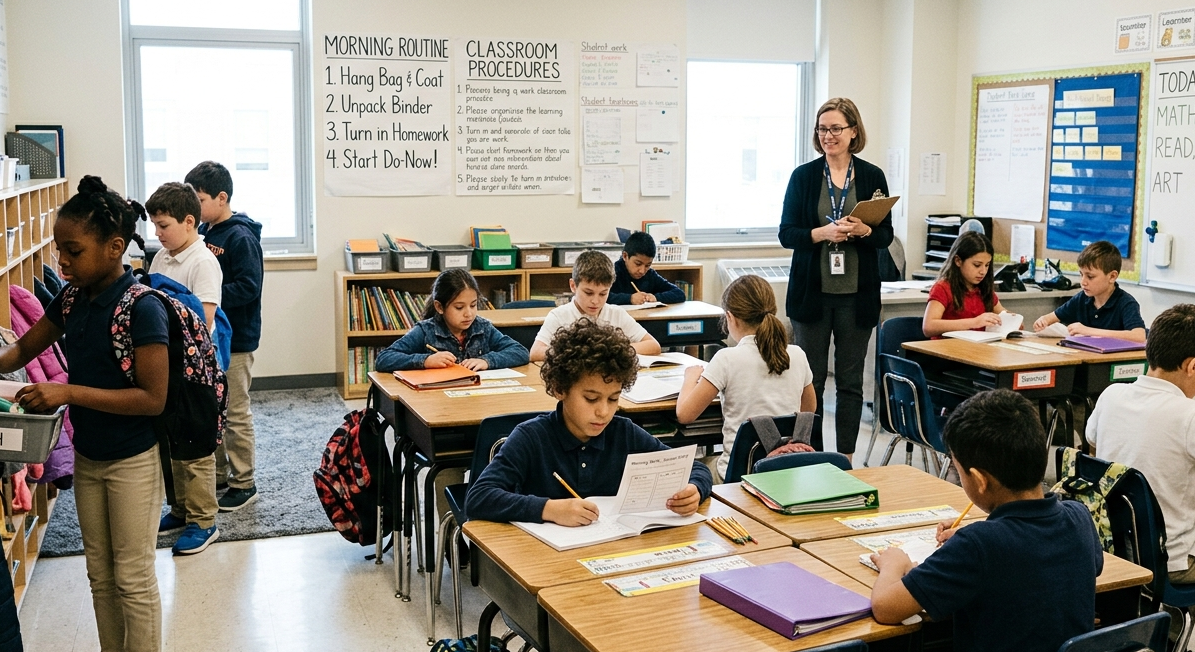
Without a proactive plan, teaching becomes incredibly stressful. You end up spending all your time policing bad behavior instead of actually getting through your lesson. Having a clear philosophy gives you three massive advantages:
- No More Guesswork: When kids know exactly how you will react and how the room operates, they feel safe. Predictability cuts down on student anxiety.
- Teaching Comes First: When your lessons flow well and transitions are quick, behavior problems naturally drop. If kids are genuinely interested in the work, they don’t look for distractions.
- Learning from Mistakes: A good framework views rule-breaking as a chance to teach better choices and solve problems, not just an excuse to hand out punishments.
The 4 Classic Classroom Management Styles
Most teachers fall into one of four basic styles when it comes to managing a room. Check out where you fit and see if you need to make any adjustments.
| Management Style | Rules & Boundaries | Teacher Warmth & Care | Student Autonomy |
| Authoritative | High, explicit expectations | High empathy and support | Balanced; honors student voice |
| Authoritarian | Rigid, uncompromising | Low or conditional warmth | Zero; demands compliance |
| Permissive | Loose, rarely enforced | High affection | High; lacks clear structure |
| Indulgent | Virtually non-existent | Indifferent or passive | Total; borders on chaotic |
The Authoritative Sweet Spot
Countless studies on different classroom management models point to one clear truth: the authoritative style is the gold standard. These teachers are often called “warm demanders.” They care deeply about their kids and build real relationships, but they do not budge when it comes to high standards for behavior and learning.
Core Principles of Outstanding Classroom Management
When you look at proven teaching frameworks—like Edutopia‘s 5 principles of outstanding classroom management—the best rooms always focus on a few key pillars.
1. Radical Mutual Respect
You can’t force a student to respect you; you have to earn it by showing it to them first. This means greeting them at the door with a smile, listening when they talk, and never using sarcasm or public shame to fix a behavior issue.
2. “Withitness” and Lesson Momentum
A researcher named Jacob Kounin came up with the term withitness to describe teachers who seem to have eyes in the back of their head. They know exactly what is going on everywhere in the room. When you couple that awareness with fast, smooth transitions, you stop disruptions before they start.
For example, when you plan lessons packed with fun examples of tactile learning, kids stay hands-on and busy. They are moving and thinking, which leaves zero time for acting out.
3. Procedures Over Rules
Harry Wong, a famous voice on classroom leadership, says the biggest issue in most schools isn’t a lack of discipline—it’s a lack of procedures. Rules tell kids what not to do. Procedures teach them how to do things correctly, like turning in papers, sharpening a pencil, or getting into small groups.
4. Firm, Restorative Accountability
When a line is crossed, you need a plan that fixes the problem rather than just kicking the kid out. Experts like Lee Canter talk about the importance of firm, direct boundaries, while others like Alfie Kohn remind us to help kids build internal responsibility instead of just handed out cheap plastic prizes or gold stickers. The goal should always be to fix the broken trust and get the student back on track.
How to Write Your Personal Classroom Management Philosophy
If you are writing this for a job application or portfolio, don’t just copy and paste dry words from an old college textbook. Follow these four straightforward steps to write something that sounds exactly like you.
Step 1: Figure Out Your Main Goal
What do you want your room to feel like every day? Is it a loud, busy workshop where kids collaborate, or a quiet, calm studio where they can focus deeply? Define that vision first.
Step 2: Plan How You’ll Build Relationships
How are you going to connect with your kids? Think about using daily morning meetings, quick check-ins, or student surveys. Make a plan to build up trust before the curriculum gets tough.
Step 3: Map Out Your Daily Routines
Be specific about how things will run. Don’t just say you love being organized. Explain how you will teach and practice routines during the very first week of school so you don’t waste time later.
Step 4: Choose Your Discipline Strategy
Be honest about how you handle conflict. How will you calm down a tense situation without ruining the whole lesson? Focus on keeping your corrections private, quick, and focused entirely on the action, not the student’s character.
Real-World Classroom Management Philosophy Examples
A kindergarten class needs a completely different kind of energy than a high school senior seminar. Here is how these theories look across different grade levels.
Elementary School Example (K-5)
“I believe kids can only grow academically when they feel completely safe. My goal is to build a student-centered classroom where every child knows they belong. By using clear, predictable routines and plenty of positive encouragement, I create a space where mistakes are just a normal part of learning. I mix high expectations with genuine warmth so my students feel brave enough to take risks and take real ownership of their choices.”
Middle School Example (6-8)
“Middle school is a tough, transitional age, so my approach focuses on mutual respect and shared responsibility. I don’t believe in just forcing compliance. Instead, I work with my students to build our room rules together so they are actually invested in our culture. I keep my lessons moving fast to hold their attention. When someone disrupts the class, I use restorative practices that deal with the behavior privately, focusing on logical consequences and fixing the relationship.”
High School Example (9-12)
“I see my high school classroom as a bridge to the real world. I treat my students with adult-level respect and expect real responsibility from them. I find that the absolute best way to stop behavior issues is to keep kids deeply challenged and engaged. My rules are clear, consistent, and designed to teach self-regulation. I don’t spend my time micromanaging minor things. Instead, I hold students accountable for their actions, habits, and communication so they are ready for college and careers.”
Sample Classroom Management Philosophy Statement Template
Need a template to help get you started? Feel free to take this statement and customize it with your own grade levels and specific style:
I believe that a successful classroom is a strong community built on mutual respect, clear routines, and high expectations. My approach is completely proactive. I believe that by keeping students highly engaged with exciting, student-centered lessons, I can stop most behavior issues before they even show up.
In my room, I work with students to set up our community expectations so everyone has buy-in. We explicitly practice our daily routines starting on day one. If a student does disrupt the class, I handle it through private conversations and fair, consistent consequences, working with them to figure out what caused the issue. Ultimately, my goal is to maintain a predictable, safe, and positive environment where every single student feels heard, valued, and ready to succeed.
Interview Guide: Answering “What Is Your Classroom Management Philosophy?”
When a principal asks you this question during an interview, they aren’t looking for a long, boring lecture on theory. They want to know exactly what you do when twenty-five kids are all testing your boundaries at the same time.
Structure your spoken answer into three quick parts:
- The Hook: Your core belief summarized in one short sentence.
- The Proof: A quick example of what this looks like in your room.
- The Result: How this helps your kids succeed.
Sample Interview Response:
“My philosophy is that great teaching is the absolute best tool for discipline. I consider myself a warm demander. I build incredibly strong relationships with my kids, but I pair that care with rock-solid, predictable routines. For example, I take the time to practice our transitions during the very first week of school so we don’t waste precious learning time later. When kids feel safe and know exactly what is expected of them, they don’t waste time testing the rules—they focus entirely on learning.”
(Quick tip: If you are moving into teaching from a different field or trying out for leadership roles, you’ll want to be ready for all kinds of interview panels. It helps to have a clear handle on your credentials and background—similar to knowing if an MBA is a Master of Arts or Science when checking how your past degrees match up with a school district’s pay scale).
Common Management Pitfalls to Avoid
Even the most passionate teachers can make mistakes if their philosophy doesn’t translate well to real life. Watch out for these three major traps:
- Stopping for Every Little Thing: If you halt your entire lesson to yell at a kid for every single whisper, you kill the momentum of the class. You are letting the disruption win. Learn what small things to ignore and what to handle privately later.
- Trying to Be the “Cool” Friend: In an effort to get kids to like them, new teachers sometimes forget to hold the line on rules. Kids don’t need another peer. They need a calm, steady leader they can actually rely on.
- Being Inconsistent: If you yell about a rule on Monday but let it slide on Thursday because you are exhausted, you destroy the predictability of your room. Kids will constantly push the boundaries just to see what they can get away with today.
Frequently Asked Questions
How long should a classroom management philosophy statement be?
Keep it between one and two pages—roughly 400 to 600 words. Principals and hiring managers are busy, so make it clear, punchy, and easy to skim.
What is the difference between a management philosophy and a management plan?
Your philosophy is your “why”—it covers your core beliefs, your values, and your mindset toward student behavior. Your classroom management plan is your “how”—it’s the actual list of rules, daily routines, rewards, and consequences you use from day one.
How do I handle a student who completely rejects my management style?
No single rule works for every single child. If a student is constantly pushing back, stop using whole-class discipline tactics. Pull them aside for a private, quiet conversation. Focus on building a real, one-on-one connection, find out what is causing the defiance, and work together to create a personalized behavior plan.
Final Thoughts: A Living Framework
Your classroom management philosophy shouldn’t be a piece of paper you print out once for an interview and then throw in a desk drawer. It is a living plan that will change and grow with every single group of kids that walks through your door.
Listen to your students, keep an eye on how your routines are working, and don’t be afraid to change things up as you learn what makes your classroom community thrive. At the end of the day, great management isn’t about getting total silence—it’s about building a safe, predictable space where real learning can happen.