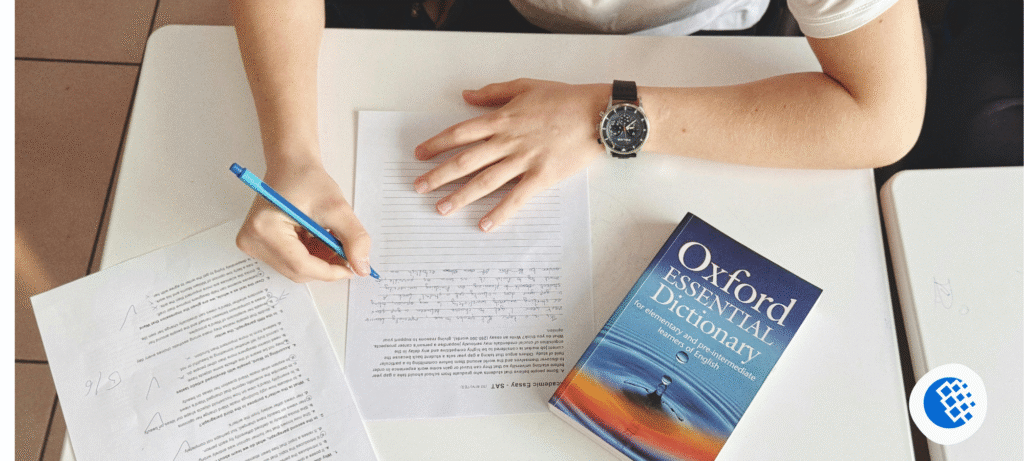

Getting hit with a massive research project in high school can definitely mess with your confidence. Most people already know what they want to say, but they trip up the second they have to organize pages of notes, track down sources, or deal with annoying margins and fonts. Honestly, checking out a real high school research paper example is the best shortcut to figure out how a good paper actually holds together.
A lot of people run into trouble because they try to treat a major research assignment like a standard five-paragraph essay. But serious research takes a totally different mindset. By breaking down actual high school research paper examples, seeing how MLA and APA look on a real page, and reading through a complete sample essay, you can get past that blank screen and put together an assignment that actually earns an A.
What Is a High School Research Paper?
A high school research paper is an academic writing project where you choose a specific research question, dig into reliable primary and secondary sources, and pull that information together to build a strong, evidence-based argument.
Unlike a simple summary or a basic book report, a real academic paper demands critical thinking, deep source evaluation, and a clear thesis statement that you can prove using solid facts and data.
How Long Should a High School Research Assignment Be?
Honestly, there’s no single answer here — it comes down to your grade level and whatever rules your teacher hands out. That said, most high school research papers land somewhere between 3 and 8 pages, or roughly 700 to 2,500 words. A regular classroom essay gives you room to write from your own point of view, but once you’re dealing with a more advanced assignment, that changes fast — every claim you make needs solid academic backing behind it.
High School Research Paper Structure
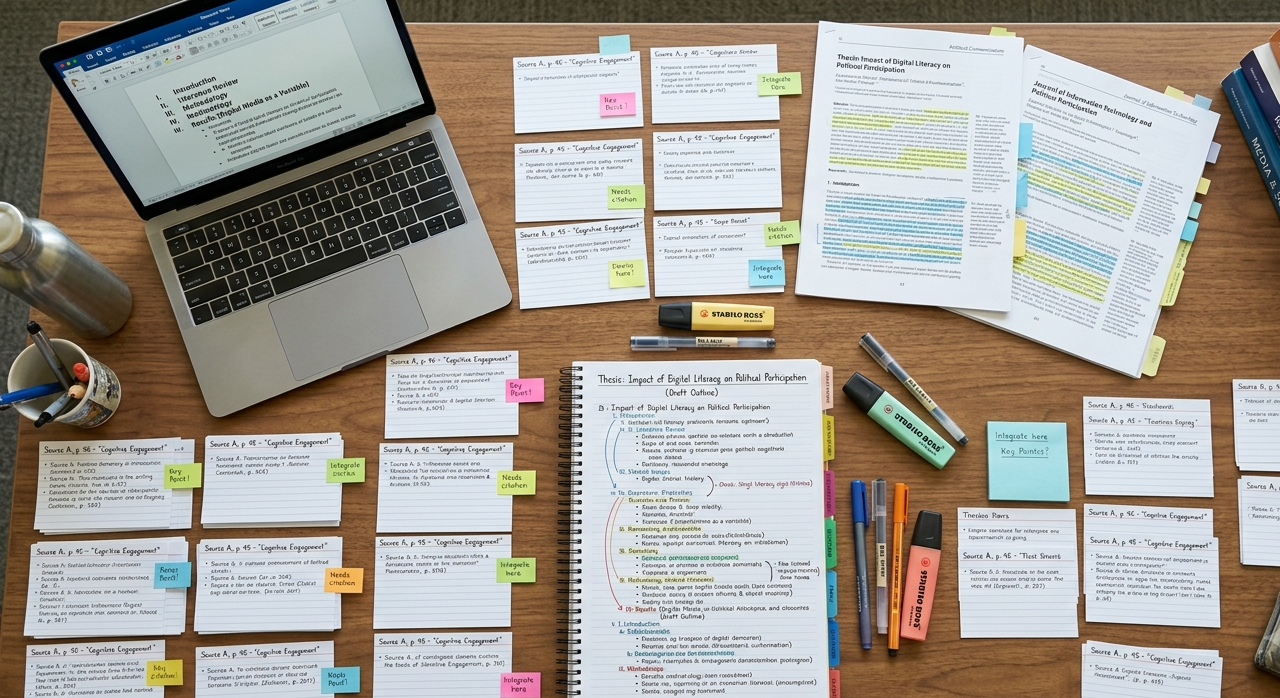
Before you read through our complete high school research paper example, it helps to know how a standard academic paper is put together. Every successful student project follows a logical layout that carries the reader through the investigation without getting them lost.
Key Sections of an Academic Paper
| Section | Purpose | Average Length |
| Title | A short, descriptive headline that states exactly what your paper is investigating. | 1 Line |
| Abstract | A quick summary of your research question, methods, and main findings (usually only needed for APA format). | 100–150 Words |
| Introduction | Introduces your main topic, gives basic background info, and explains why the issue matters. | 1–2 Paragraphs |
| Thesis Statement | A single, arguable sentence at the end of your intro that clearly states your main point. | 1 Sentence |
| Literature Review | A quick summary of what other experts, books, and studies have already said about your topic. | 2–3 Paragraphs |
| Methodology | An explanation of how you found your data—whether through library research, analyzing history documents, or running a science lab experiment. | 1–2 Paragraphs |
| Body Paragraphs | The main core of your paper where you share your evidence, analyze the facts, and prove your points using strong topic sentences. | 3–5 Pages |
| Conclusion | Wraps up your main arguments, restates your thesis in a fresh way, and talks about why your findings matter in the real world. | 1 Paragraph |
| References / Works Cited | An alphabetical list at the very end that gives full credit to every single source you used. | 1+ Pages |
Comprehensive Formatting Styles: MLA vs. APA

The layout of the research paper examples high school students encounter changes depending on the subject. English, history, and humanities classes almost always use MLA (Modern Language Association) format. On the other hand, science, psychology, and sociology classes usually require APA (American Association) guidelines.
Side-by-Side Comparison Chart
| Formatting Element | MLA 9 Style Guidelines | APA 7 Student Guidelines |
| Title Page | You do not need a separate page. Your info header goes directly at the top of your first page. | Requires a completely separate, standalone title page. |
| First Page Layout | Your name, instructor’s name, class, and date are left-aligned at the top. | The paper title, your name, department, course, instructor, and date are centered. |
| Page Numbering | Top right corner: Your last name followed by the page number. | Top right corner: Just the page number itself. |
| In-Text Citations | Uses parentheses with the author’s last name and page number: (Author Page). | Uses parentheses with the author’s last name and year: (Author, Year). |
| Final Bibliography | Titled Works Cited and organized in alphabetical order. | Titled References and organized in alphabetical order. |
| Font & Spacing | 12pt Times New Roman, completely double-spaced. | 12pt Times New Roman or 11pt Calibri, completely double-spaced. |
An Original High School Research Paper Example (MLA Format)
Here is a full high school research paper example written and formatted according to standard MLA 9 rules.
Note: This sample paper, its data, and its source citations have been created for educational and illustrative purposes to show you how a real paper flows.
Sample Student Essay
Marcus Vance
Mrs. Evelyn Sinclair
AP US History
November 12, 2025
The Digital Divide in the Classroom: Evaluating 1:1 Laptop Initiatives
Walk into almost any public school today and you’ll notice something: the stack of textbooks kids used to lug around has mostly given way to a laptop screen. Over the last ten years or so, school districts across the U.S. have poured millions into 1:1 laptop initiatives — programs built on a simple premise, give every enrolled student their own personal computer.
Administrators love to talk these programs up, framing them as a straight line toward digital equity. But spend time in an actual classroom and the picture gets messier. Handing a teenager a laptop doesn’t automatically translate into better grades or deeper learning. Left unmonitored, that same device becomes a constant pull on attention, splintering focus in ways that work against the goal. Without teachers actively managing what software students are using and when, high school 1:1 laptop initiatives tend to do the opposite of what they promise — engagement drops, and so does how much information students actually retain over time.
To accurately assess this issue, one must evaluate how constant screen access disrupts basic classroom psychology. Laptops give students instant access to a massive digital world. This easily turns a school computer into a major distraction. Educational researcher Dr. Arthur Green notes that the teenage brain is naturally vulnerable to the pull of algorithms, making it really hard for kids to stay focused during independent study blocks (Green 45).
When schools don’t block distracting sites, students struggle to manage themselves. The urge to open extra tabs, stream music, or play online games usually wins, and the actual lesson plan gets completely ignored. The presence of the machine creates a permanent baseline of divided attention.
Furthermore, the structural drop in engagement directly translates to weaker academic performance due to the cognitive costs of media multitasking. When a student constantly flips between a teacher’s lecture slides and a chat window, the brain takes a serious hit from task-switching, making it much harder to actually absorb the information.
Classroom research has pointed to the same concern for years. The National Literacy Association ran a study that found something worth paying attention to: high school students who kept jumping between tasks on their laptops scored roughly 11% lower on weekly reading retention quizzes compared to classmates who stuck with plain paper notebooks (Reynolds and Smith 112). Why the gap? Typing tends to turn into a copying habit — students transcribe information almost word-for-word without really processing it. Writing by hand works differently. It forces you to slow down, filter what matters, put ideas into your own words, and that extra step is what makes things stick. So you end up with two very different outcomes: a neatly formatted digital file on one hand, and on the other, a student who can barely recall what the material actually said.
On the flip side, plenty of people argue that giving every student a laptop is vital for prepping them for today’s tech-driven job market. The logic is that since programs like Google Docs and Microsoft Word are staples in the corporate world, getting comfortable with them early on builds the exact tech skills students will need later. For example, learning how to analyze real-world media trends or evaluate Example Advertisements for Students gives young people essential digital skills.
While technical literacy is undeniably important, this defense conflates mechanical proficiency with intellectual focus. Learning how to type a document or search Google Scholar does not require an unmonitored laptop running during every single minute of a history lecture. Doing well in college calls for deep, sustained concentration — the kind of focus that falls apart fast when notifications and tabs keep pulling students’ attention in the classroom. At the end of the day, technology should support teaching, not stand in for it. And if school districts keep handing out a laptop to every student without training teachers to use them well, or without solid monitoring software like GoGuardian in place, those classrooms end up as little more than distraction zones.
To make sure all the money spent on classroom tech doesn’t go to waste, high schools need to set some firm rules. Laptops should stay closed while the teacher is lecturing and only come out for specific, hands-on group research.
Breaking away from the constant urge to stare at a screen is the only way students are going to get back the sharp focus they need to actually learn and succeed.
Works Cited
Green, Arthur. Cognitive Anchors in the Digital Age. Academic Press, 2022.
Reynolds, Clara, and David Smith. “The Cost of Clicks: Screen Multitasking in Secondary Education.” Journal of Educational Psychology, vol. 14, no. 3, 2024, pp. 104-118.
Step-by-Step Writing Guide: How to Craft an A+ Paper
If you want your essay to match the quality of professional high school research paper examples, it helps to break the assignment down into manageable stages. Follow this step-by-step roadmap to build your paper from the ground up.
Choosing a Research Topic by Subject
If you are feeling stuck on step one, use this quick reference table to see how a broad school subject can be narrowed down into a great, highly targeted research topic:
| Subject | Broad Theme | Narrowed Research Topic |
| History | American Revolution | Analyzing the role of spy networks in the Culper Ring during the Revolutionary War |
| Biology | Sleep and health | The direct effects of sleep deprivation on short-term memory retention in teenagers |
| English | Literature analysis | How F. Scott Fitzgerald uses domestic architecture to symbolize social class in The Great Gatsby |
| Economics | Minimum wage | The measurable impact of local minimum wage changes on youth employment rates |
| Environmental Science | Pollution | Evaluating the effectiveness of local community bans on single-use microplastics |
In a study conducted by the National Literacy Association, high school students who frequently switched between tasks on their laptops scored about 11% lower on weekly reading retention quizzes than students who relied on traditional paper notebooks (Reynolds and Smith 112). The results suggest that typing often becomes a habit of recording information exactly as it appears, whereas writing notes by hand encourages students to think through the material, summarize key ideas, and remember them more effectively. Students end up with perfectly formatted digital files, but they barely remember the actual material.
Acknowledged absence of substantive content to process
The National Literacy Association ran a study that found something worth paying attention to: high school students who kept jumping between tasks on their laptops scored roughly 11% lower on weekly reading retention quizzes compared to classmates who stuck with plain paper notebooks (Reynolds and Smith 112). Why the gap? Typing tends to turn into a copying habit — students transcribe information almost word-for-word without really processing it. Writing by hand works differently. It forces you to slow down, filter what matters, put ideas into your own words, and that extra step is what makes things stick. So you end up with two very different outcomes: a neatly formatted digital file on one hand, and on the other, a student who can barely recall what the material actually said.
5 Common Mistakes High School Students Make
Want your paper to stand out from the stack of typical student submissions? Watch for these mistakes when you sit down to edit:
- Relying on a Weak Personal Voice: Skip phrases like “I think,” “In my opinion,” or “I believe.” Your name’s already on the title page, so readers know these are your ideas — no need to say so. Stick to third person throughout; it reads more polished.
- Using Un-Sandwiched Quotes: Don’t just drop a quote into a paragraph and hope it fits. Give it a lead-in first — something like According to a recent study… or The author states that… — so the quote connects naturally to what you’re writing.
- Forgetting True Topic Sentences: A body paragraph shouldn’t open with a raw fact or quote pulled from somewhere else. Start with your own thought instead — the first sentence needs to lay out exactly what that paragraph is going to prove.
- Ignoring the Counterargument: Papers that only tell one side of the story fall flat. A strong research paper takes at least one full paragraph to consider the other viewpoint, then brings in solid evidence to knock it down.
- Trusting Online Citation Tools Blindly: Automatic citation generators are convenient, but don’t paste their output without checking it first. They routinely drop volume numbers, skip italics, or follow outdated formatting rules. Double-check your reference page against current guidelines before you call it done.
Doing well in college calls for deep, sustained concentration — the kind of focus that falls apart fast when notifications and tabs keep pulling students’ attention in the classroom. At the end of the day, technology should support teaching, not stand in for it. And if school districts keep handing out a laptop to every student without training teachers to use them well, or without solid monitoring software like GoGuardian in place, those classrooms end up as little more than distraction zones.
3 Secret Study Tips for Better Academic Writing
Staying focused through a long assignment isn’t easy. These three lesser-known strategies can give you a real edge:
- The Reverse Outline Trick: Once your rough draft is done, read it backward. Jot down the single main point of each paragraph on a separate sheet of paper. If a paragraph doesn’t give you one clear point, that’s exactly where your structure is falling apart.
- Read Your Prose Aloud: Nothing exposes robotic text, awkward pacing, or clunky transitions faster than reading your own paper out loud. Run out of breath mid-sentence? That’s your cue to split it into two.
- Keep a Source Directory Document: Never close a browser tab without saving the link first. Start a temporary document and drop in the URL, author info, and key quotes for every article you read. Do this and you’ll skip the last-minute scramble of hunting down a lost source the night before your paper’s due.
Topic and Thesis Contrast Examples
Evaluating Topic Strength:
- Weak Topic: Global warming is happening. (This is just a factual summary that nobody really disputes in an academic setting).
- Strong Topic: Evaluating the economic efficiency of urban carbon-tax programs in major North American cities. (This is strong because it forces you to analyze data, compare systems, and make an argument).
Evaluating Thesis Strength:
- Weak Thesis: Social media is bad for high school students because it wastes their time. (Too casual, too broad, and does not provide a clear roadmap for your body paragraphs).
- Strong Thesis: Altering high school start times improves adolescent academic performance by aligning with natural circadian rhythms, reducing chronic sleep deprivation, and lowering early-morning tardiness rates. (Specific, highly arguable, and tells the reader exactly what each section of the paper will prove).
Core Elements of Citations & Reference Pages
Plagiarism will ruin your grade faster than anything else. To protect your academic reputation, you must use clear in-text citations every single time you use a direct quote, copy an author’s unique idea, or mention a specific data point.
When you need to look up real citation rules, always rely on professional, authoritative resources like the Purdue OWL Citation Guide or the official MLA Style Center.
MLA In-Text Citation Example
When writing an MLA style paper, put the author’s last name and the exact page number inside parentheses right before the period at the end of the sentence:
“The human brain cannot sustainably process multiple streams of fast visual information at once” (Vance 42).
APA In-Text Citation Example
In APA format, the focus shifts to the author’s name and the specific year the source was published:
Vance (2024) demonstrated that continuous digital interruptions break down reading retention.
5 Common Mistakes High School Students Make
Want your paper to stand out from the stack of typical student submissions? Watch for these mistakes when you sit down to edit:
- Relying on a Weak Personal Voice: Skip phrases like “I think,” “In my opinion,” or “I believe.” Your name’s already on the title page, so readers know these are your ideas — no need to say so. Stick to third person throughout; it reads more polished.
- Using Un-Sandwiched Quotes: Don’t just drop a quote into a paragraph and hope it fits. Give it a lead-in first — something like According to a recent study… or The author states that… — so the quote connects naturally to what you’re writing.
- Forgetting True Topic Sentences: A body paragraph shouldn’t open with a raw fact or quote pulled from somewhere else. Start with your own thought instead — the first sentence needs to lay out exactly what that paragraph is going to prove.
- Ignoring the Counterargument: Papers that only tell one side of the story fall flat. A strong research paper takes at least one full paragraph to consider the other viewpoint, then brings in solid evidence to knock it down.
- Trusting Online Citation Tools Blindly: Automatic citation generators are convenient, but don’t paste their output without checking it first. They routinely drop volume numbers, skip italics, or follow outdated formatting rules. Double-check your reference page against current guidelines before you call it done.
The Ultimate Research Paper Checklist
Before you hit the final submit button on your school’s digital portal, double-check your draft against this quick quality-control checklist:
- [ ] 1-Inch Margins: Make sure your word processor didn’t accidentally change your page margins to an odd size.
- [ ] Uniform Double Spacing: Check that your entire document—including your headers and the final reference list—is evenly double-spaced.
- [ ] Clear Thesis Placement: Double-check that your main thesis statement sits clearly as the final sentence of your introduction paragraph.
- [ ] Alphabetized Reference Page: Make sure your Works Cited or References list is organized in alphabetical order using the authors’ last names.
- [ ] Clean Hanging Indents: Check that the second and third lines of your individual bibliography sources are indented by exactly half an inch.
- [ ] No First-Person Language: Scan through your text to remove any accidental uses of words like “I,” “me,” “my,” or “we.”
- [ ] Final Proofread: Run your text through a writing tool or grading resource like our EasyGrader Tool to check formatting metrics and clear out any lingering typos or passive voice slips.
Frequently Asked Questions
What is a high school research paper?
A high school research paper is an academic writing project where a student investigates a specific question, analyzes information from trusted sources, and builds a well-organized, evidence-based argument using formal formatting and citations.
How do you start a research paper?
Start by picking a focused, arguable topic and running a few quick searches on Google Scholar to make sure there are enough reliable sources out there. From there, write a basic working thesis statement and map out a clean outline before you start drafting your introduction.
Is MLA or APA used in high school?
It depends entirely on the class you are taking. English, literature, and history courses almost always ask for MLA style. Science, psychology, health, and social studies classes usually require you to use APA style guidelines.
How many sources should a high school research paper have?
Most high school teachers look for somewhere between 3 to 6 high-quality sources. This can include peer-reviewed articles, books, historical documents, or official government data reports.
Can generative AI tools write my research paper for me?
Using an AI tool to write your school essays is considered plagiarism and breaks academic integrity policies. Most high schools use detection platforms like Turnitin that easily flag automated text patterns. However, you can absolutely use AI as a helpful assistant to brainstorm different topics or map out an initial structural outline.
What are the 10 main parts of a research paper?
A comprehensive paper typically includes a Title, an Abstract, an Introduction, a Literature Review, a Statement of the Research Problem, a Methodology section, the Results/Findings, a Discussion section, a Conclusion, and a full Bibliography or Works Cited page.
How many paragraphs should a research paper have?
There is no fixed number. Unlike a basic five-paragraph essay, a true research paper can have anywhere from 15 to 30+ paragraphs depending on the word count, target depth, and the complexity of your supporting evidence.
Final Thoughts: Taking Control of the Writing Process
Succeeding on your high school assignment comes down to budgeting your time, staying organized, and keeping your formatting consistent. By looking closely at a verified high school research paper example, setting up your page layout before you start writing, and backing up your claims with solid evidence, you can turn a stressful project into an easy grade booster. Take it one step at a time, build your outline first, and head into the academic databases with a clear plan in mind.