Watch a kid try to tie their shoelaces for the first time. Tongue out, fingers fumbling, the same loop attempted four different ways before one of them accidentally works. That’s not a bad performance — it’s just what the beginning of learning any physical skill actually looks like. There’s a name for what’s happening: the stages of motor learning, and once you understand the three of them, you start noticing this pattern everywhere — in a driving lesson, a physical therapy session, even someone learning to use chopsticks for the first time.
Quick answer: the stages of motor learning are the cognitive stage, the associative stage, and the autonomous stage — a model first laid out by psychologists Paul Fitts and Michael Posner back in 1967. In plain terms: figure it out, refine it, then stop thinking about it altogether.
A few things worth knowing before we dig in:
- There are three stages — cognitive, associative, autonomous — and they build on the Fitts and Posner model
- The cognitive stage is clumsy and mentally draining. That’s not a red flag, it’s just normal
- Most of the real improvement happens quietly, during the associative stage
- By the autonomous stage, the skill more or less runs itself
- Good coaches, therapists, and teachers change how they give feedback depending on which stage someone’s actually in — not one-size-fits-all
What Is Motor Learning, Really?
Motor learning is what happens when the body gets better at a physical task through repetition, feedback, and time — not through doing it once and getting lucky. There’s a difference between performing a movement and learning it. Performing it is a one-off. Learning it means the brain has actually rewired something, laid down new pathways, so the movement sticks around even after a break.
This is why physical therapists care about it, why occupational therapists build entire treatment plans around it, and why every decent sports coach has some version of this model in the back of their head, even if they’ve never heard the term “Fitts and Posner.” A stroke patient regaining grip strength and a nine-year-old learning a golf swing are, neurologically speaking, going through the same three phases.
Where the Three-Stage Model Comes From
Paul Fitts and Michael Posner published their model in 1967, and — somewhat unusually for a 50-plus-year-old psychology theory — it’s still the one everyone reaches for. Sports science textbooks use it. Rehab clinics use it. Human Kinetics uses it. There have been other frameworks proposed since (Gentile’s two-stage model and Bernstein’s theory both get mentioned in academic circles), but Fitts and Posner remains the standard reference point because it maps so cleanly onto what people actually experience: cognitive, associative, autonomous. Confusion first, refinement second, autopilot third. Whichever field you’re in, the stages of motor learning give you a shared vocabulary for describing where a learner actually is.
The Three Stages at a Glance
| Stage | What’s Happening | What the Learner Notices | Example |
|---|---|---|---|
| Cognitive | Working out what the movement even is | “What am I supposed to do with my hands?” | First attempt at a golf swing |
| Associative | Smoothing it out through repetition | “That one felt better than the last” | Shooting free throws every week for a month |
| Autonomous | Running on autopilot | Barely noticing they’re doing it | Changing lanes on a highway while talking |
Stage 1: The Cognitive Stage — Figuring It Out
Nobody looks graceful here, and that’s fine. The cognitive stage is the “wait, what am I even trying to do” phase. A learner is building a mental model of the task from scratch, so movements come out jerky, disconnected, occasionally backwards. A chef in culinary school holding a knife for the first time grips it like it might bite them. A student nurse practicing an IV insertion on a training arm hesitates at every step, second-guessing the angle.
There’s a reason for the awkwardness: almost all of the learner’s conscious attention is tied up in the task. None of it is automatic yet. Someone learning to type has to actually look for the letter Q. A new driver checks the mirror on purpose, deliberately, instead of glancing at it out of habit the way an experienced driver does.
This is exactly why coaching in this stage needs to stay simple. Overloading a beginner with six corrections at once doesn’t help — it usually backfires, because there’s no spare attention left to absorb it. Short, clear instructions. One demonstration at a time. Frequent, direct feedback, because the learner genuinely can’t tell yet whether they got it right.
Mistakes that show up constantly at this stage:
- Pushing someone toward speed or fluency before the basic pattern is even understood
- Dumping too much technical detail on a beginner in one sitting
- Expecting anything close to consistency this early — it isn’t coming yet
Stage 2: The Associative Stage — Where the Real Work Happens
This is usually the longest stretch, and honestly, it’s the one that separates people who stick with a skill from people who quit. The wobble starts settling. Mistakes still happen, but they’re smaller, less dramatic, and — this is the interesting part — the learner starts feeling them before anyone points them out.
That shift matters. Early on, a learner needs someone else to tell them what went wrong. By the associative stage, they’re relying more on proprioception — the internal sense of where the body is and what it’s doing — and less on watching themselves in a mirror or waiting for a coach’s verdict. A rock climber stops staring at their feet for every hold and starts trusting what their foot tells them. A violin student stops checking finger position visually and starts hearing when a note lands flat.
Sports scientists often point out something worth knowing if you’re coaching someone through this phase: progress here doesn’t feel linear. There are plateaus. A learner can go two or three weeks feeling like nothing’s improving, when in reality their nervous system is making small refinements that only become obvious in hindsight. If you’ve coached anyone through this, you’ve probably had the “I feel like I’m getting worse” conversation. It’s usually not true — it just doesn’t feel like progress from the inside.
Feedback needs to shift here too. Vague praise doesn’t help much anymore (“good job” means less once someone can already tell it was good). What actually moves the needle is specific, targeted feedback, plus nudging the learner to start catching their own errors instead of waiting to be corrected.
Stage 3: The Autonomous Stage – Running on Its Own
Eventually — and “eventually” varies wildly depending on the skill — the movement stops requiring conscious thought at all. This is motor memory doing its job. A veteran mechanic changes a clutch without narrating each step in their head. An experienced pianist doesn’t think about which finger goes where mid-performance; they just play. A surgeon with fifteen years in the operating room isn’t consciously managing their hand movements — their hands have, in a real sense, taken over.
The upside of this stage isn’t just accuracy, it’s bandwidth. Once a skill is automatic, the brain frees up attention for everything else happening around it. That’s the entire reason an experienced driver can merge onto a highway while thinking about what to make for dinner, and a beginner absolutely cannot.
An instructor’s job shrinks a lot here. There’s not much left to correct — mostly fine-tuning, or helping someone adapt an already-automatic skill to a new context, like a golfer adjusting their swing on a slope they’ve never played before. One thing worth saying plainly: even autonomous performers benefit from occasional feedback. Elite athletes still work with coaches. Assuming someone at this stage never needs input again is a mistake I’d push back on — it’s just that the input becomes much more surgical.
Real-Life Examples of the Stages of Motor Learning
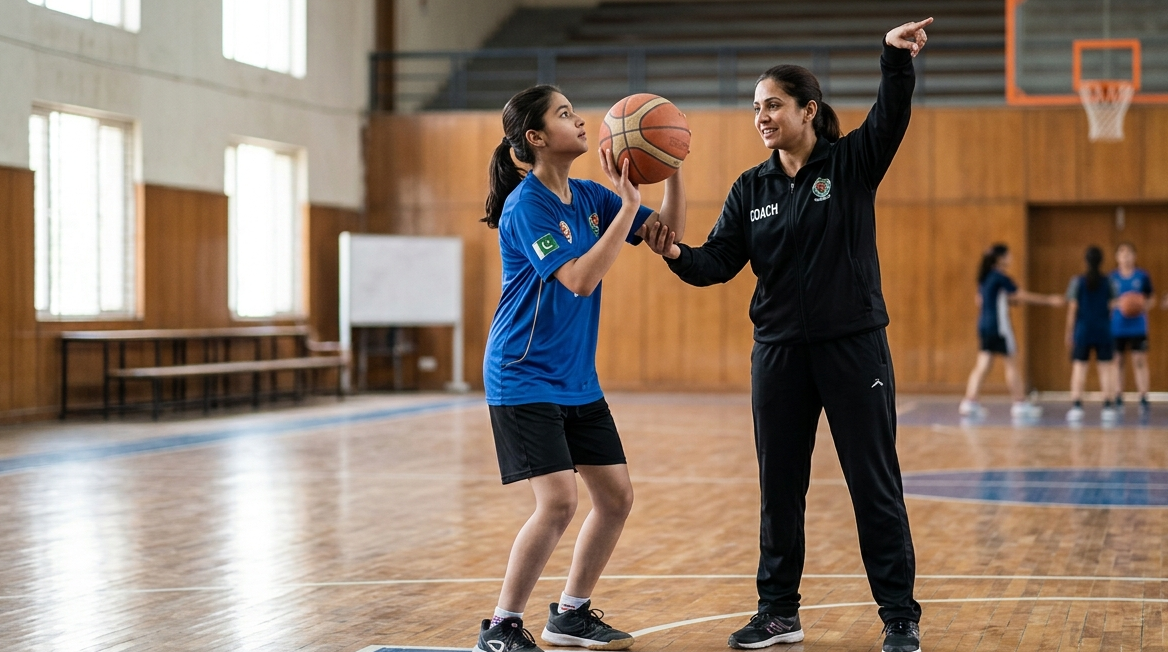
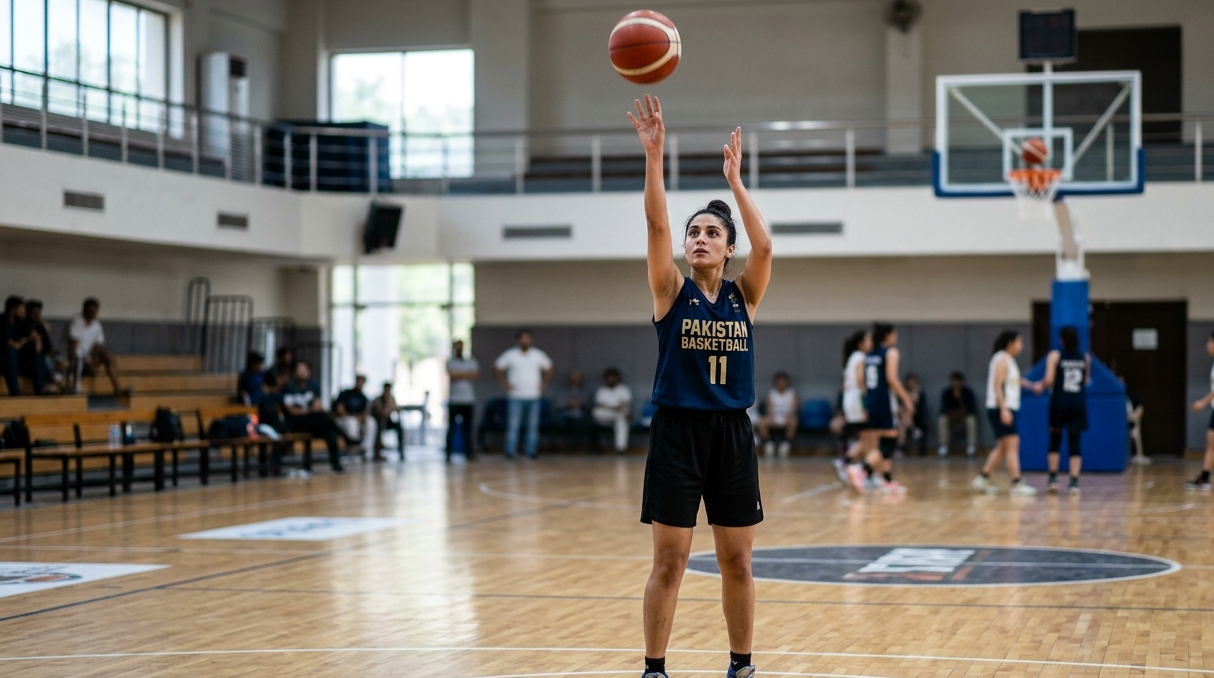
Basketball: A first-time player’s free throws are all over the place — too much wrist, inconsistent arc (cognitive). A few weeks of daily reps and the shot starts looking like a shot, even if it’s not always going in (associative). Eventually, a seasoned player can sink free throws in a packed, loud arena without thinking through a single mechanic (autonomous).
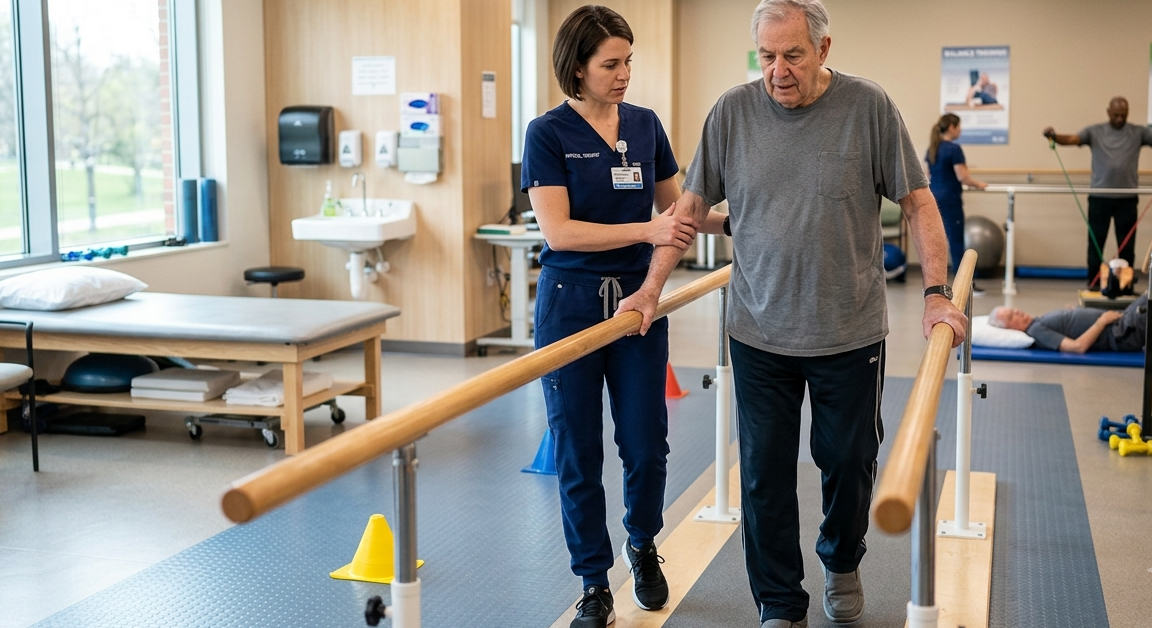
Physical therapy: A stroke patient relearning to walk often starts by consciously willing each foot forward, one at a time (cognitive), then gradually builds a gait that feels more balanced without needing a mirror to check it (associative), and eventually walks without deliberately thinking about foot placement at all (autonomous).
Occupational therapy: A child learning to button a shirt fumbles with the fabric and can’t quite line things up (cognitive), gets noticeably quicker and less frustrated with practice (associative), and eventually buttons a shirt while thinking about something else entirely (autonomous).
Everyday skills: Typing, driving, using chopsticks, tying shoelaces — all of it follows the same three-stage arc, no matter how mundane the skill looks from the outside.
=> Sports Research Paper Ideas
Motor Learning in Physical Therapy
PT is arguably where this framework matters most, because getting the stage wrong has real consequences. A patient relearning balance after an ACL reconstruction is, cognitively speaking, right back at square one — even though they knew how to walk their whole life before the injury. Therapists lean on this model constantly for gait retraining, balance work, and general orthopedic rehab, adjusting cues and feedback as the patient moves from consciously willing each step to trusting their body again.
Motor Learning in Occupational Therapy
Occupational therapists apply the same three stages to daily living tasks — buttoning, feeding, hand coordination — often with children or older adults relearning skills after illness or injury. The stakes here are quieter than sports, but no less real: independence in daily life often comes down to a skill quietly crossing over into the autonomous stage.
The Role of Feedback
Feedback isn’t one thing — it splits into a few types that matter differently at each stage:
- Extrinsic feedback — information from an outside source, like a coach or therapist
- Intrinsic feedback — what the learner feels internally (the proprioceptive sense mentioned earlier)
- Knowledge of results — did the outcome happen or not (the ball went in)
- Knowledge of performance — how the movement itself looked or felt, regardless of outcome
Beginners lean almost entirely on extrinsic feedback and knowledge of results. By the associative stage, intrinsic feedback and knowledge of performance start carrying more weight. Get this mismatched — say, giving a beginner detailed performance feedback before they’ve grasped the basic pattern — and you generally just create confusion instead of progress.
Factors That Affect How Fast Someone Learns
A handful of things speed this process up or slow it down. Focused, consistent practice beats scattered, occasional practice by a wide margin — five short, deliberate sessions a week will usually outpace one long, distracted one. Feedback timing matters too; vague or delayed feedback during the associative stage tends to stall people out. Motivation and attention shape how much actually sticks from a given session, and age can influence pace, particularly with fine motor skills. Sleep and stress play a bigger role than most people assume — a tired nervous system doesn’t consolidate motor memory nearly as well. None of these factors change the order of the stages of motor learning, but they can stretch or compress how long someone spends in each one.
Common Mistakes During Each Stage
| Stage | Common Mistake |
|---|---|
| Cognitive | Overloading the learner with feedback before they’ve grasped the basics |
| Associative | Rushing them forward before the fundamental pattern has settled |
| Autonomous | Assuming an expert never needs feedback again |
| Any stage | Skipping structured practice and hoping repetition alone will fix things |
Motor Learning vs. Motor Control
These two get mixed up constantly, so it’s worth drawing a clear line between them.
| Motor Learning | Motor Control | |
|---|---|---|
| Definition | The process of acquiring a skill over time | The real-time execution of a movement |
| Timeframe | Long-term, built through practice | Happening right now, in the moment |
| Focus | How a skill improves and becomes automatic | How the nervous system coordinates a single movement |
Motor control is the split-second event. Motor learning is the long arc that event belongs to.
Frequently Asked Questions
What are the stages of motor learning?
The cognitive stage, the associative stage, and the autonomous stage — based on the model Fitts and Posner proposed in 1967.
What are the three stages of motor learning?
Cognitive (figuring out the movement), associative (refining it through practice), and autonomous (performing it with barely any conscious thought).
What is the associative stage of motor learning?
The middle stage, where movements smooth out and the learner starts relying on how a movement feels rather than watching themselves do it.
What is the cognitive stage of motor learning?
The first stage, where a learner is still working out what the movement is supposed to look like and makes frequent, often obvious mistakes.
What is the autonomous stage of motor learning?
The final stage, where a skill runs almost automatically and takes up very little conscious attention.
Why is motor learning important?
It gives coaches, therapists, and teachers a way to match their support to where a learner actually is, instead of using the same approach for a total beginner and someone who’s nearly mastered the skill.
Who developed the stages of motor learning?
Paul Fitts and Michael Posner, in 1967 — still the most widely cited framework in sports science and rehabilitation.
How long does each stage of motor learning take?
There’s no fixed timeline. It depends on the skill’s complexity and how much deliberate practice someone gets — some skills reach the autonomous stage in weeks, others take years.
Conclusion
Understanding the stages of motor learning — cognitive, associative, autonomous — gives you a way to see a pattern that’s easy to miss otherwise: in a physical therapy clinic, on a basketball court, in a kid’s first wobbly bike ride. None of it happens by rushing. The clumsy first attempts are supposed to be clumsy. The plateau in the middle is supposed to feel like nothing’s changing. Give each stage the time and the right kind of feedback, and the autopilot stage arrives on its own schedule — not before.
you can find us here => easygrader