
A while back, I had a fascinating chat with two parents. Their kids were getting nearly identical grades, yet their daily lives couldn’t have been more different. One child literally bounded out of bed every morning, genuinely excited for class. The other practically had to be dragged out the door, filled with dread. The twist? It wasn’t a matter of intelligence at all—it came down entirely to the environment. That eye-opening conversation stuck with me. It proved that understanding the importance of choosing the right school isn’t about chasing elite rankings or showing off a prestigious name. It’s about finding that specific community where your unique child feels safe, challenged, and free to grow.
Think about the math for a second: a child spends thousands of hours inside a school building. The social circles they form, the mentors who cheer them on, and the overall vibe of a classroom will define how they view learning for the rest of their lives. Taking the time to realize the importance of choosing the right school is your first real step toward setting them up for a happy, fulfilling future.
Why is choosing the right school important?
Choosing the right school matters because it directly impacts your child’s academic growth, mental well-being, self-worth, social habits, and future career path. When a child is placed in a supportive, encouraging environment, they don’t just memorize facts—they build a lifelong love for learning while gaining the confidence needed for college and beyond.
Beyond the Report Card: Academic Success and Teacher Quality

Let’s be honest, a great curriculum shouldn’t feel like an endless loop of flashcards and textbook drilling. The modern world doesn’t care if you can memorize a date; it cares if you can think critically, adapt quickly, and solve real problems. When you start looking into how to choose the right school, you need to look past the marketing and see how teachers actually run their classrooms.
Whenever I tour a school, I look for one specific thing that brochures always hide: what happens the second a kid gets stuck?
A phenomenal teacher won’t just blurt out the answer to clear their desk. Instead, they’ll spark a conversation, offer a new angle, and ensure the student never feels foolish for struggling in front of their peers. This kind of high-level teacher quality keeps kids hooked. It stops them from zoning out or getting frustrated. Ultimately, that early engagement builds the kind of solid academic foundation that makes university admission and college readiness feel like a natural next step, rather than a stressful hurdle. Interestingly, modern universities look for this exact type of genuine student engagement early on; many institutions even track these touchpoints using a systematic Lead Scoring Criteria in Higher Education to identify and admit students who are the perfect cultural and academic fit for their campuses.
What factors should parents consider when choosing a school?
When evaluating schools, you want to focus heavily on the everyday classroom culture, the quality of the teaching staff, safety measures, and how the curriculum matches your child’s natural learning style. Don’t forget about practical, daily logistics either—like total commute times, opportunities for parent involvement, and the variety of extracurricular activities available.
The Hidden Power of the Learning Environment
I’ve talked to countless families over the years, and a common theme pops up: parents rarely look back and regret a school choice because of a math syllabus. Instead, when things go wrong, it’s usually because they ignored the day-to-day school culture, poor teacher communication, or the simple fact that their child hated walking through the front gates every morning.
Emotional and Social Development
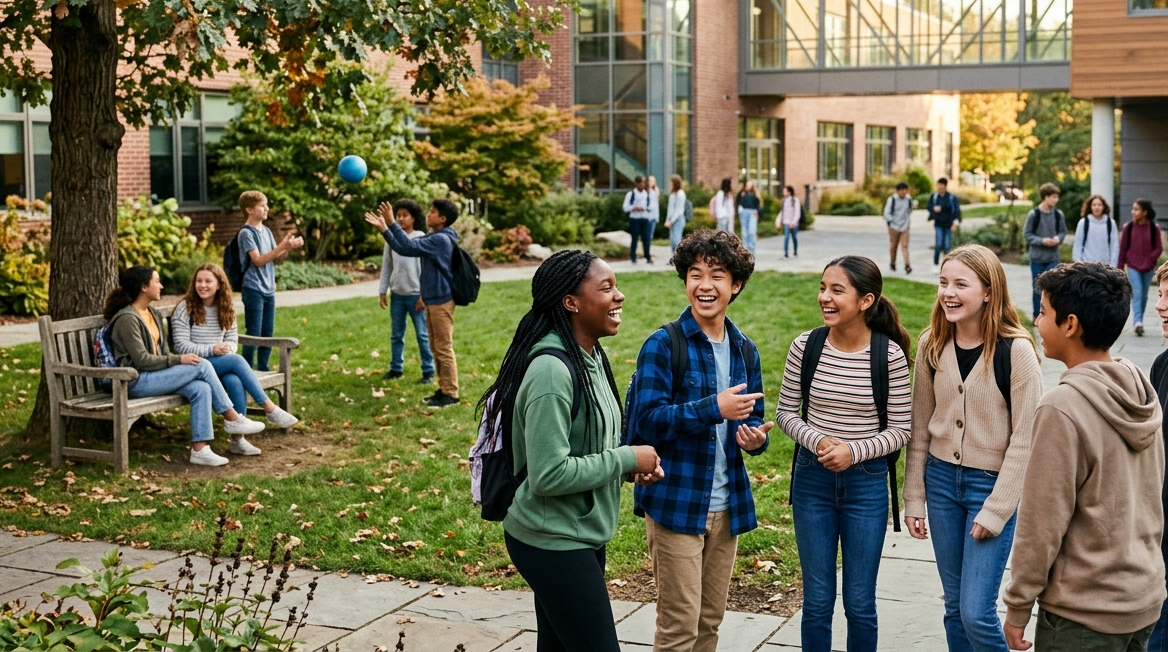
Kids spend the massive majority of their weekdays living in a mini-society made of classmates and staff. It’s their training ground for life. This is the exact environment where they figure out how to settle arguments, make loyal friends, collaborate on teams, and pick themselves up after a failure. Believe me, these messy, real-world lessons stick around a lot longer than formula sheets.
In fact, global studies by groups like the OECD confirm that when a school invests in a supportive learning environment and solid social-emotional learning (SEL) strategies, student engagement skyrockets and student well-being improves dramatically.
- Bullying Prevention: When an institution uses a hands-on, highly transparent framework to handle playground conflicts, kids learn to handle tough, real-world disagreements with genuine respect.
- Inclusive Education: Learning alongside a diverse student body breaks down biases early. It teaches children to appreciate varied backgrounds, giving them a massive head start in our global workforce.
Does the type of school matter?
Absolutely. The type of school you pick matters because different institutions lean on entirely different educational philosophies and operational frameworks. Whether you wind up choosing a public, private, or international option, the daily rhythm of the school must align with your kid’s distinct personality and your own family values.
Public School vs. Private School vs. International School
There is zero truth to the idea of a single “perfect” school model. Finding the absolute best school for your child depends entirely on what they need right now and where you want them to be down the road.
| School Type | Core Advantages | Key Considerations |
| Public School | Deep neighborhood roots, highly diverse peer groups, and close alignment with local state education standards. | Larger class sizes are common; less room to pivot toward unconventional teaching styles. |
| Private School | Usually offers smaller class sizes, top-tier specialized facilities, and alternative teaching paths (like Montessori or project-based learning). | Out-of-pocket tuition fees can be high; sometimes lacks local geographic diversity. |
| International School | Highly mobile global curriculums (like the International Baccalaureate (IB) or Cambridge Assessment), with a heavy focus on mastering multiple languages. | Can see a higher turnover rate among expat students; calendars might conflict with local holidays. |
The Value of Extracurricular Activities
An incredible educational journey can’t happen if a child is glued to a desk all afternoon. Whether your little one is just starting out in primary school or navigating the trickier waters of secondary school, extracurricular activities are vital for healthy child development.
I remember meeting a student who used to freeze up completely during class presentations. He was incredibly quiet—until he discovered the school’s robotics club. Within a single school year, that same kid was passionately presenting a complex STEM education project to a packed room during an open exhibition.
That’s the power of finding a spark. When children dive into sports, music, theater, or debate, they discover what makes them tick. More importantly, they learn how to handle losing and failure without giving up.
Questions to Ask During a School Visit
Pro tip: do everything you can to visit on a completely normal, chaotic Tuesday morning rather than relying solely on a polished weekend open house. Step into the hallways. Listen to how the teachers speak to the kids when they think no one is watching. Those unscripted moments tell you infinitely more than a glossy, expensive brochure ever will.
When you get a chance to sit down face-to-face with the principal or admissions team, skip the basic small talk and ask these high-intent questions:
- How do your teachers actually balance supporting a struggling student while keeping an advanced learner from getting bored?
- What specific, daily practices do you use to monitor student well-being and overall mental health?
- Can you walk me through exactly how a bullying situation is resolved if it happens away from a teacher’s sight, like on the bus or online?
- What does the Parent-Teacher Association (PTA) actually do here, and how do you prefer parents to stay involved?
- How are modern digital learning tools utilized in the classroom without turning into a screen-time distraction?
Common Mistakes Parents Make
It’s crazy how two siblings can go to the exact same school and have completely upside-down experiences. One might love the school culture, while the other counts down the seconds until the final bell rings. It just goes to show that the “best” school on paper isn’t a one-size-fits-all solution. A school’s personality, structural pacing, and classroom environment matter just as much as its historical test scores.
Try your best not to pick a place just because it has a great reputation from twenty years ago, or because everyone else on your block is sending their kids there. An even bigger trap is choosing a school to heal your own childhood nostalgia, instead of looking closely at the actual child standing right in front of you. Trust your intuition, watch how your child naturally learns, and find the spot where they genuinely come alive.
Frequently Asked Questions
Why is understanding the importance of choosing the right school necessary?
Understanding the importance of choosing the right school forces you to look at the big picture instead of just tracking state test scores. It ensures you pick a space that looks after your child’s emotional safety, mental health, and social instincts during their most critical formative years.
What are the main benefits of choosing the right school?
The biggest payoffs are strong academic success, a healthy sense of self, real emotional resilience, and the chance to build essential skills—like leadership, empathy, and communication—through diverse extracurricular options.
How do I know if a school environment is safe?
Look for an open-door policy and highly transparent communication. A truly safe school doesn’t hide its problems; it openly shares its safety rules, ensures active adult presence in the corridors, and treats student well-being as a top priority.
How does school selection impact university admission?
Schools that offer specialized, globally tracked programs like the IB Curriculum or Cambridge Assessment usually come with specialized college counseling teams. That said, a student’s personal drive, work ethic, and individual development always carry more weight than the logo on their high school uniform.
At the end of the day, every kid deserves a learning environment that treats them like an actual individual, not a statistic. By focusing on emotional safety, hands-on curiosity, and genuine community, you’ll make an informed choice that helps them truly blossom.