

A diploma in special needs (frequently called a SEND or Special Educational Needs and Disabilities qualification) is a practical, career-focused training program that typically takes between 6 and 18 months to complete. Available at both undergraduate and postgraduate levels, it gives teachers, support staff, and parents the hands-on strategies, psychological insights, and legal knowledge they need to help kids with physical, learning, behavioral, or developmental challenges thrive.
Quick Program Metrics (2026 Global Data)
- Average Program Duration: 6 months (fast-track or part-time) up to 1.5 years (full-time or advanced tracks).
- Tuition Cost Range: $1,500 to $6,000 USD (cheaper for online courses, higher for local on-campus colleges).
- Primary Career Outcomes: Special Educational Needs (SEN) Teaching Assistant, Learning Support Assistant (LSA), Inclusion Coordinator, Early Intervention Specialist.
- Core Compliance Focus: Learning how to build Individualized Education Programs (IEPs) and using Universal Design for Learning (UDL) frameworks.
Introduction
If you walk into almost any classroom today, you’ll notice a massive shift right away. The kids who used to be quietly sent down the hall to a separate “resource room” are now sitting right there with everyone else. This is what real inclusive education looks like. Most schools are genuinely trying to make this work now instead of just talking about it, moving away from the old days of keeping kids isolated.
But this shift has hit a major snag: a really big training gap.
[How Classrooms Are Changing]
More Early Diagnoses -> Diverse Mix of Student Needs -> Big Training Gap for Teachers
Kids are being diagnosed with learning and developmental needs much earlier than they used to be. This isn’t because something is suddenly different with children today. It’s because parents are advocacy-driven, doctors are catching things sooner, and we have much better screening tools. A child who might have just been labeled “difficult” or “disruptive” back in 2008 routinely gets a clear ADHD or Autism Spectrum Disorder (ASD) diagnosis by age six today.
Catching these things early is great news, but it means a standard classroom now has a massive range of learning styles and needs under one roof. A general education teacher can’t realistically handle all of that alone without some real, proven training behind them.
Earning a professional diploma in special needs is one of the most direct ways to bridge that exact Getting a professional diploma in special education is easily one of the quickest ways to clear up that confusion and build the actual, real-world skills you need to help these kids out.
Who Actually Takes These Courses?
You tend to see a mix of people signing up for a special needs program, all coming from completely different angles:
- Current Teachers: Regular classroom teachers who feel completely overwhelmed by the different learning styles in their rooms. They are looking for practical tools they can use first thing Monday morning, not another boring lecture on abstract theories.
- Career Switchers: People stuck in office or retail jobs who want a career making a difference with kids, but don’t have the time or a small fortune to spend on a brand-new, four-year university degree.
- TAs and Paraeducators: If you’re an experienced classroom assistant, this is how you back up all your years of hard work with a real piece of paper. It’s the most direct route to bump yourself up into better pay scales and land those specialized roles you’ve been eyeing.
- Parents and Caregivers: For moms and dads of neurodivergent kids, this is about decoding all those complicated legal terms and school policies. It gives you the confidence to walk into school meetings and fiercely advocate for your child without feeling overwhelmed.
What is a Special Needs Diploma, Exactly?
Think of this qualification as a highly practical middle ground. It sits right in the sweet spot between a cheap, unaccredited weekend workshop that won’t help your career, and a massive, exhausting four-year university degree that costs a fortune. Because it focuses strictly on what actually works in a classroom without dragging on for years, it’s a completely realistic option for busy adults who are already balancing demanding jobs and families.
+------------------------------------+---------------------------------------+------------------------------------+
|  Short-Term Certificates           |  Professional Diplomas                |  University Degrees                |
|  (Weekend to 2 Weeks)              |  (6 Months to 18 Months)              |  (3 to 4 Years)                    |
|  Very little job recognition.      |  Great career value; highly practical.|  Super detailed; costs a fortune.  |
+------------------------------------+---------------------------------------+------------------------------------+
The Shift in Laws and History
To really get why this qualification is such a big deal, you have to look at how much the legal landscape has shifted over the years.
Back in the day, schools didn’t actually practice true inclusion. Instead, they relied on “integration”—which was basically just a nice way of saying they would drop a student with special needs into a standard classroom and hope for the best. If that student couldn’t keep pace with the rest of the class, the school rarely saw it as their job to step in or adapt.
That hands-off approach completely fell apart after the landmark UNESCO Salamanca Statement. This historic agreement forced countries worldwide to shake things up, establishing the core principle that every single child has a fundamental right to learn right alongside their peers in mainstream classrooms.
Because of that massive shift, governments worldwide had to completely rewrite their education laws to actually hold schools accountable.
In the United States, this completely changed the game for how the Individuals with Disabilities Education Act (IDEA) is enforced. Now, the law basically guarantees that eligible kids get a free, proper public education (FAPE). It also makes sure they are taught right alongside their peers in a regular classroom rather than being isolated—which is what the law calls the Least Restrictive Environment (LRE).
Meanwhile, over in the United Kingdom, the government shook things up by introducing the Children and Families Act 2014. This legislation put down incredibly strict, legally binding rules that forced schools to completely overhaul how they manage and deliver SEND support.
- Similarly, in Canada and Australia, regional human rights and education laws were put in place to fiercely protect a student’s right to get custom learning setups that actually fit their needs.
Because of all these global legal changes, a regular teaching degree just doesn’t cut it anymore—which is exactly why specialized training has become so essential for anyone stepping into a modern classroom.
Since a standard teaching degree usually covers special education in just one or two quick modules across four years of university, focusing on a specialized program gives you the deep-dive training you actually need for the modern classroom.
Core Curriculum Breakdown & Practical Frameworks
A high-quality course won’t just ask you to memorize clinical lists of medical symptoms. Instead, it blends child development psychology with practical, day-to-day classroom strategies that work.

1. Core Educational Frameworks
Universal Design for Learning (UDL)
A massive part of modern SEND training revolves around the UDL framework.Instead of putting together a rigid lesson plan and then stressing out trying to fix it when a student starts falling behind, UDL flips the whole approach. It shows you how to build flexibility right into your teaching from day one.
It doesn’t matter if you are mapping out specific learning paths, setting up specialized language study templates like AP Spanish Language Vocabulary, or organizing spatial layouts like Geometry Learn V3—using these adaptive setups means you are planning for every type of learner from the very start. That way, nobody gets left out or left behind.
                    ┌───────────────────────────────┐
                    │ Universal Design for Learning │
                    └───────────────┬───────────────┘
                                    │
         ┌──────────────────────────┼──────────────────────────┐
         ▼                          ▼                          ▼
┌──────────────────┐       ┌──────────────────┐       ┌──────────────────┐
│ Multiple Means   │       │ Multiple Means   │       │ Multiple Means   │
│ of Engagement    │       │ of Representation│       │ of Expression    │
│ (The "Why")      │       │ (The "What")     │       │ (The "How")      │
└──────────────────┘       └──────────────────┘       └──────────────────┘
- Multiple Ways to Connect (Engagement): This handles the “why” of learning. It’s all about giving kids real choices in how they work, shaking up the activities, and shifting the classroom environment so they stay genuinely interested and motivated.
- Multiple Ways to Present Information (Representation): This covers the “what” of learning. Instead of just handing out a standard piece of text and hoping for the best, you share the material through different formats—like videos, audio clips, visual charts, or hands-on models—so every type of brain can actually process it.
- Multiple Ways to Show Success (Action & Expression): This is the “how” of learning. It means letting kids prove they get the concept using paths that actually work for them. Instead of forcing everyone to sit down for a stressful written test, they might give a quick talk, make a video, or build a creative project.
Multi-Tiered System of Supports (MTSS)
Any training worth your time will show you how to use MTSS. It’s basically a common-sense, data-driven strategy designed to spot struggles early and help kids grow academically, socially, and emotionally before they completely fall behind.
- Tier 1 (Universal Teaching): This is your baseline. It means using high-quality, proven teaching methods for the whole class, combined with quick, regular check-ins to ensure everyone is moving along together.
- Tier 2 (Targeted Support): When a few students start hitting snags, you step things up by pulling them into small groups for extra help and focused attention on those exact trouble spots.
- Tier 3 (Intensive Help): This is the highest level of support. It involves highly personalized, one-on-one interventions designed to break through major, long-term learning roadblocks.
Multi-Tiered System of Supports (MTSS)
2. What Your Modules Will Look Like
An accredited diploma curriculum is split into clear, highly useful topics:
- Understanding Educational Psychology & Disabilities: This is where you look closely at the actual causes and traits of different learning needs. You’ll get a firm handle on physical challenges, speech delays, cognitive processing styles, and neurodivergent profiles like Dyslexia, ADHD, Dyspraxia, and Autism.
- Smart Assessment Tools & Methods: This part teaches you how to use screening and tracking tools without feeling overwhelmed. You’ll practice reading psychological evaluations and making structured observations, giving you the confidence to spot when a child needs extra help without crossing the line into trying to diagnose them yourself.
- Real-World Classroom Inclusion: This is all about the actual day-to-day work of running a classroom full of different learning speeds and levels. You’ll figure out how to break down tough assignments into smaller chunks, adjust your teaching pace on the fly, or move desks around so the physical space works for everyone. The goal is to make sure every single kid can learn at a pace that fits them, without you ever having to dumb down the material or lower your standards.
- Positive Behavior Support (PBS): Old-school punishments like yelling or detentions just don’t work. This strategy flips the script by helping you figure out the exact reason why a student is acting out or misbehaving. You’ll learn how to notice what triggers them, track their behavior patterns over time, and use encouraging, proactive methods that actually teach kids how to make better choices on their own.
- Using Assistive Technology (AT): This gives you actual hands-on experience with tools that quickly knock down learning walls. You’ll get to work with high-tech software like text-to-speech programs, screen readers, and speech-generating apps, alongside simple, low-tech options like visual schedule strips and picture exchange communication boards (PECS).
- Mastering the IEP Process: This gives you the tools to understand Individualized Education Programs inside and out. Instead of feeling overwhelmed by the massive stack of paperwork, you’ll learn exactly how to read through these documents, track a student’s progress toward their specific legal goals, and confidently speak up when collaborating with parents, therapists, and administration during intense school meetings.
Individualized Education Program (IEP) Mastery
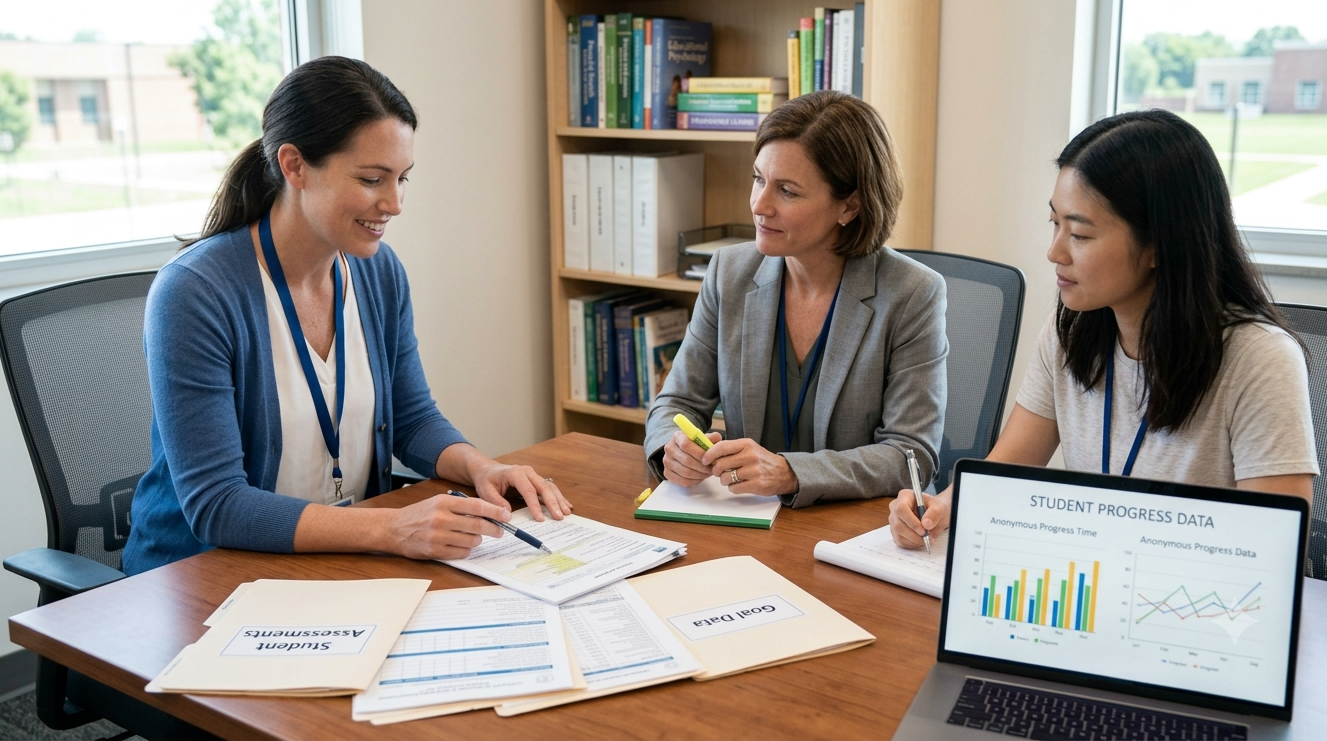
If you want to know which single skill makes you instantly hirable after finishing your studies, it’s knowing how to build an Individualized Education Program (IEP).
An IEP isn’t a casual report card. It is a legally binding document that details exactly what a student needs—including their specific goals, accommodations, and the legal support metrics the school must provide.
The Legal Core of an IEP
1. Current Levels of Performance (Where the student is starting from
2. Measurable Annual Learning & Functional Goals
3. Explicit List of Special Education Services to Be Provided
4. Placement Details (Ensuring the Least Restrictive Environment
5. Clear Accommodations (Changes to timing, testing, or environment
Look, a good diploma course breaks this whole legal process down into clear, manageable steps so you don’t get overwhelmed:
- Writing Goals That Count: You’ll learn how to stop using vague phrases like “the student will get better at reading.” Instead, you’ll write goals that are actually measurable—something like, “given a third-grade story, the student will read 90 words correctly per minute across three separate checks.”
- Leading Team Meetings: You’ll build the actual people skills you need to guide meetings when everyone in the room—from the speech therapist and school psychologist to the principal and parents—is completely stressed out or feeling defensive.
- Tracking Real Progress: You’ll master straightforward tracking methods, like counting how often a specific behavior happens or timing intervals. This keeps the school legally compliant and gives you hard proof that your strategies are actually working.
Academic Formats, Tuition, and Admission Requirements
At the end of the day, finding the right course is just a balancing act. You just have to weigh your current background against your actual budget and whatever free time you have open.
Admission Requirements
What you need to get into a course depends entirely on the level of the program you pick:
Undergraduate and Vocational Diplomas: For these, the entry barriers are usually pretty low. You just need a standard high school diploma or a few basic school passes (like 3 GCE O-Levels, including English). You don’t need any past classroom experience to get accepted, and as long as you meet the minimum age requirement—which is usually between 16 and 18 years old—you are good to go.
Quick Program Comparison Matrix
| Program Level | Standard Duration | Average Cost Range (USD) | Who It Is Best For |
| Standard Vocational Diploma | 6 to 12 Months | $1,500 – $3,500 | High school grads, career switchers, and parents wanting to learn the system. |
| Advanced Professional Diploma | 12 to 18 Months | $3,000 – $5,000 | Active Teaching Assistants who want to step into senior coordinator roles. |
| Postgraduate Diploma (PG Dip) | 9 to 12 Months | $4,500 – $6,500+ | Degree holders who want a faster, cheaper path than a full Master’s. |
Online vs. Campus Study Styles
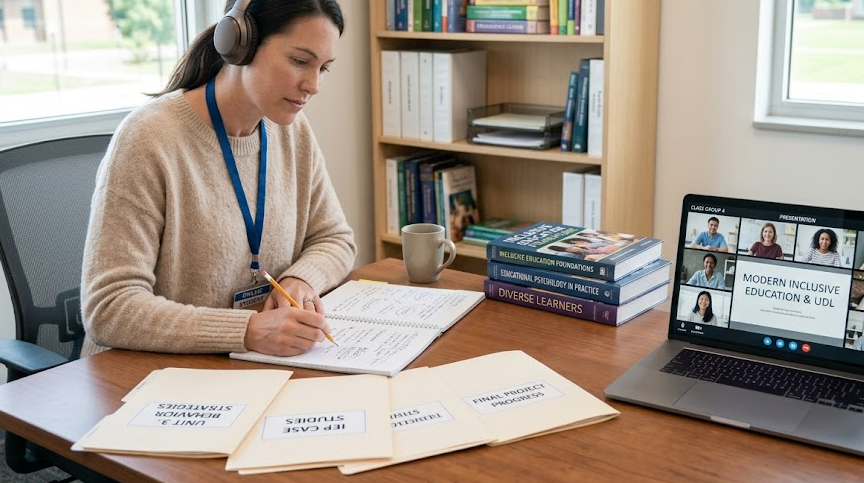
As shown in standard institutional platforms (and frequently referenced on validation sites like zerogpt.com), modern online courses have caught up completely with traditional campus options. However, they come with different day-to-day trade-offs:
- Self-Paced Online Learning: Gives you total flexibility if you are juggling a full-time job or managing a family. The catch? You need excellent self-discipline to stay on track.
- In-Person Campus Learning: Offers a rigid schedule, instant networking with classmates, and immediate access to specialized teaching materials.
- The Golden Rule: No matter which path you take, make sure the program includes a monitored practicum or internship component. Programs that are 100% textbook-based without real-world school hours are rarely respected by hiring managers.
Accreditation & How to Choose a Program
The market for special education training has an unfortunate mix of high-quality institutions and unaccredited certificate mills. Spending your hard-earned money on an unaccredited program is a massive risk—you could end up with a piece of paper that schools and job registries simply won’t accept.
Before you give any provider your tuition money, run through this verification checklist:
- [ ] National Legal Recognition: Double-check that the provider is officially approved by your country’s or region’s education department (like state boards, the UK’s Ofqual, or national registries).
- [ ] Professional Alignment: See if the course curriculum matches the gold standards set by major professional groups, such as the Council for Exceptional Children (CEC).
- [ ] Hands-on Practice: Confirm that the course gives you formal credit hours for supervised student-teaching or classroom observations.
- [ ] Local School Checks: Call up a few local schools or check in with their HR offices. Ask if they actually recognize and hire people who hold a credential from that specific training provider.
Careers, Pay, and Job Outlook
Earning a diploma in special needs opens up a wide variety of roles across public schools, private academies, and community non-profits.
                   ┌──────────────────────────────────────┐
                   │ Special Needs Diploma Career Matrix │
                   └──────────────────┬───────────────────┘
                                      │
         ┌────────────────────────────┼────────────────────────────┐
         ▼                            ▼                            ▼
┌──────────────────┐         ┌──────────────────┐         ┌──────────────────┐
│ Mainstream LSAs  │         │ Special Schools  │         │ Non-Classroom    │
│ & Paraeducators  │         │ & Care Facilities│         │ Consultants & TAs│
└──────────────────┘         └──────────────────┘         └──────────────────┘
The table below breaks down where you can work, what you’ll make, and how your career can grow over time:
| Job Title | Average Salary (US) | Average Salary (UK) | What You’ll Do Every Day | Where You Can Go Next |
| SEN Teaching Assistant / Paraeducator | $28,000 – $35,000 | £18,000 – £22,000 | Work one-on-one with a specific student; track behavioral changes; help with physical mobility and daily tasks. | Upskill toward becoming a Board Certified Assistant Behavior Analyst (BCaBA). |
| Learning Support Assistant (LSA) | $35,000 – $45,000 | £22,000 – £28,000 | Adapt standard lesson plans alongside the main teacher; set up and manage specialized classroom assistive tech. | Step up into a Lead LSA role or become a Resource Room Coordinator. |
| Inclusion / SEND Coordinator | $40,000 – $55,000+ | £28,000 – £35,000+ | Run legal compliance checks for the school; lead team IEP reviews; run training sessions for general education staff. | Move toward district-level leadership roles (which may require a full degree later). |
| Early Intervention Specialist | $38,000 – $48,000 | £24,000 – £30,000 | Create learning and behavior plans for toddlers aged 0-5; guide parents on how to use support strategies at home. | Branch out into private behavioral consulting or pediatric care positions. |
Note: Pay scales in Canada, Australia, and Ireland follow a very similar pattern—starting out modest but scaling up nicely as you gain experience or add advanced certifications.
Real-World Case Studies
To see how this training actually plays out in real life, take a look at these common scenarios:
Scenario A: Boosting Skills in Early Childhood
A veteran preschool teacher with five years of experience starts noticing early signs of Autism Spectrum Disorder (ASD), like speech delays and sensory overload, in a few of her toddlers. She’s brilliant at general child care but has never been taught how to write a formal intervention plan.
By taking a dedicated training track, she learns exactly how to design visual routines and use communication boards. This fills her training gap perfectly, letting her support those toddlers right inside her current classroom without needing to send them away.
Scenario B: Navigating a Career Pivot
A professional spent ten years working in retail management but decides they want a career that makes a real difference. Because they have bills to pay, they can’t afford to quit working entirely to spend years earning a brand-new university degree.
They choose a part-time, online postgraduate program instead. This lets them take their existing management and people skills and pivot smoothly into a certified Learning Support Assistant role in less than a year—saving massive amounts of time and tuition money.
Scenario C: Becoming a Stronger Parent Advocate
A parent finds themselves completely overwhelmed after their child receives a developmental diagnosis. Facing stacks of complex IEP paperwork and endless acronyms at school, they feel left out during crucial school meetings.
Instead of changing jobs, they take a structured course solely to demystify the education system. Armed with this new knowledge, they can walk into school meetings sitting as an equal, confident partner at the table, ensuring their child gets the exact legal accommodations they deserve.
Myth vs. Reality
- Myth: A special education certificate is completely useless unless you want to become a licensed, full-time classroom teacher.Reality: Most people who graduate from these programs don’t work as traditional lead teachers. This qualification is incredibly useful for early intervention clinics, youth community centers, private therapy practices, and residential care environments.
- Myth: Online programs don’t carry the same weight as old-school, on-campus formats.Reality: Modern schools look at two main things: accreditation and real classroom placement hours. An online setup from a fully approved school that includes a hands-on placement is just as competitive as an in-person one.
- Myth: Special needs strategies are only helpful for kids who have an official medical diagnosis.Reality: Using tools like Universal Design for Learning (UDL) and differentiated instruction helps the entire class. Neurotypical students get more options for how they learn, and everyone learns a lot more patience, empathy, and social awareness.
Comprehensive FAQ
Is a special needs diploma enough to become a lead special education teacher?
In most public school districts, working as the lead special education teacher requires a full Bachelor’s or Master’s degree in Special Education along with a state or regional teaching license. This credential is designed to qualify you for critical specialist, support, and paraeducator roles, and it works beautifully as a stepping stone toward a full degree later.
What is the difference between SEN and SEND?
SEN stands for Special Educational Needs, which focuses mainly on learning styles, cognitive differences, and classroom accommodations. SEND stands for Special Educational Needs and Disabilities, which explicitly expands the focus to include physical challenges, sensory needs, and chronic medical or health conditions.
Can international students enroll in online special education diploma programs?
Yes, absolutely. Many globally accredited schools welcome international students. However, if your chosen course requires a hands-on placement, you must double-check that the school is able to monitor and approve a local classroom placement in your home country.
Can I get financial aid or funding for these programs?
Yes. Many accredited vocational colleges offer flexible monthly payment plans or accept local workforce development grants. For instance, some UK-based programs qualify for specific funding tracks like UTAP, and many corporate employers offer tuition assistance if the course connects to your current role.
Will the credits I earn in a diploma course transfer over to a Bachelor’s degree later?
This depends entirely on the agreement between the schools. If your diploma comes from a fully accredited community college or university, those credits are much more likely to transfer directly into a Bachelor of Education (B.Ed.) or human services degree. It is always best to check with the admissions team before you sign up.
Wrapping Up
Deciding to pursue a diploma in special needs is one of the most accessible, highly practical ways to break into an education sector that is facing a real shortage of trained professionals. It isn’t meant to replace a multi-year university degree or land you a job running clinical research projects. Instead, it gives you a fast, respectful, and reliable pathway to start doing meaningful, skilled work with kids who need it most.
Just protect your career investment by verifying the program’s national accreditation and checking for a real-world placement component before you enroll.